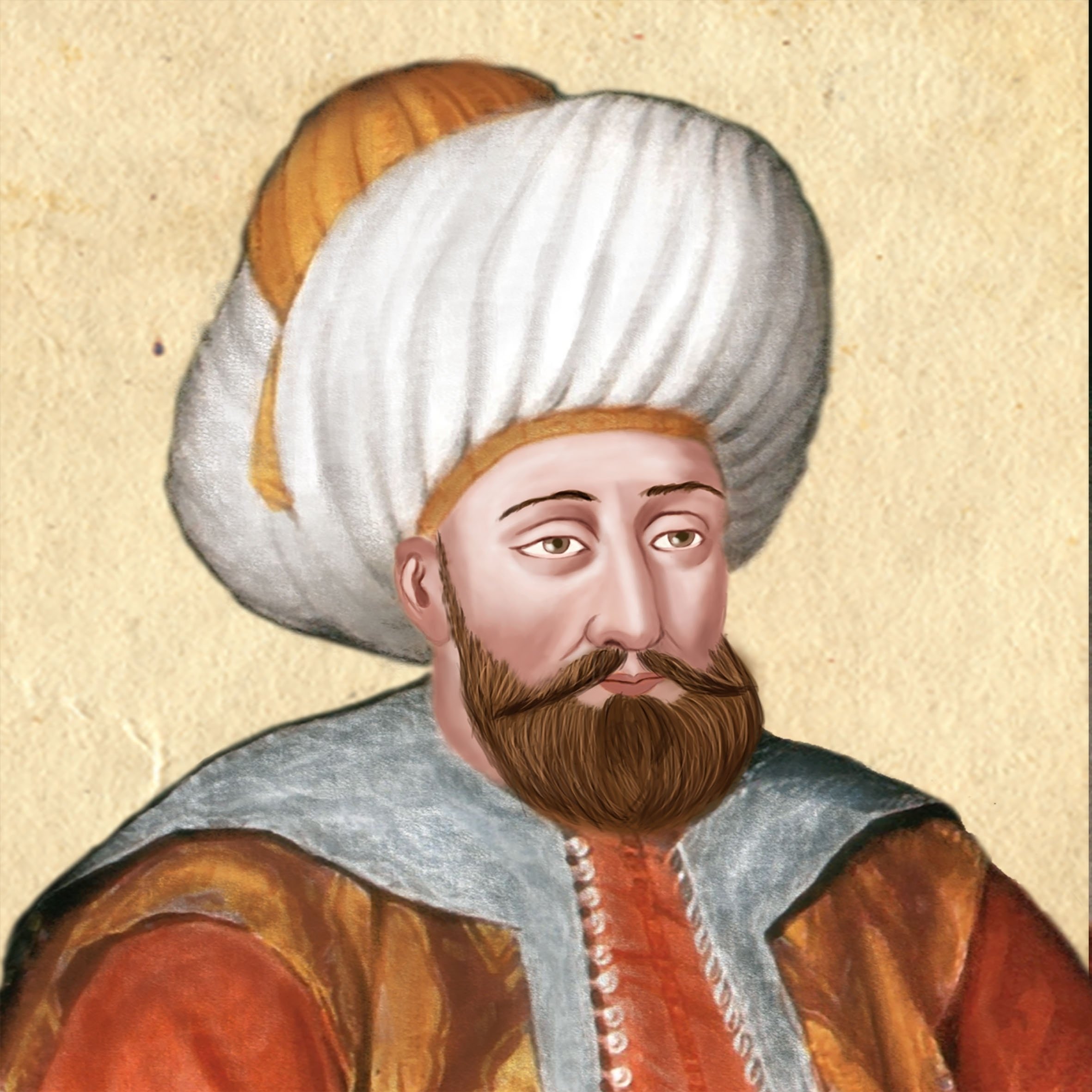
Sultan Bayezid I, also known as Yıldırım Bayezid, the fourth sultan of the Ottoman Empire, earned his nickname “Yıldırım,” or “Thunderbolt,” for his rapid military campaigns and strategic conquests that helped pave the way for the empire to become a major state.
Bayezid ascended to the throne following the death of his father, Sultan Murad I, who was killed at the Battle of Kosovo in 1389. As sultan, Bayezid expanded Ottoman territories at an unprecedented pace.
Working to unify the Anatolian Turks, he brought numerous beyliks under Ottoman rule. In 1396, he achieved a decisive victory against a coalition of European forces at the Battle of Nicopolis, marking a critical milestone in Ottoman-European confrontations.
Bayezid’s ultimate ambition was to capture Constantinople. Believing it was essential to cut off the city’s maritime support, he ordered the construction of Anadolu Hisarı on the Bosporus in 1396–1397. Despite laying siege to the city four times, Bayezid was unable to achieve this goal.
In 1402, he faced Timur, the founder of the Timurid Empire, at the Battle of Ankara and was captured. Bayezid died in captivity on March 8, 1403, at the age of 49. His tomb is located at the Yıldırım Complex in the Yıldırım district of Bursa.
Even 623 years after his death, Bayezid’s legacy endures. He left behind numerous public works, including the iconic Bursa Grand Mosque, as well as madrasas, soup kitchens, inns, bridges, and hospitals, many of which still serve the community today.
Professor Mustafa Asım Yediyıldız of Bursa Uludağ University’s Faculty of Theology described Bayezid as a sultan of exceptional value, deeply committed to expanding the Ottoman state.
“Yıldırım Bayezid was highly educated in religious and scholarly matters,” Yediyıldız said. “He often met with scholars, engaging in discussions and debates, and he greatly respected their knowledge.”
Bayezid’s personality was characterized by decisiveness and energy. “He was impatient, quick to act, intelligent, and determined to see any project through to completion,” Yediyıldız noted. His broad vision and strategic thinking were also acknowledged by foreign Ottoman historians.
Bayezid followed in the footsteps of his ancestors and father, participating in campaigns in Hungary and proving himself on the battlefield. “He was a warrior sultan, personally involved in military operations and even wounded in action,” Yediyıldız said.
Bayezid married first Sultan Hatun, daughter of Germiyanoğlu Süleyman Bey and later Olivia, daughter of a Serbian king. His son, Ertuğrul, was killed by Timur in Sivas before the Battle of Ankara. Bayezid reportedly learned of his son’s death while in Uludağ, responding to a shepherd playing the flute, “Play on, shepherd, your Ertuğrul has not died.” He also had a daughter who married in Bursa while Bayezid was campaigning in the Balkans.
Yediyıldız emphasized Bayezid’s focus on public works and city development. “He left monuments that doubled or tripled the scale of previous sultans’ projects. The Yıldırım Complex in Bursa is one of his most significant legacies,” he said. Similar complexes were built in Edirne, Kütahya, Manisa, Balıkesir and Mudurnu.
“The construction of the Grand Mosque symbolizes his vision of transforming the state from a beylik into a major empire. Had he not been stopped by the Battle of Ankara, the Ottoman Empire’s rise could have occurred at least a century earlier,” Yediyıldız added.
The Battle of Nicopolis marked the Ottomans’ first major confrontation with a crusader army. Bayezid reportedly moved from Bursa to Nicopolis in just four days, covering the distance without pause. There, he coordinated with Doğan Bey, who defended the castle, securing a decisive victory the following day.
Even Byzantine historians praised Bayezid’s leadership. His nickname, “Yıldırım,” reflected his remarkable speed and strategic mobility. He also promoted economic growth, establishing a bedesten on the southern side of the Grand Mosque with four gates opening onto markets, laying the foundations for Bursa as a commercial hub.
Yıldırım Bayezid remains celebrated as a dynamic ruler whose military acumen, scholarly patronage and visionary public works shaped the trajectory of the Ottoman Empire.