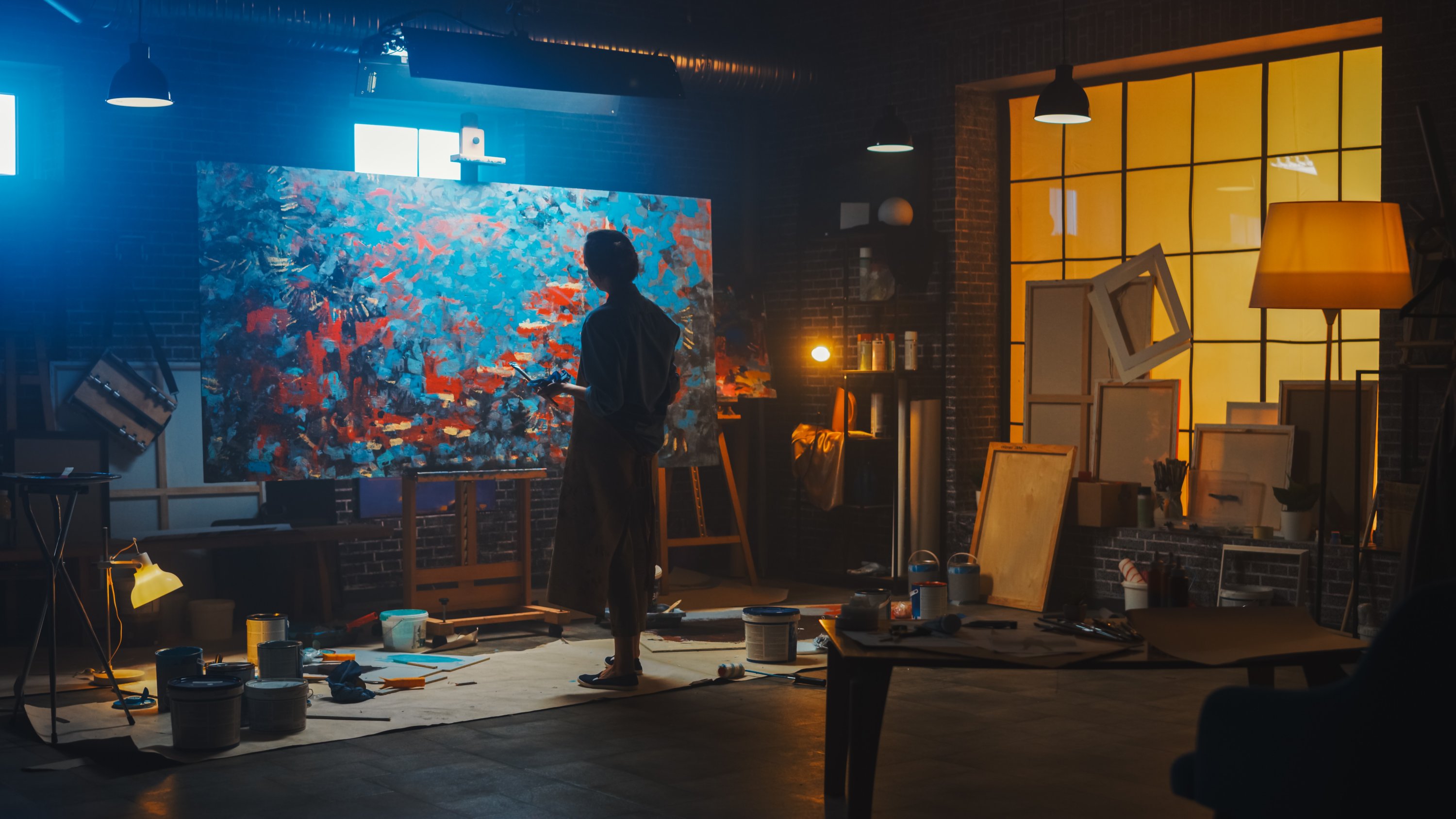
Creativity has always occupied a curious and unstable position in cultural history. It is celebrated publicly yet often misunderstood privately; romanticized as divine inspiration while, in practice, sustained through discipline, doubt, repetition and quiet persistence. Every artist, sooner or later, encounters the same unsettling question: Where does creativity truly come from and why does it sometimes disappear?
Julia Cameron’s "The Artist’s Way: A Spiritual Path to Higher Creativity" is searching for answers to the most fundamental questions while fueling the self-questioning of the artists. When I first encountered it, I approached it with a mixture of curiosity and skepticism, the instinctive reaction of many artists who have spent years navigating the complex terrain between inspiration, discipline, doubt and the realities of professional creative life. Could a book truly “unlock” creativity? Could a structured 12-week program offer insight into something as elusive and deeply personal as artistic intuition?
And yet, as I progressed through Cameron’s pages, I realized that "The Artist’s Way" is less a manual and more a conversation. It is not a rigid doctrine of creativity but an invitation to examine the invisible architecture that shapes the artist’s inner world.
In my own experience as a painter and writer, creativity has never appeared as a single, luminous moment of inspiration. It unfolds instead through a series of negotiations between silence and expression, confidence and doubt, discipline and spontaneity. Cameron understands this negotiation remarkably well. Her book is not concerned with teaching technique. Rather, it is concerned with removing the psychological obstacles that prevent creative energy from flowing freely.
That distinction is crucial. Art history, after all, reminds us repeatedly that technique alone does not generate originality. The Renaissance masters possessed extraordinary technical skill, but what distinguishes Leonardo da Vinci or Michelangelo is not simply their mastery of anatomy or perspective. It is their relentless curiosity, their willingness to remain in dialogue with the unknown. Creativity emerges not only from knowledge but from a certain openness to possibility.
Cameron’s central premise is that this openness often becomes blocked. Society encourages productivity, efficiency and measurable outcomes, while creativity frequently requires the opposite: patience, wandering attention and the courage to explore uncertain ideas. The result is what Cameron calls “creative blockage,” a phenomenon most artists recognize immediately. The painter standing before a blank canvas knows it well, so does the writer confronting the intimidating emptiness of the first page.
One of the most distinctive aspects of "The Artist’s Way" is its spiritual framing of creativity. Cameron proposes that artistic inspiration is not solely a product of intellect or skill but a form of dialogue with what she calls the “creative source.” She deliberately avoids strict religious language, yet the spiritual undertone remains unmistakable. For some readers, particularly those trained in secular academic environments, this language may initially feel unfamiliar or even uncomfortable. Yet when considered within the broader history of art, Cameron’s perspective appears less unusual than it might first seem.
The idea that creativity connects the artist to something beyond the individual ego has deep roots. The Romantic poets of the 19th century spoke of inspiration almost as a mystical encounter. William Blake believed the imagination was a divine faculty. Later, Wassily Kandinsky argued that painting should arise from what he termed an “inner necessity,” a spiritual impulse rather than mere representation.
Even in modern art, which often prides itself on intellectual rigor, traces of this spiritual understanding remain visible. Mark Rothko famously insisted that his large color field paintings were not abstract compositions but emotional experiences, thresholds through which viewers might encounter something profound and even transcendent.
When read in this context, Cameron’s emphasis on spirituality feels less like New Age rhetoric and more like a contemporary articulation of a long-standing artistic intuition. As I read her reflections, I began to see "The Artist’s Way" less as a self-help book and more as a meditation on the psychological ecology of creativity. Cameron reminds us that artistic work does not occur solely on the surface of the canvas or page; it unfolds within an interior landscape shaped by belief, memory, fear, and desire.
One of the most famous practices Cameron proposes, “Morning Pages,” illustrates this beautifully. The ritual is simple: three pages of longhand writing every morning, written quickly and without censorship. The writing is not intended for publication or even rereading. Its purpose is to clear mental clutter, to allow anxieties and self-criticism to dissipate before they have the chance to dominate the creative process.
When I tried this exercise myself, I was surprised by its effectiveness. The pages often contained nothing extraordinary, just fragments of thoughts, complaints about unfinished tasks, scattered reflections about daily life. Yet gradually, a subtle shift occurred. The internal critic that so often interrupts creative work seemed to soften its voice.
In this sense, "Morning Pages" reminded me of the Surrealists’ fascination with automatic writing. Andre Breton believed spontaneous writing could bypass rational control and access deeper layers of the unconscious. Cameron’s practice operates in a similar way, though with a gentler psychological framing.
Artists throughout history have relied on comparable rituals. Leonardo da Vinci filled notebooks with restless observations and sketches, rarely worrying about polish or perfection. These notebooks were not masterpieces in themselves; they were laboratories of thought. Cameron’s "Morning Pages" function similarly: They transform the page into a space where ideas may wander freely before they are refined into finished work.
Equally compelling is Cameron’s concept of the “Artist Date”; a weekly excursion undertaken alone, designed to nourish curiosity and sensory awareness. The activity might involve visiting a museum, wandering through a market, or simply sitting in a cafe observing the choreography of everyday life. This practice resonated deeply with me because it recognizes a fundamental truth often overlooked in discussions of productivity: creativity depends as much on receptivity as it does on output.
Claude Monet’s lifelong exploration of light in his Giverny garden illustrates this beautifully. The artist returned to the same water lilies again and again, observing subtle changes of color and atmosphere. What appears in the paintings as effortless beauty was in fact the result of sustained attention, an almost meditative relationship with the visible world.
Cameron’s Artist Dates encourage a similar attentiveness. They remind us that artists must remain curious observers before they can become effective creators.
Another aspect of "The Artist’s Way" that struck me profoundly is Cameron’s rejection of the romanticized myth of the suffering artist. Western culture has long celebrated the idea that great art emerges from anguish and torment. The biographies of Caravaggio, Van Gogh and Modigliani are often narrated as dramatic tragedies, reinforcing the belief that artistic genius and personal suffering are inseparable. Cameron challenges this narrative directly, as I mostly do in my personal life.
She argues that creativity thrives not in despair but in freedom, freedom from excessive self-judgment, from paralyzing perfectionism, from the fear of failure. While emotional intensity can certainly fuel artistic expression, chronic self-doubt often silences it. And art history quietly supports her claim. Consider the discipline of Rembrandt, whose extraordinary series of self-portraits reflects not only emotional depth but also relentless experimentation. Or Georgia O’Keeffe, whose iconic desert landscapes emerged from years of careful observation and deliberate practice. These artists were not merely tormented geniuses; they were committed practitioners who cultivated the conditions necessary for creativity to flourish.
Cameron’s 12-week structure reflects this understanding. Each chapter addresses a different psychological barrier: fear, shame, jealousy, perfectionism and proposes exercises designed to dissolve these obstacles gradually.
Admittedly, some readers may find the tone overly optimistic. The suggestion that creative blocks can be addressed through journaling and weekly exercises might appear simplistic when confronted with the structural realities of artistic life: financial instability, institutional hierarchies and cultural gatekeeping. These critiques are valid. No workbook can resolve the broader economic and political conditions shaping the art world. Yet Cameron’s focus lies elsewhere. She is not attempting to redesign the external systems surrounding art. She is attempting to restore the internal conditions that allow artists to continue working within those systems without losing their imaginative vitality. And this is where The Artist’s Way reveals its quiet power.
Reading the book today, more than three decades after its publication, one cannot ignore the changes that have transformed the creative landscape. Artists now operate in an environment defined by digital visibility, algorithmic attention and relentless self-promotion. The pressure to produce constant content often leaves little space for reflection. In such a climate, Cameron’s rituals feel almost subversive. To write three private pages every morning that no one will ever read.
To spend time alone exploring beauty without photographing it for social media. To protect the fragile incubation period of ideas before exposing them to public scrutiny. These acts may appear modest, yet they defend something essential: the interior space where creativity is born.
Reflecting on my own reading experience, I realized that "The Artist’s Way" does not offer definitive answers about creativity. Instead, it offers something perhaps more valuable, a framework for listening. Cameron encourages artists to trust their intuitive impulses, to cultivate curiosity, and to approach their work with a sense of play rather than relentless pressure.
In the end, the book functions less as a strict program and more as a gentle recalibration of perspective. It reminds us that creativity is not an exotic gift possessed by a few extraordinary individuals. It is a living impulse present within all of us, waiting patiently beneath layers of doubt and distraction.
For artists navigating the complexities of contemporary cultural life, that reminder alone can be transformative. And perhaps that is why "The Artist’s Way" continues to resonate with readers across generations. Not because it promises to make us brilliant overnight, but because it quietly restores our permission to create. The artist’s task, Cameron suggests, is simply to listen. And sometimes, listening begins with three quiet pages written before the world wakes up.