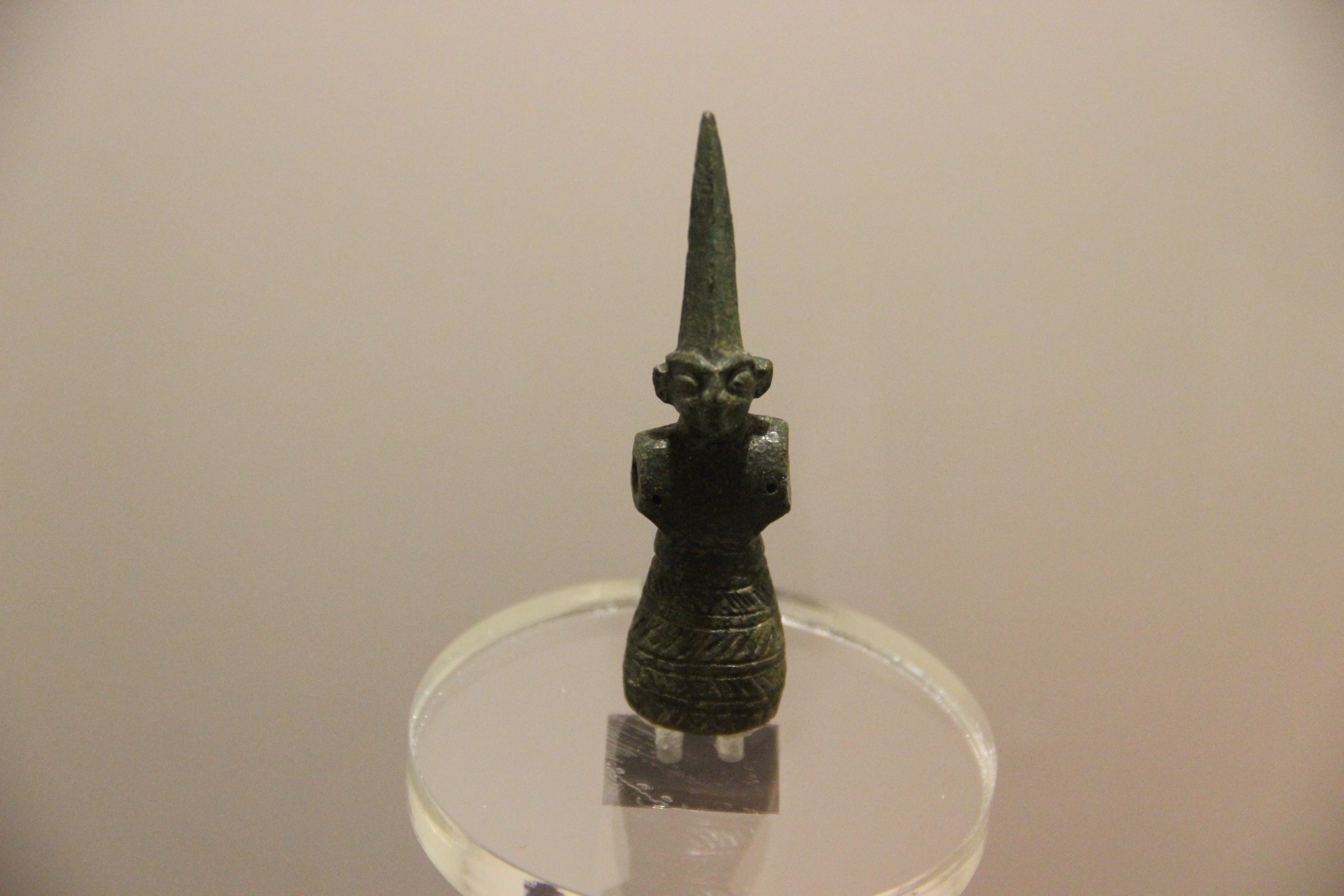
A 3,500-year-old figurine known as the “Genç Fırtına Tanrısı” (“Young Storm God”) discovered by chance and recently added to a museum collection, has gone on public display for the first time at the Boğazköy Museum.
The small artifact, dating back to the Hittite Kingdom period in the 15th-14th centuries B.C., was found by a local resident in a village in the Alaca district of central Türkiye's Çorum province and later handed over to authorities. Experts say the figurine has drawn significant attention in the archaeology world due to its rarity and craftsmanship.
Measuring just 7.65 centimeters (about 3 inches), the figurine is believed to be the smallest known example of its kind. It was cast from arsenical copper and showcases the advanced metalworking techniques of the Hittites, an ancient Anatolian civilization.
One of the most distinctive features of the piece is its construction method. The arms and legs were attached to the body using a sophisticated “riveted limb technique,” developed by the Hittites. Socket joints and pin holes visible on the shoulders and skirt area indicate that these parts were added separately – a complex process that makes the figurine unique among known Hittite bronze works.
In the polytheistic Hittite religion, the storm god was considered the “king of the gods,” symbolizing rain, fertility and the power of the sky. Known by different names across cultures – Taru by the Hattians, Tarhunza by the Luwians, Teshub by the Hurrians and Tarhuna by the Hittites – the deity was often depicted in human or bull form.
Archaeologists emphasize that the figurine is not only an artistic object but also an important piece of evidence shedding light on Hittite religious practices.
The figurine was officially unveiled during Türkiye’s Tourism Week celebrations in a ceremony attended by local officials, including Çorum Governor Ali Çalgan and Mayor Halil Ibrahim Aşgın.
Speaking at the event, Çalgan described the artifact as “unique and extremely valuable,” noting that it was crafted in these lands approximately 3,500 years ago. He also thanked the citizen who found and responsibly turned in the object, encouraging others to show similar awareness in protecting cultural heritage.
Officials expect the figurine to attract strong interest from both domestic and international visitors. The exhibition is part of broader efforts to promote tourism in the region, which includes interactive workshops, cuneiform writing demonstrations and cultural programs for children.
Aşgın said local authorities are working to boost Çorum’s tourism potential through restoration projects and gastronomy initiatives. The city is aiming to join the UNESCO Creative Cities Network in the field of gastronomy and has already participated in major international tourism fairs to promote its culinary heritage.
Museum Director Resul Ibiş added that the figurine had previously been introduced to the academic community through exhibitions and symposiums, including a presentation in South Korea.
Now on display, the “Young Storm God” offers visitors a rare glimpse into the artistry and religious life of one of the ancient world’s most influential civilizations.