The history of art is, to a great extent, the history of humanity’s attempts to understand the world. The discovery of perspective, the study of anatomy, the examination of light, the analysis of movement. For centuries, art sought ways to represent reality more accurately. This is why the origins of many artistic movements can be explained relatively easily: Impressionism focused on the changing nature of light, Cubism fragmented form, Futurism was concerned with speed and modern life.
Surrealism, however, looked elsewhere amid all of this.
Its aim was not to describe reality better, but to reveal just how fragile reality already was.
Perhaps this is why Surrealism remains one of the most popular yet simultaneously one of the most misunderstood movements in art history. Today, the word “surreal” is used in everyday language for almost anything: something strange, absurd, inexplicable. Yet Surrealism was never simply about producing bizarre images. In fact, many of the finest Surrealist works do not shout at first glance. They are quiet. Yet they remain in the mind.
Because Surrealism does not create a space where logic disappears completely, it creates a space where logic shifts ever so slightly. And perhaps that is precisely what affects us most.
It is impossible to understand the movement itself without understanding why Surrealism emerged. In the early 20th century, Europe had begun to lose faith in human reason. Science, technology, progress and modern thought were all concepts believed to carry humanity forward. Yet that same modern world had also produced the First World War. Human reason had built civilization, but it had also made unprecedented destruction possible.
For artists, this represented not merely a political crisis, but a psychological one. If reason had brought us to this point, why should we continue to trust it completely?
Surrealism emerged directly from this question. Shaped by André Breton’s manifestos, the movement turned its attention away from the external world and towards the internal one. Freud’s theories of the subconscious played a major role in this shift. Dreams, repressed desires, fears, coincidences and uncontrollable thoughts suddenly became the new territory of art.
For this reason, Surrealist artists were not simply making paintings. They were attempting to alter the very way the mind functions.
Today, Salvador Dalí’s melting clocks and René Magritte’s bowler-hatted men have become so familiar that Surrealism is often read through a handful of iconic images. Yet the true power of the movement lies not in how recognizable these images have become, but in the way they subtly disrupt our relationship with reality.
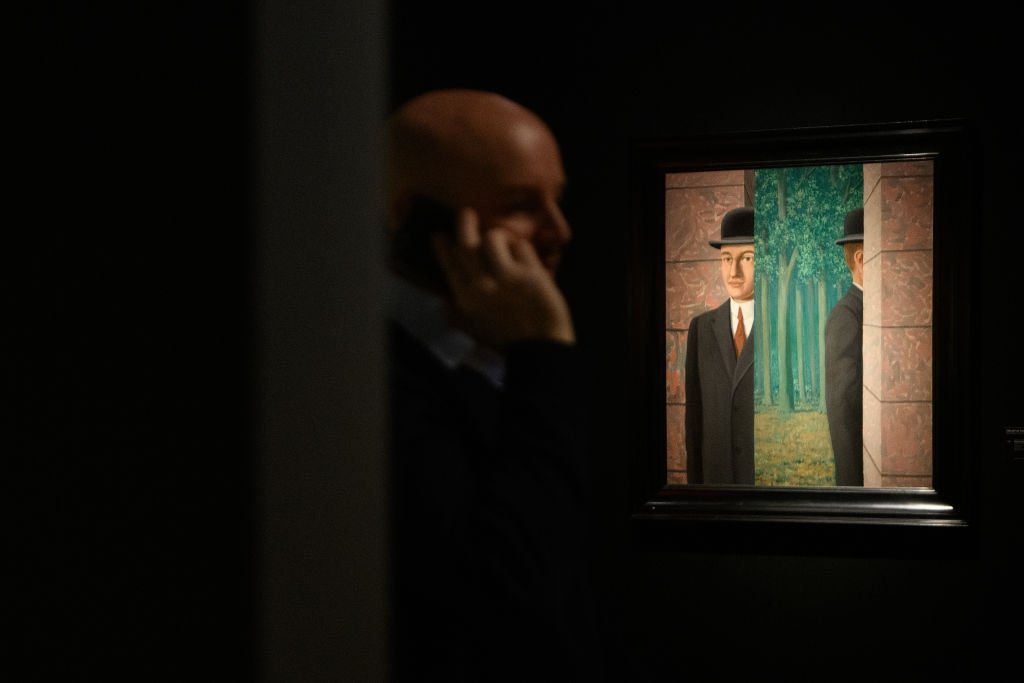
When you look at a Dalí painting, what you feel is not merely surprise. There is also a strange sense of familiarity. Because Surrealism does not create an entirely different world. It reveals just how fragile and strange the world we already inhabit truly is.
Perhaps this is why Surrealism has once again become so appealing today. The contemporary world already feels surreal much of the time. We live in an age in which we are constantly exposed to images, where the digital and the physical blend into one another, where our sense of time has become increasingly fragmented. Reality itself sometimes functions like a Surrealist composition.
For this reason, Surrealism is no longer being read merely as a historical movement. It is increasingly being understood as a contemporary state of mind.
Yet it would be a great injustice to think about Surrealism solely through Salvador Dalí. The true depth of the movement emerges through artists who worked more quietly.
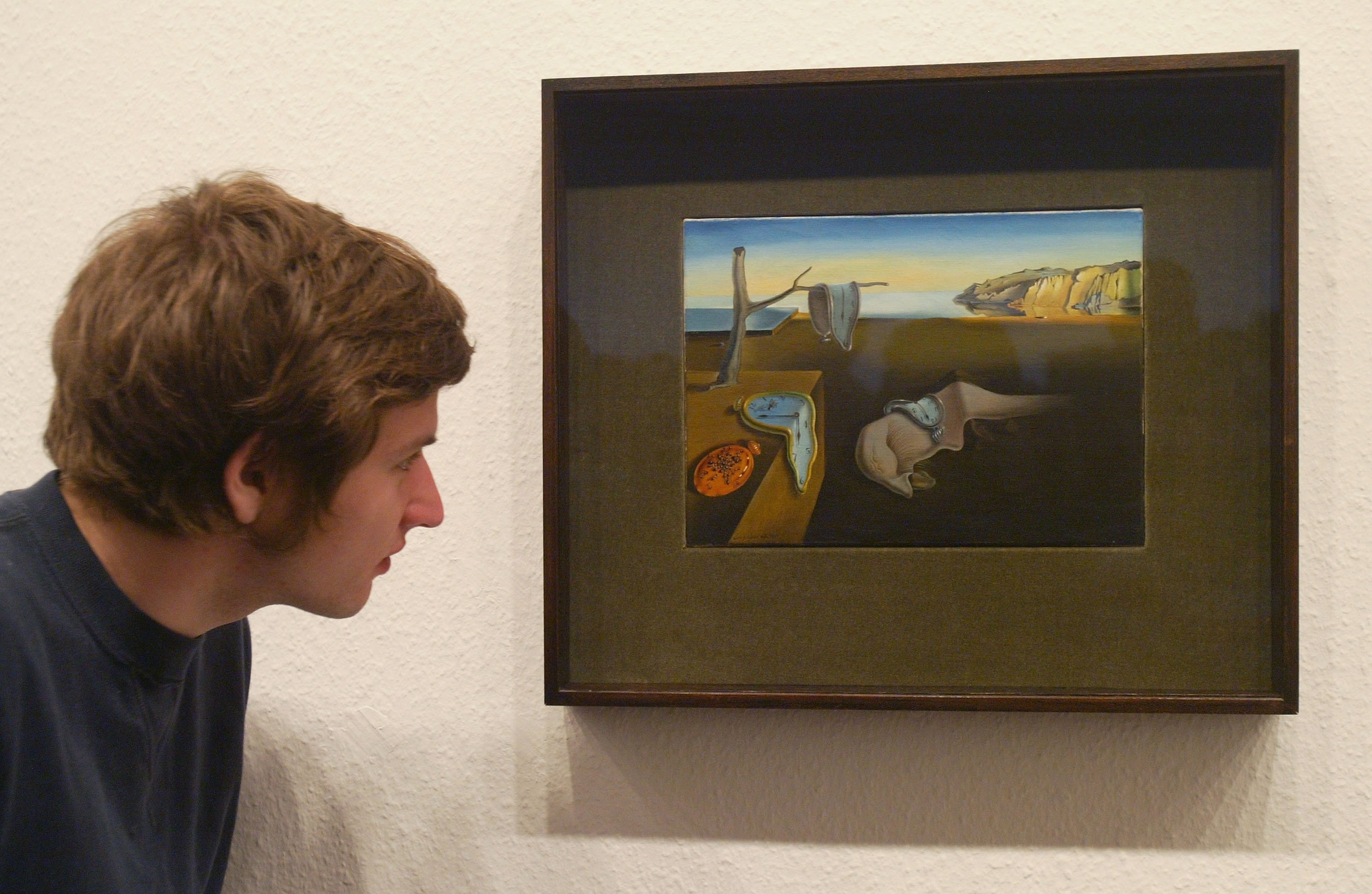
René Magritte is one of the strongest examples. At first glance, Magritte’s paintings appear remarkably calm. Clean surfaces, everyday objects, simple compositions. Yet after a few seconds, you begin to sense that something has shifted. A window no longer shows the outside world. A face is concealed. The sky unexpectedly spills into an interior space. What Magritte does is not fragment the world, but reveal the subtle displacements already hidden within reality itself. This is why his works are not aggressive; they are almost hypnotic.
Salvador Dalí, by contrast, represents the more theatrical side of Surrealism. Yet reducing Dalí to a man who merely produced “crazy images” would be a significant misunderstanding. His painting "The Elephants," in particular,
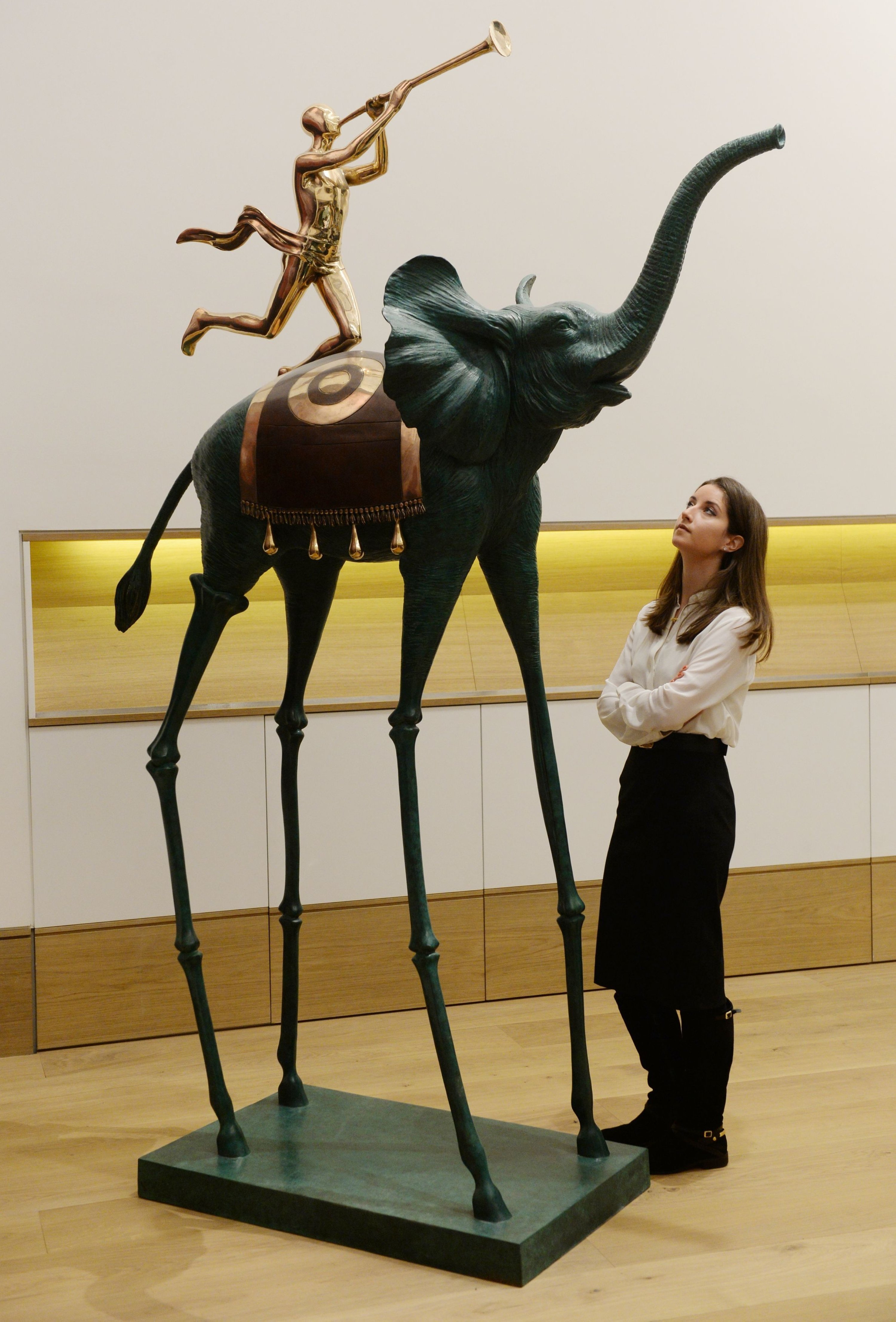
demonstrates why he was such a powerful creator of images. Giant elephants walk on impossibly long, impossibly thin legs that appear as though they might snap at any moment. At first the image seems impossible, but within seconds it transforms into something almost poetic. This is because Dalí is not interested in physical reality but in emotional weight. He shows us how something that appears powerful can also be profoundly fragile.
Perhaps this is one of the most remarkable qualities of Surrealism: its ability to make even the most inexplicable images emotionally understandable.
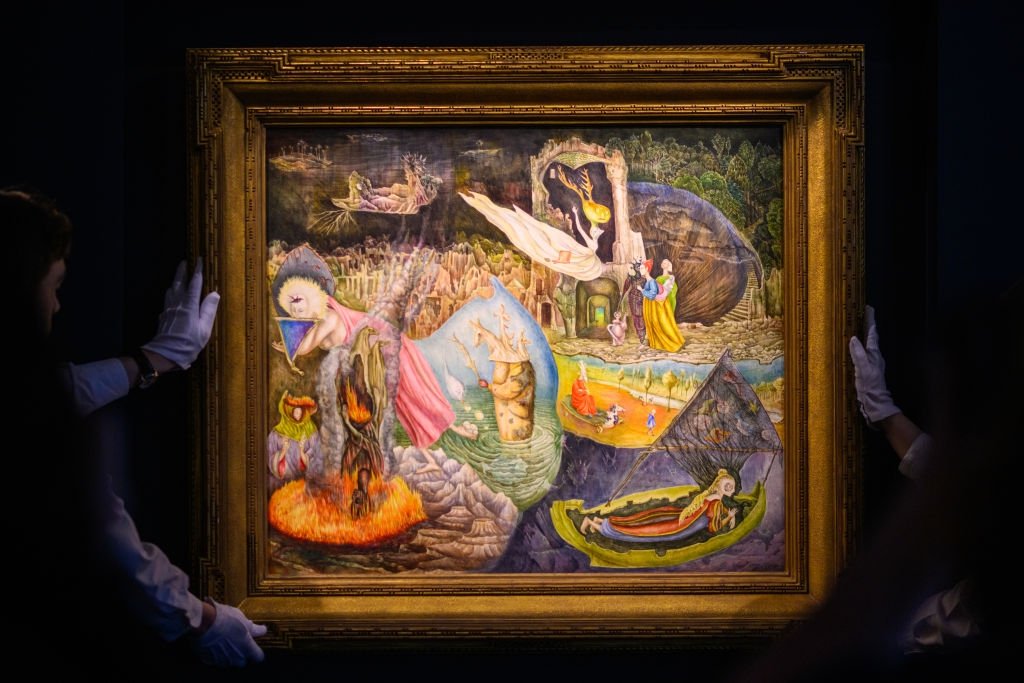
Leonora Carrington’s work, meanwhile, opens another dimension of Surrealism. Carrington’s world is not as flamboyant as Dalí’s. It possesses a more intuitive, inward-looking and almost mystical atmosphere. The giant figure we encounter in "The Giantess" ("The Guardian of the Egg") is not merely a character. It feels like a symbolic manifestation of the subconscious itself. Carrington’s paintings are often described as dreamlike, yet they evoke memory more than dreams. Perhaps this is why they remain with us for so long.
The wartime works of Max Ernst reveal that Surrealism was not concerned solely with the subconscious, but also with trauma. At first glance, "Europe After the Rain II" appears to depict a landscape in dissolution. The world seems to be reshaping itself. Ernst does not create a fantastical universe; instead, he paints reality after it has been shattered by war.
Surrealism is often regarded as an art of escape, yet for many Surrealist artists the opposite was true. Reality became so intense, so complex, that representing it directly was no longer possible.
In Türkiye, however, Surrealism never developed into a dominant artistic movement. One of the main reasons for this lies in the fact that Turkish painting evolved largely through questions of social reality, modernization and identity. In Turkish art, the external world often remained more dominant than the internal one. As a result, Surrealism appeared in fragmented forms rather than as a coherent movement.
Even so, there are certainly artists whose works bear traces of the surreal. The metaphysical atmospheres of Erol Akyavaş, the deformed figures of Mehmet Güleryüz, certain periods of Nejad Devrim’s practice, or more contemporary artists who blur the boundary between dream and reality. None of these artists are Surrealists in the classical sense. Yet all of them carry traces of Surrealist thought.
Perhaps this is precisely what makes Surrealism so enduring. It is not merely an artistic movement. It is a way of thinking about the darker, more poetic and ultimately inexplicable dimensions of the human mind.
And perhaps this is why it has never truly lost its power. Because sometimes reality simply is not enough.
Surrealism is often reduced to a handful of iconic images. Yet the true strength of the movement emerges in works that are discussed less often but remain in the mind far longer.
Salvador Dalí’s "The Elephants" is one of those works. Although it may not be as famous as the melting clocks, I believe it is among Dalí’s most poetic and unforgettable paintings. As enormous elephants appear to move through space on
impossibly thin legs, an unusual sense of silence settles over the image. I have never forgotten this painting since the first time I saw it. In fact, I even have a tattoo inspired by it on my back. Because this work does not merely create an image – it creates a feeling. It is one of those rare works that allows us to sense how strength and fragility can exist simultaneously.
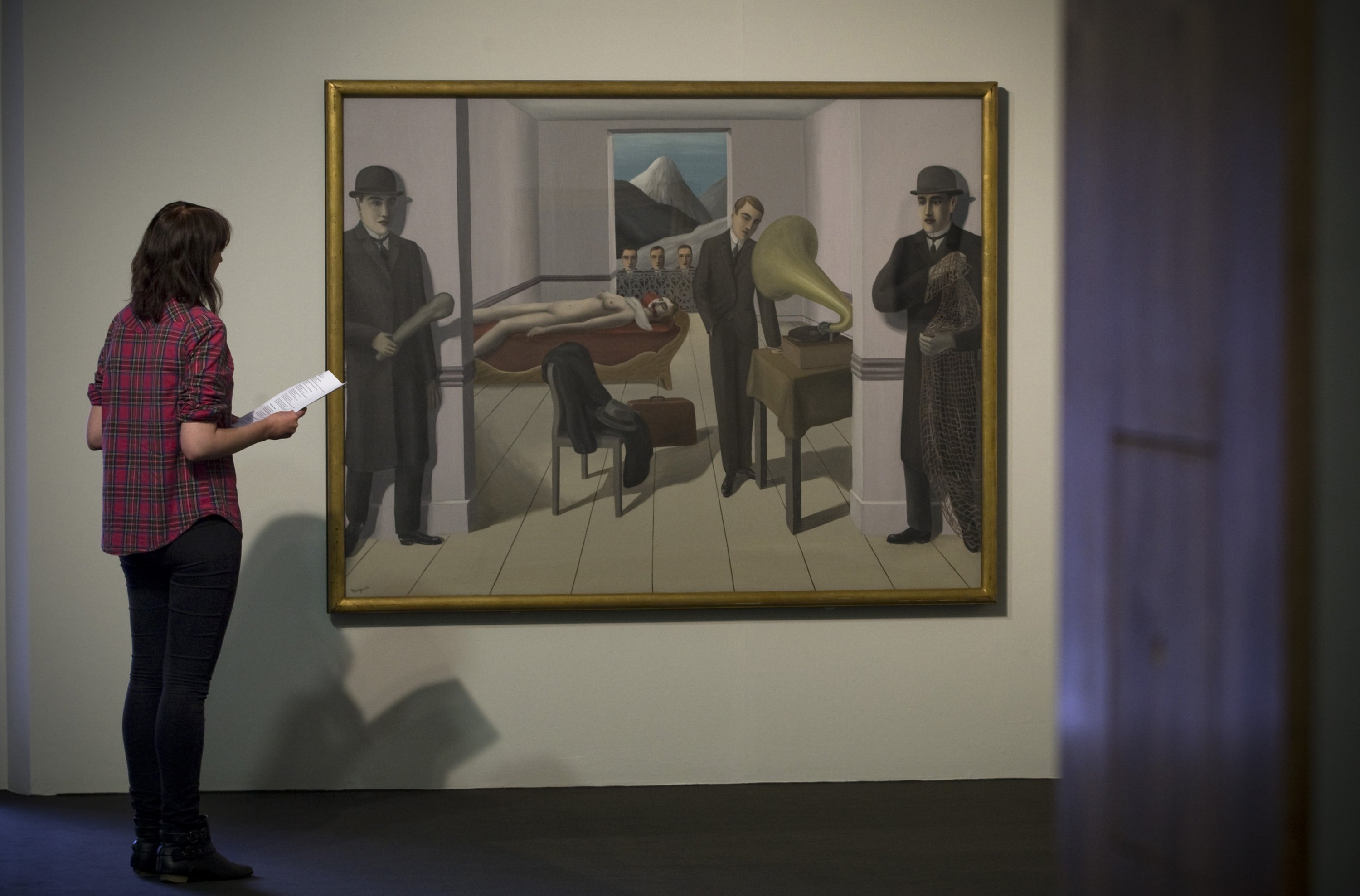
René Magritte’s "The Menaced Assassin" demonstrates the cinematic side of Surrealism. Figures standing in a room, a body lying on the floor, and the weight of an unseen event. Magritte is not telling a story here. He is constructing an atmosphere. Looking at the painting feels like stepping into the middle of a film.
Leonora Carrington’s "The Giantess" represents the intuitive side of Surrealism. Carrington’s work is not discussed nearly enough, yet in my opinion she is one of the most fascinating artists associated with the movement. The way she approaches female figures connects Surrealism not only to the subconscious but also to nature, mythology and memory.
Dorothea Tanning’s "Eine Kleine Nachtmusik," meanwhile, creates a peculiar tension despite appearing calm at first glance. An open door, children standing in a corridor and a gigantic fallen sunflower. Everything seems normal, yet nothing is truly normal. This is precisely where Tanning’s power begins.
One of the most fascinating aspects of Surrealism is the relationship between artists’ lives and their works. It is said that Salvador Dalí slept holding a spoon so he would not forget his dreams. As he drifted into sleep, the spoon would fall, waking him and he would immediately record the images he had just seen. Leonora Carrington was institutionalized in a psychiatric clinic for a period and those experiences found their way directly into her work. René Magritte, meanwhile, lived an extraordinarily calm and orderly life, despite the strange worlds depicted in his paintings.
Perhaps this is exactly what makes Surrealism so compelling. These artists were not trying to create other worlds. They were simply changing the way we look at our own. What we encounter in a Dalí painting, a Magritte composition or a Carrington figure is not an alien universe, but another face of our own reality. And perhaps if Surrealism continues to captivate us today, the reason is far simpler than our fascination with the subconscious: it reminds us that everything we see is far less certain than it appears.