Central banks around the world are leaving behind a year riddled with uncertainties due to U.S. tariffs, geopolitical tensions, and intense political developments, while inflation-related risks came to the fore, limiting the room to ease policy.
Washington's protectionist trade practices became all the more apparent, as following his inauguration, U.S. President Donald Trump’s tariff decisions in March and April further exacerbated global trade tensions, causing a massive wave of uncertainty in the world economy.
The U.S. tariffs directly affected China, Japan, the EU, Canada, and Mexico, and these countries became the main actors in trade tensions.
While tensions were somewhat alleviated in the second half of the year with more and more trade agreements, the 12-day air strikes between Iran and Israel, as well as the unsuccessful attempts at putting an end to the Russia-Ukraine war, led markets to be cautious about the economic outlook.
The U.S. federal government shut down on Oct. 1, as a temporary budget could not be agreed upon. The 43-day shutdown went down in U.S. history as the longest, causing significant disruptions in the economic data flow in the third quarter of the year.
However, major central banks delivered cuts this year, with the Bank of Japan (BOJ) being the only outlier, as after years of ultra-loose policy, it moved to hike rates.
This year, the U.S. Federal Reserve (Fed) cut rates by a total of 75 basis points, the European Central Bank (ECB) 100 basis points, the Bank of England (BoE) 100 basis points, the Reserve Bank of Australia 75 basis points, and the Turkish central bank by some 950 basis points, while BOJ raised its rates by 50 basis points.
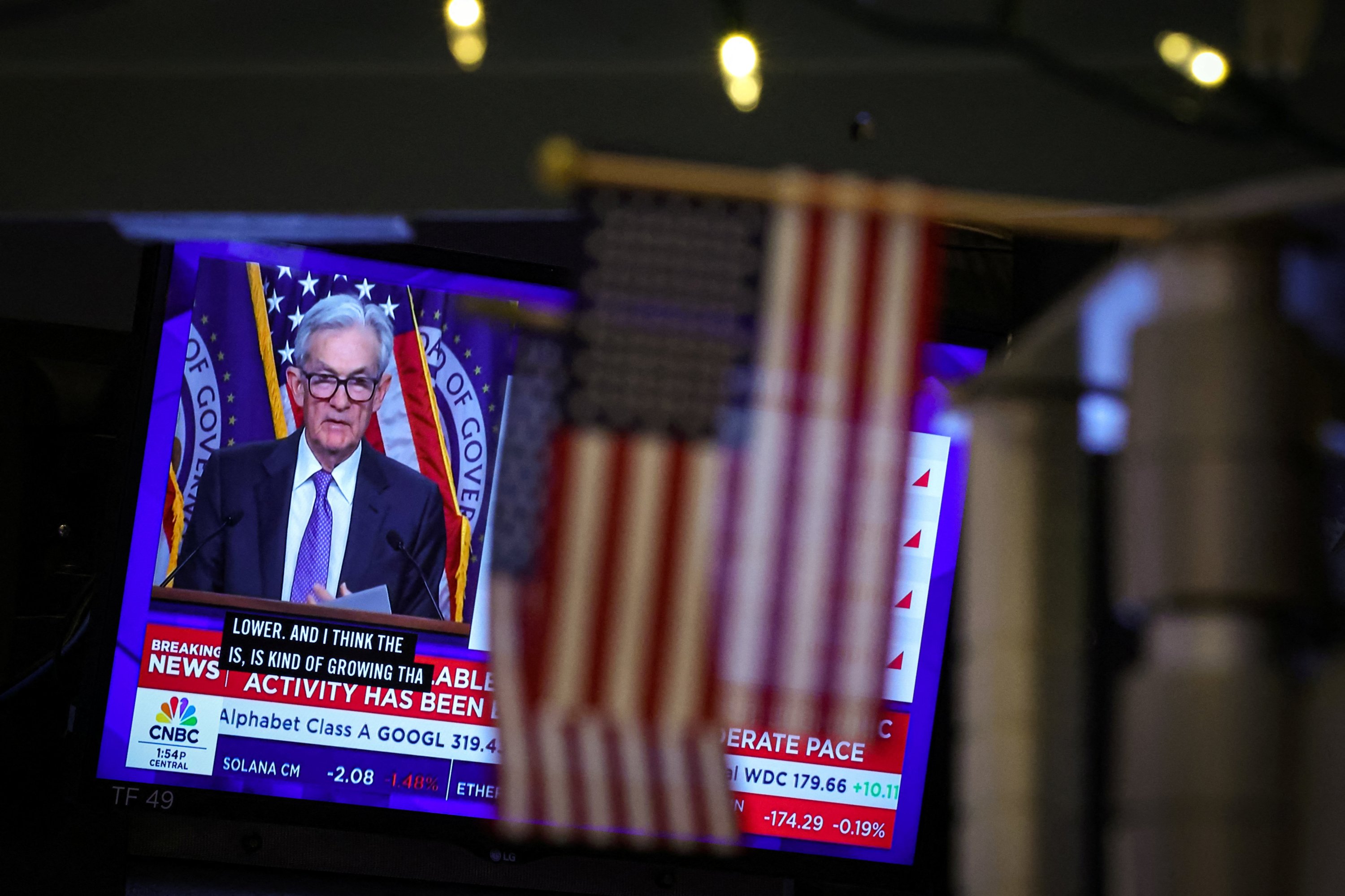
The Fed adopted a cautious approach in its policy decisions in the face of an intense economic and financial agenda.
Tariff-induced uncertainties and the impact of the federal government shutdown contributed to the risks in the inflation outlook, which remains on the agenda until the end of the year.
Fed officials diverged in opinion in this period – while some emphasized the need for caution in the fight against inflation and the need for more data to be reviewed, others said conditions were right to cut rates.
The Fed cut its rates by a total of 75 basis points this year, bringing its policy rate to the range of 3.5-3.75%. The bank completed the year with 25 basis point cuts each in September, October, and December.
Two 25-basis-point cuts are expected in March and July 2026, according to market estimates.
It remains uncertain who will replace Fed Chair Jerome Powell when his term ends.
The ECB ended the year with a total of 100 basis points cut from its three key policy rates, but expectations for its rate cut cycle to continue into next year remain limited.
The eurozone’s annual inflation fell to 2.1% in November, edging close to the bank’s 2% medium-term target.
ECB President Christine Lagarde said in the bank’s last meeting this month that uncertainties over the inflation outlook persist in the region due to the volatile global environment.
She said the falling energy prices could suppress inflation in the short term, but potential disruptions in supply chains, wage pressures, and extreme weather phenomena pose upside risks.
While the ECB may occasionally increase rates in the future, the impact of the bloc’s defense spending and fiscal expansion measures on the domestic demand balance will be closely monitored.
The BoE cut rates by a total of 100 basis points this year to support growth, despite ongoing inflation risks.
The U.K.’s annual inflation was 3.2% in November, and the bank’s policy rate was 3.75%. The BoE kept a tight monetary stance to maintain interest rates above inflation.
The BoE is expected to make its first rate cut in April amid ongoing uncertainties.
Meanwhile, in Japan, the BOJ raised its policy rate by a total of 50 basis points in the face of rising inflation risks and the possibility of wage hikes becoming permanent.
The BOJ’s policy rate reached 0.75%, its highest in 30 years. The bank said in a statement that wages and prices are expected to rise moderately, while real interest rates will remain negative, and supportive financial conditions will encourage economic activity.
Japan’s annual inflation was 2.9% in November. Markets are yet to have any clear expectations of the BOJ for the bank’s next steps moving into 2026.
The BOJ is expected to make its first rate hike of next year in September.
The Bank of Korea ended the year with a total of 50 basis points cut from its policy rate, bringing it to 2.5%.
The Reserve Bank of Australia (RBA) cut rates by a total of 75 basis points this year, bringing its policy rate to 3.6%.
It cut rates 25 basis points each in February, May, and August.
The possibility that the bank may return to tightening next year has gained some prominence in money market estimates.
In May, it is expected to make a 25-basis-point hike, according to estimates.
The Reserve Bank of New Zealand, on the other hand, cut rates by a total of 200 basis points this year, lowering its policy rate to 2.25%.
The Central Bank of the Republic of Türkiye (CBRT), meanwhile, held some 10 Monetary Policy Committee (MPC) meetings this year, as well as one interim meeting, cutting its rates by a total of 950 basis points and bringing down its policy rate to 38% as inflation in the country cooled.
Türkiye’s fight against inflation continued throughout the year, standing at the top of policymakers' and authorities' priorities. The country’s consumer price index (CPI) surged 0.87% monthly in November, its lowest in the past 30 months, and by 31.07% year-over-year, its lowest in the last four years.