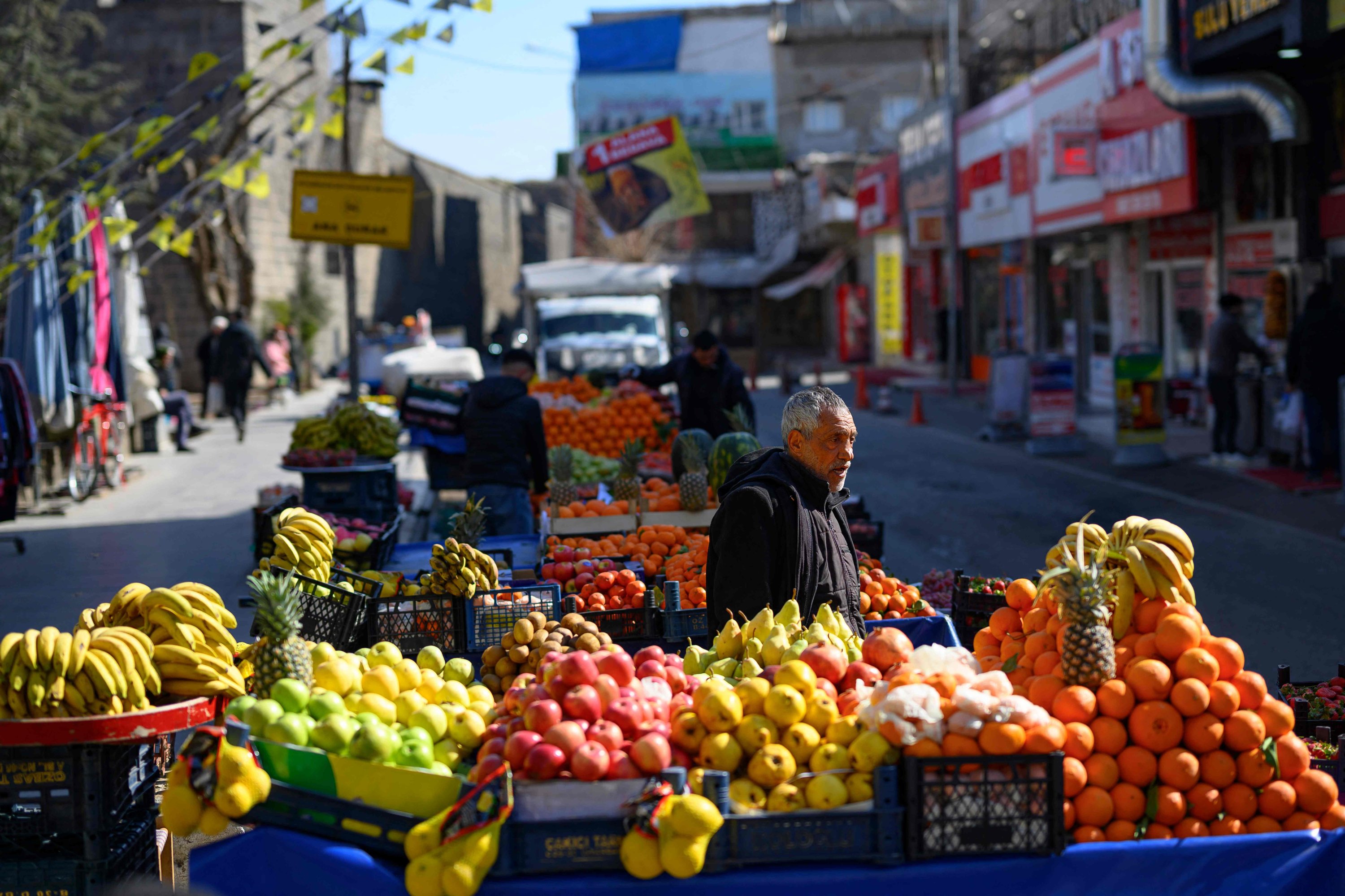
The annual inflation rate in Türkiye slowed for a ninth consecutive month in February, falling below 40% for the first time since June 2023, with monthly prices also advancing less than anticipated, official data showed on Monday.
The drop comes as the central bank is set to make its latest decision on interest rates this week after lowering borrowing costs at its last two monetary policy meetings.
Consumer prices rose by 39.05% last month, down from 42.1% in January, the Turkish Statistical Institute (TurkStat) said.
Inflation came in below expectations and has been sustaining a downtrend since it peaked at around 75% in May last year.
A Turkish regulation lowering patient contribution fees for services at public health care institutions recently helped to rein in price growth, prompting some analysts to trim their February inflation expectations.
"We expect the steady decline in inflation to continue thanks to fiscal and income policies that support the disinflation process and the improvement in expectations," Treasury and Finance Minister Mehmet Şimşek said.
"We will resolutely implement our policies to achieve price stability, which will permanently improve the purchasing power and income distribution of our citizens," Şimşek wrote on social media platform X.
Monthly inflation stood at 2.27%, the statistics institute said, also below forecasts. In January, inflation had stood at 5.03% on a monthly basis due to a minimum wage hike and several price adjustments.
Annual inflation in the key food and nonalcoholic drinks sector was lower than the headline rate, at 35.11%, down from 41.76% in January and marking the slowest pace since November 2021.
Trade Minister Ömer Bolat attributed that fall to government policies and strict inspections authorities have conducted to combat price gouging
"Inflation has decreased by 36.4 points over the last nine months compared to its peak in May 2024," Bolat said in a statement.
"Due to the measures and strict controls implemented by the ministry, the annual inflation rate for food and nonalcoholic beverages has decreased by 6.7 points compared to the previous month, reaching 35.11%, the lowest level in the last three years," the minister added.
Annual price hikes were led by a 94.9% rise in education prices, while housing prices were up 70.81%.
The cost of energy rose by 43.92% year-over-year, slightly accelerating from January's 43.05%.
Annual core inflation, which excludes volatile items such as energy and food, fell to a 37-month low of 40.21%. On a monthly basis, the core gauge increased 1.80%, significantly lower than the 5.59% hike recorded in January.
The Turkish lira firmed slightly to 36.4775 against the U.S. dollar on Monday, from a close of 36.5310 on Friday.
Surveys had forecast inflation to dip to about 3% on a monthly basis, driven by the regulatory changes reducing co-payments at public hospitals. The annual rate was forecast to slow to around 40%.
The central bank cut its policy rate to 45% from 50% in December, having kept it steady in the preceding eight months, and is set to hold its next policy-setting meeting on Thursday.
Previously, the bank raised its key rate 4,150 basis points to cool inflation in a shift to orthodox policy, after years of low rates aimed at fostering growth.
Capital Economics economist William Jackson predicted the bank will cut interest rates by another 250 basis points this week. The repo rate is expected to end the year at around 31%.
Shares in Turkish banks rose on Monday as lower-than-expected inflation data boosted hopes for rate cuts that could drive higher banking activity.
Türkiye's main banking index surged 5.3%, while Turkish equities were up 2.3%.
ALB Yatırım's chief economist, Filiz Eryılmaz, said the lower-than-expected inflation has strengthened the outlook for rate cuts.
"The increased expectations for rate cuts have brought buying activity into the banking sector and boosted risk appetite," Eryılmaz added.
"The lower-than-expected inflation raised the likelihood of a 250 basis point interest rate cut by the Central Bank of the Republic of Türkiye on Thursday, leading to increased risk appetite in the banking sector," Yunus Yenikalaycı, an equity research specialist at Gedik Yatırım, said.
Separate data from TurkStat on Monday showed the domestic producer price index rose 2.12% month-over-month in February, after rising 3.06% in the prior month, for an annual rise of 25.21%.
The annual reading was weaker than January's 27.2% increase and the lowest level reached since December 2020.
Data showed that producer prices in the four main industry sectors increased in February, with prices of mining and quarrying climbing 33.24% and manufacturing reporting a 24.76% rise.
Producer prices of electricity, gas, steam and air conditioning grew 23.95% while they advanced 57.58% for water supply.
Cevdet Yılmaz, the vice president of Türkiye, said inflation continues to decrease as a result of government policies.
While the stabilization in demand contributed to the decline, inflation expectations of consumers and firms also declined, Yılmaz said on X.
He added that the relatively low course of producer inflation continues to have a favorable cost-side impact on consumer prices, which indicates that the normalization in pricing behavior continues.