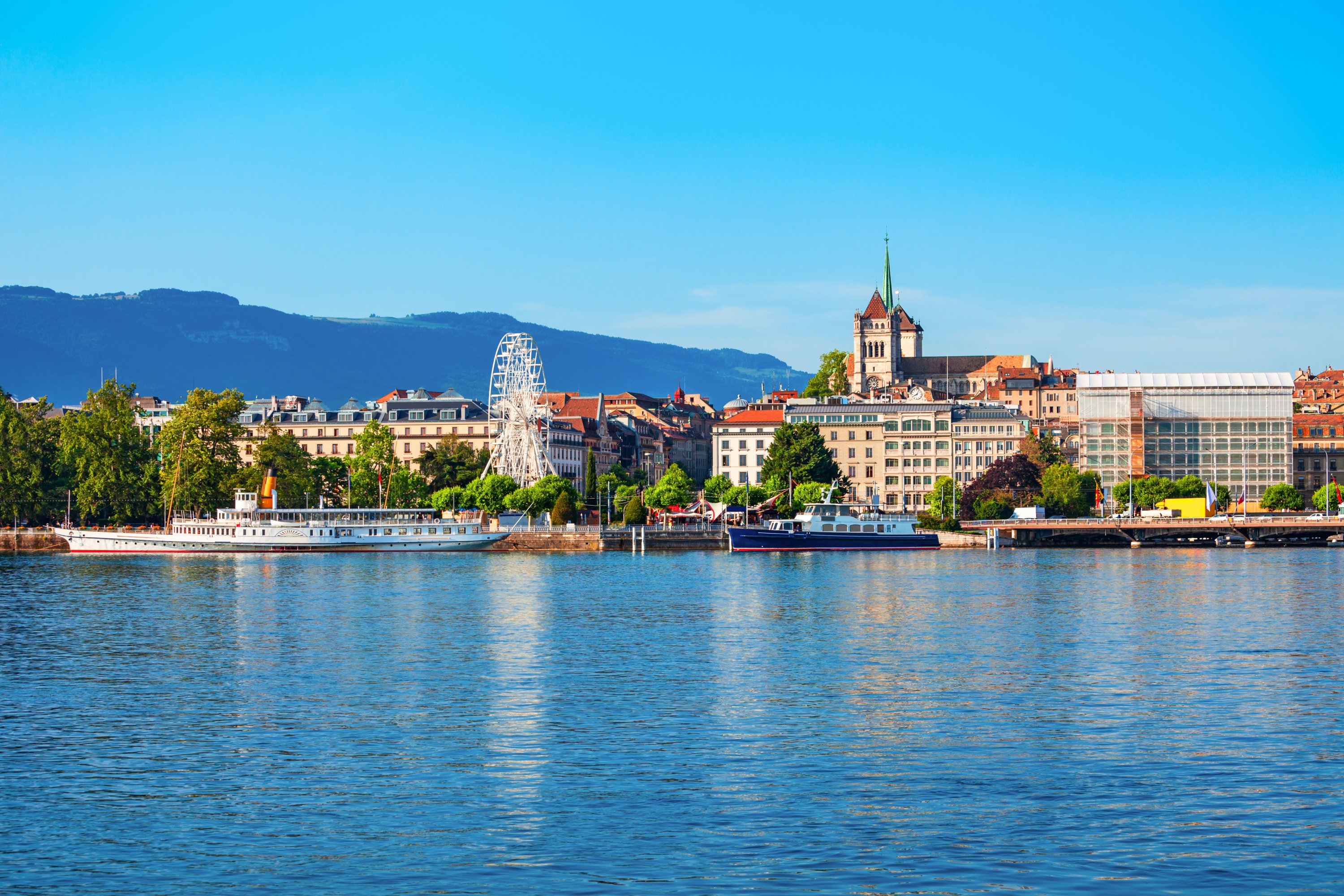
On this trip to one of the most beautiful destinations to visit in spring, we found ourselves immersed in nature while also witnessing the history of a city of global importance.
Geneva, located on the shores of Lake Geneva under the shadow of the Alps and the Jura Mountains, had long been on our travel list. As with every trip to Switzerland, our excitement began months in advance. The fact that this journey also extended from Switzerland into France doubled our anticipation.
From Geneva – right on the French border – you can easily visit Mont Blanc, the highest peak in Europe and even cross into Italy in a very short time. I will share more details about that in a future article. Another essential stop, just 45 minutes from Geneva, is Annecy, which is absolutely worth visiting.
Geneva is not only blessed with stunning natural scenery like many Swiss cities, but it is also one of Europe’s most prestigious cities due to hosting some of the world’s most important international institutions. Located on the shores of Lake Geneva (Lac Leman), the city is home to the European headquarters of the United Nations, the World Health Organization (WHO), the UN High Commissioner for Human Rights, the International Labour Organization (ILO), the Red Cross, and CERN, the European Organization for Nuclear Research. Geneva is also known as a global center for the production of some of the world’s most prestigious watch brands.
One of Geneva’s most iconic landmarks is the Jet d’Eau, located on Lake Geneva – one of the largest lakes in Central Europe, shared by Switzerland and France.
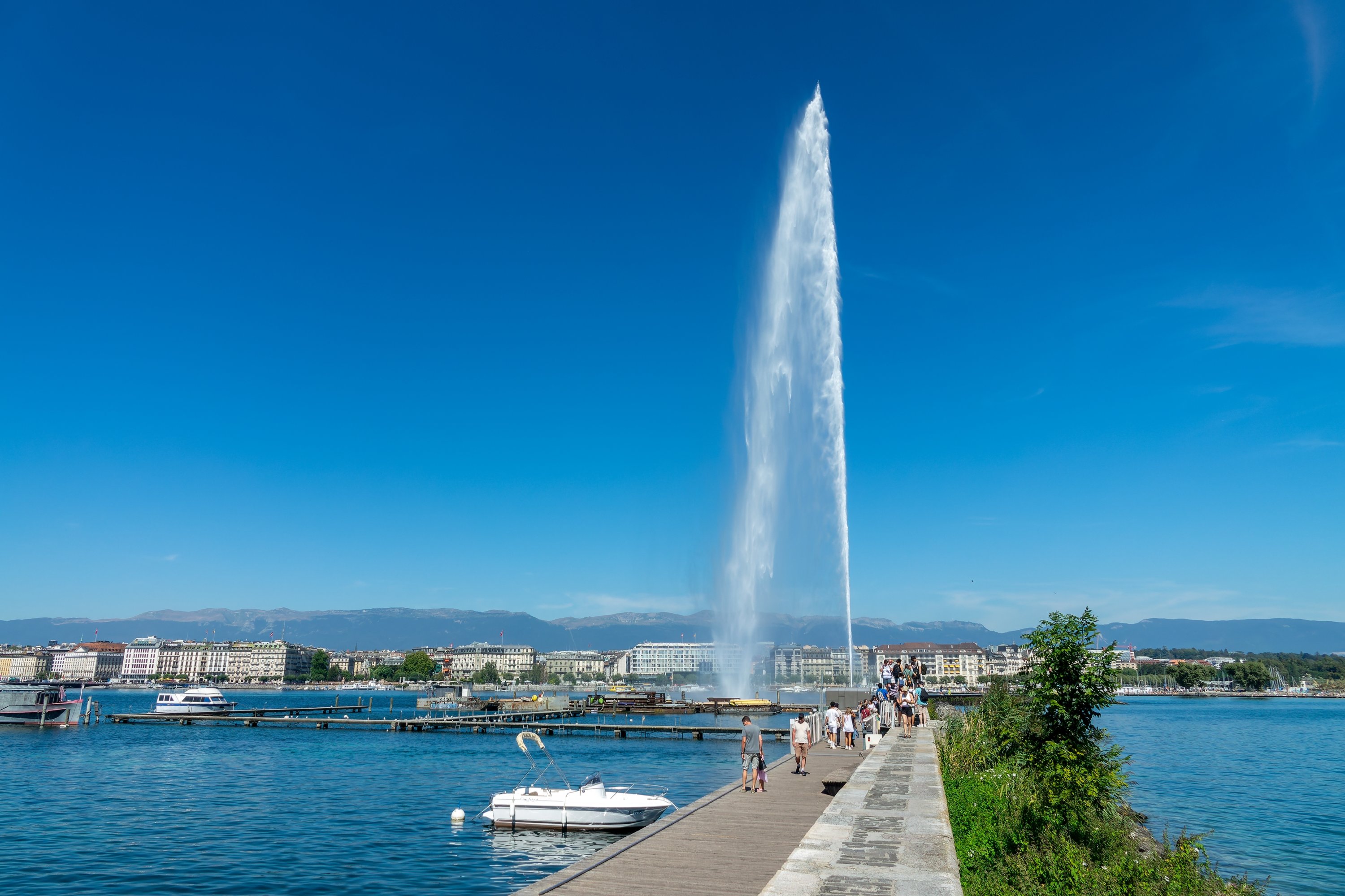
The fountain shoots 500 liters of water per second at a speed of 200 kph, reaching a height of 140 meters. On sunny days, it creates a beautiful artificial rainbow.
The mist rising from the water can make you feel as if you are walking through a fairytale. Watching this while feeling the cool spray on your face and seeing the snowy peaks of Mont Blanc in the background is an unforgettable experience.
Located along the lake, the English Garden (Jardin Anglais) is a perfect place to enjoy nature. Opened in 1862, it features walking paths, the Fontaine des Quatre-Saisons (a bronze fountain) and sculptures by Swiss artists.
One of its most notable features is that the trees and plants are maintained without any chemical pesticides. Inside the park, you can see a Ginkgo tree planted in 1863 and a Copper Beech planted in 1895.
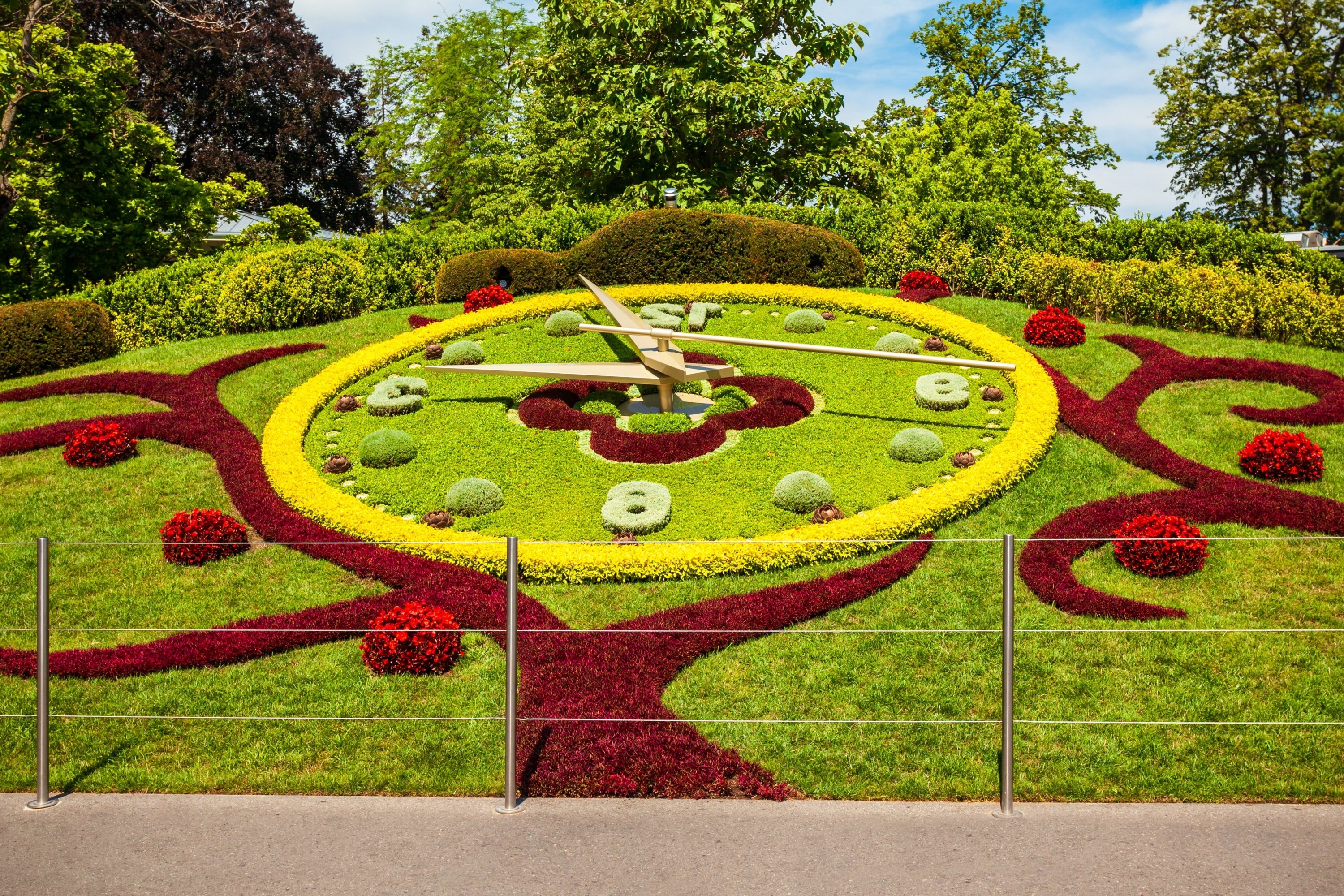
The most famous attraction here is the Flower Clock (L’Horloge Fleurie), a symbol of Geneva’s watchmaking heritage. Created in 1955 and powered by solar energy, it is redesigned each season with different flowers.
For those looking for a photo spot, it is located at the corner where the road to Mont Blanc Bridge meets Quai du Général-Guisan.
The Mont Blanc Bridge, also known as Pont du Mont-Blanc, is 250 meters long and open to both pedestrians and vehicles. While it has no particular historical significance, it is a great photo spot thanks to the flags on both sides.
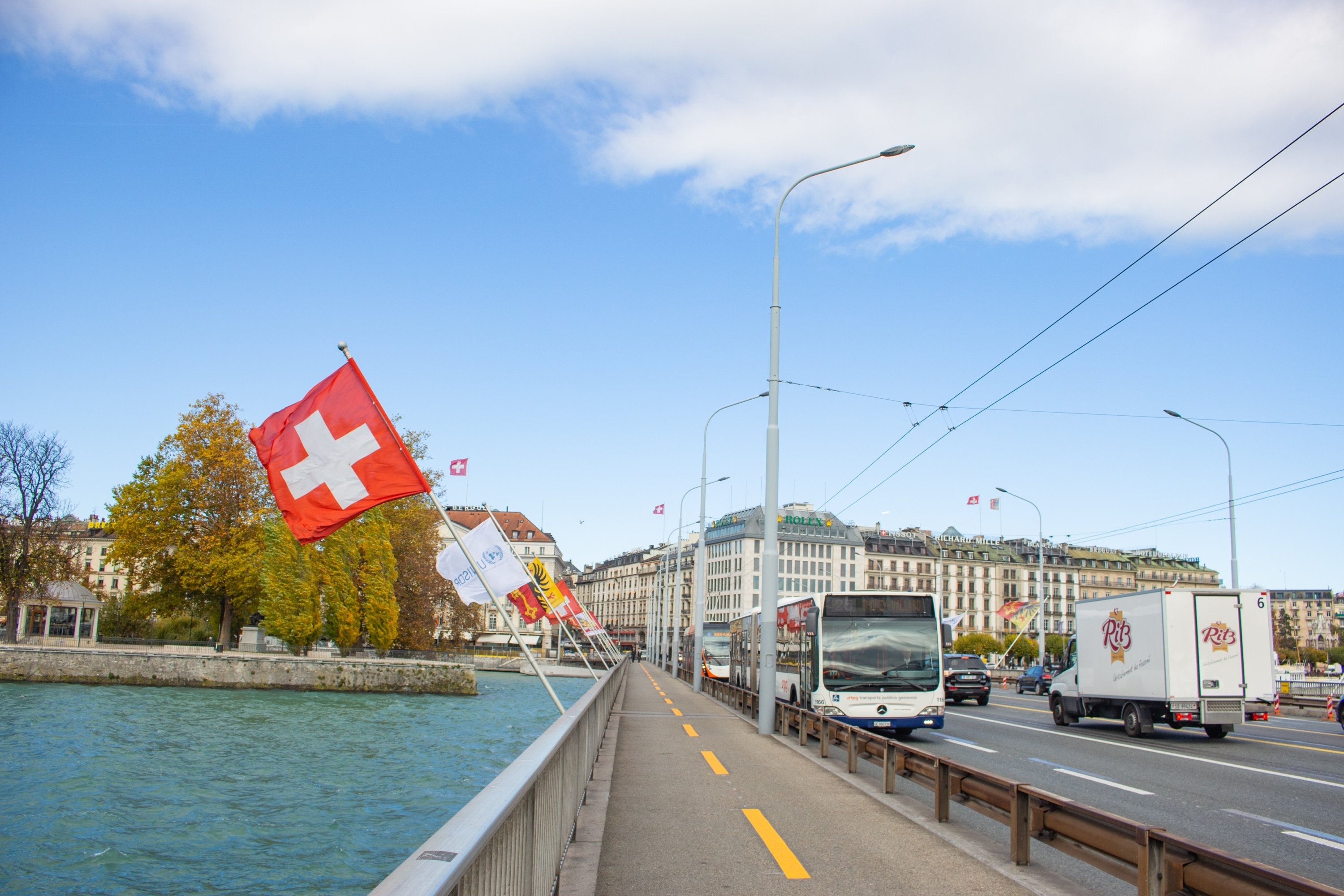
On a clear day, you can even see Mont Blanc from here. One end of the bridge leads to the luxurious Paquis district, where you can admire beautiful architecture.
Les Grottes is one of Geneva’s most interesting neighborhoods, known for its narrow streets and Parisian-style cafés.
What stands out most here is its unique architecture. The colorful, curved buildings known as “Schtroumpfs” resemble the works of Gaudí in Barcelona and the Hundertwasser Houses in Vienna.
Built between 1982 and 1984 by Berthoud, Frei and Hunziker, these buildings are also locally known as the “Smurfs’ houses.”
This lakeside promenade, lined with cafes and restaurants, stretches toward Bains des Pâquis. It offers stunning views of Lake Geneva and the Alps.
The area is also home to luxury hotels and Michelin-starred restaurants, making it one of the most elegant walking routes in the city.
Located on the Rhone River just west of Mont Blanc Bridge, this small island can be reached on foot via Bergues Bridge.
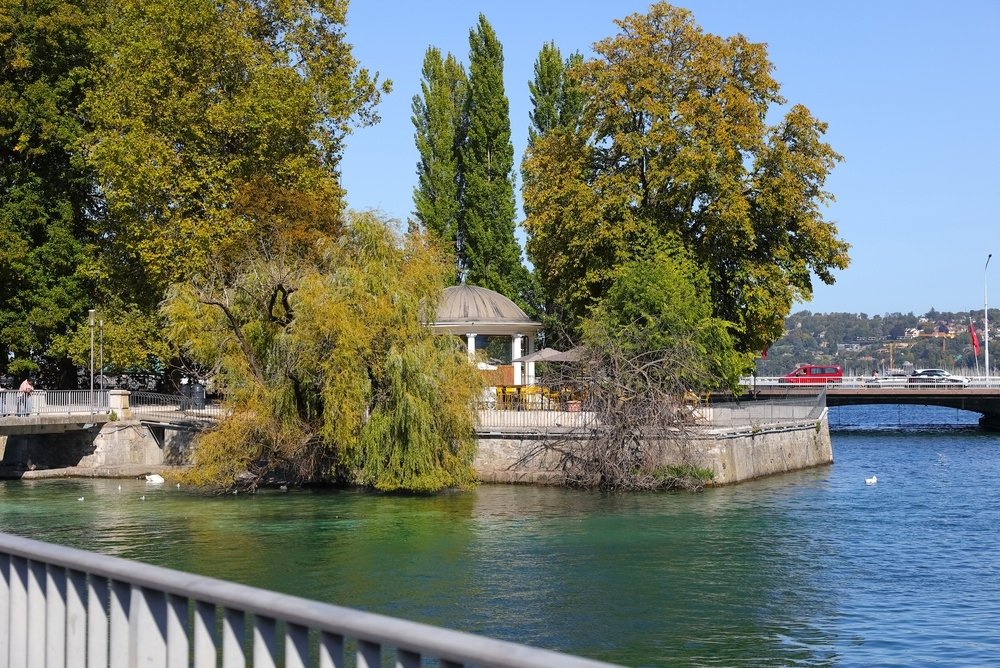
While walking along Quai du Mont Blanc, you will encounter the Brunswick Monument, a mausoleum dedicated to the Duke of Brunswick.
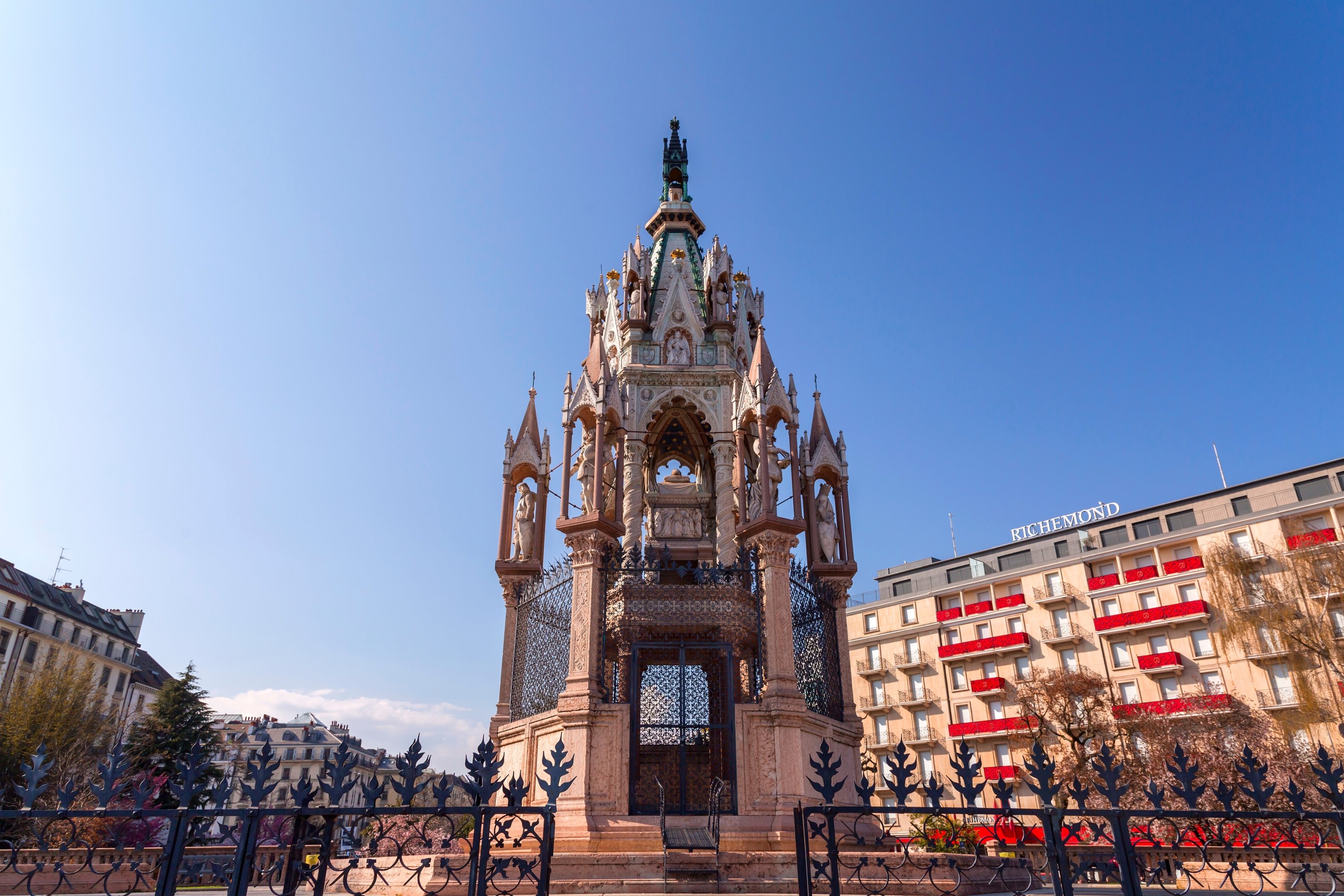
The Duke donated his entire fortune to Geneva in exchange for a grand tomb overlooking the Alps. Today, it remains one of the city’s most visited landmarks.
This is Geneva’s main luxury shopping street, connecting the Old Town to Lake Geneva. Here you will find world-famous brands and exceptional chocolate shops.
It is also one of the best places to enjoy Swiss chocolate and luxury shopping. At sunset, dining here with a view of the lake – perhaps with a traditional cheese fondue – is a memorable experience.
Located inside Ariana Park, the Palais des Nations (United Nations Palace) is considered the heart of global diplomacy.
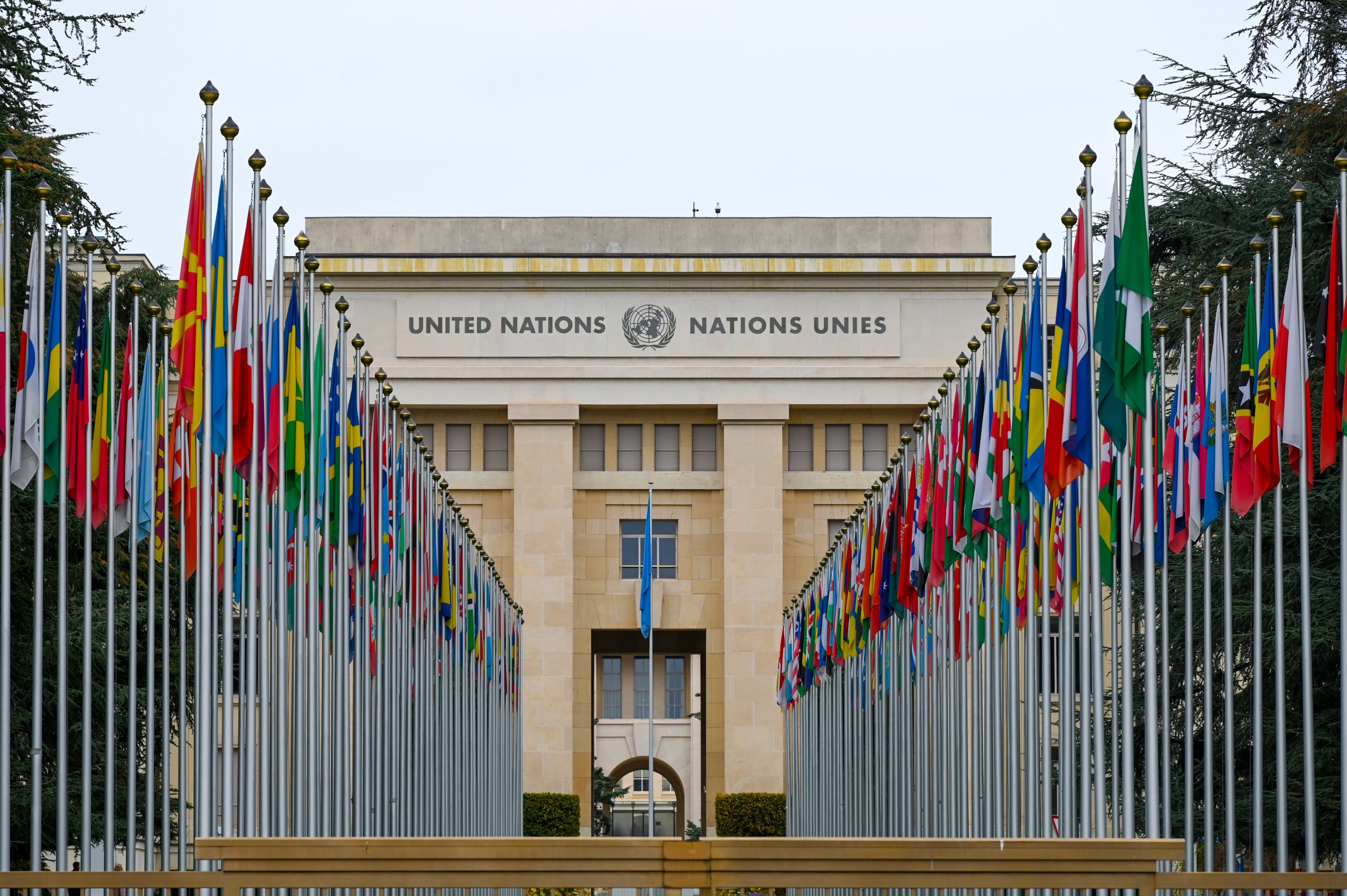
The park is also home to peacocks, which were allowed to roam freely as part of Geneva’s agreement when hosting the U.N.
Located directly opposite the U.N. building, this museum opened in 1988. It showcases documents, posters and information about the humanitarian work of the Red Cross and Red Crescent.
One of Geneva’s most iconic landmarks, St. Pierre Cathedral is a blend of Romanesque, Gothic and Neoclassical architecture.
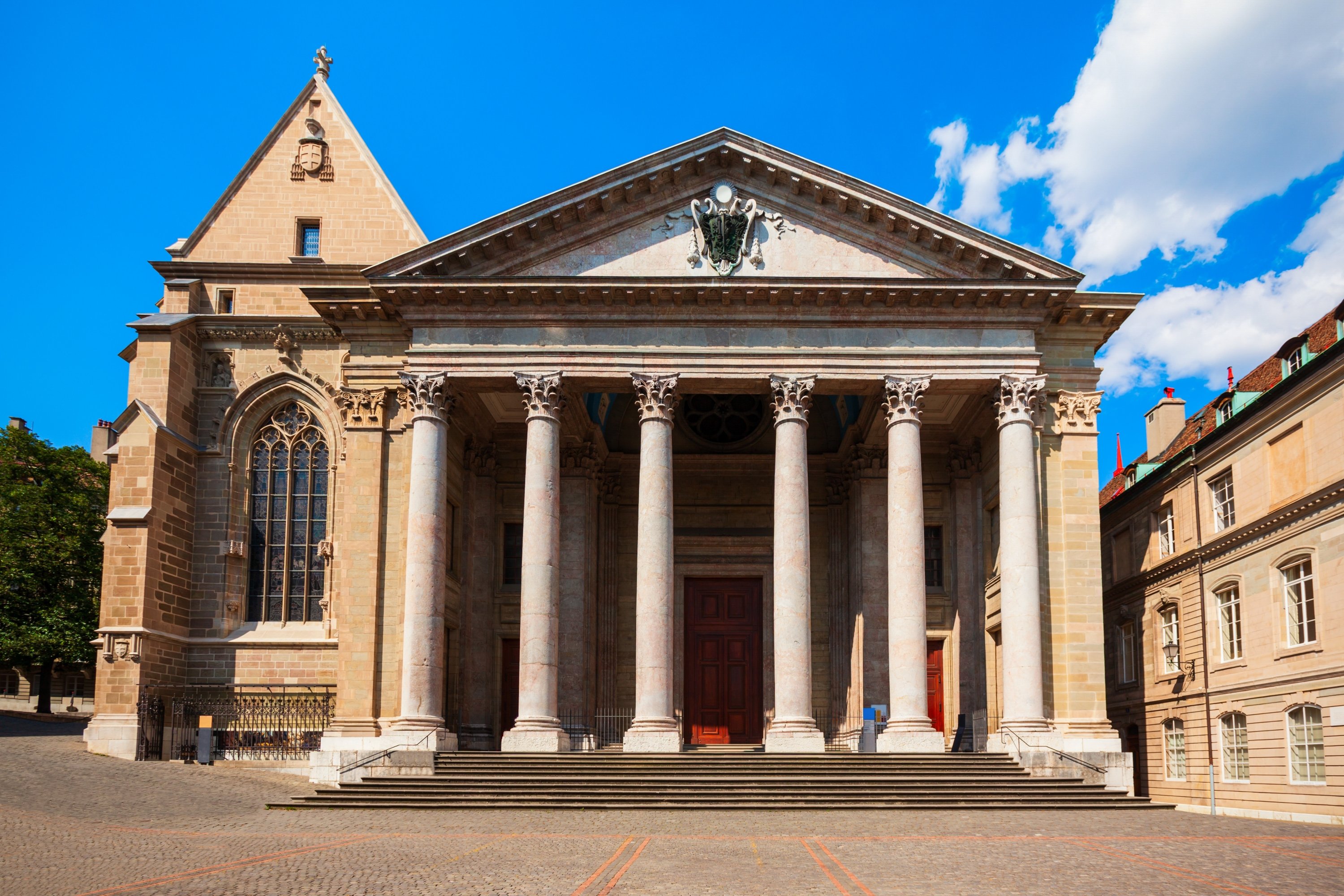
If you are willing to climb 157 steps, you will be rewarded with a stunning view from the north tower. The cathedral is also listed as part of the European Cultural Heritage.
Covering approximately 65,000 square meters, Parc des Bastions is a great place to rest and relax.
The park often hosts music festivals and is popular for yoga and sports. It also includes playgrounds, botanical areas and public events.
At the entrance near Place de Neuve, you will find large outdoor chessboards, a common feature in many European city parks.
The Reformation Wall, also known as the Monument International de la Reformation and located inside Parc des Bastions, is a 100-meter-long monument built in 1909. It features statues of key figures of the Protestant Reformation, including John Calvin, William Farel, Theodore Beza and John Knox.
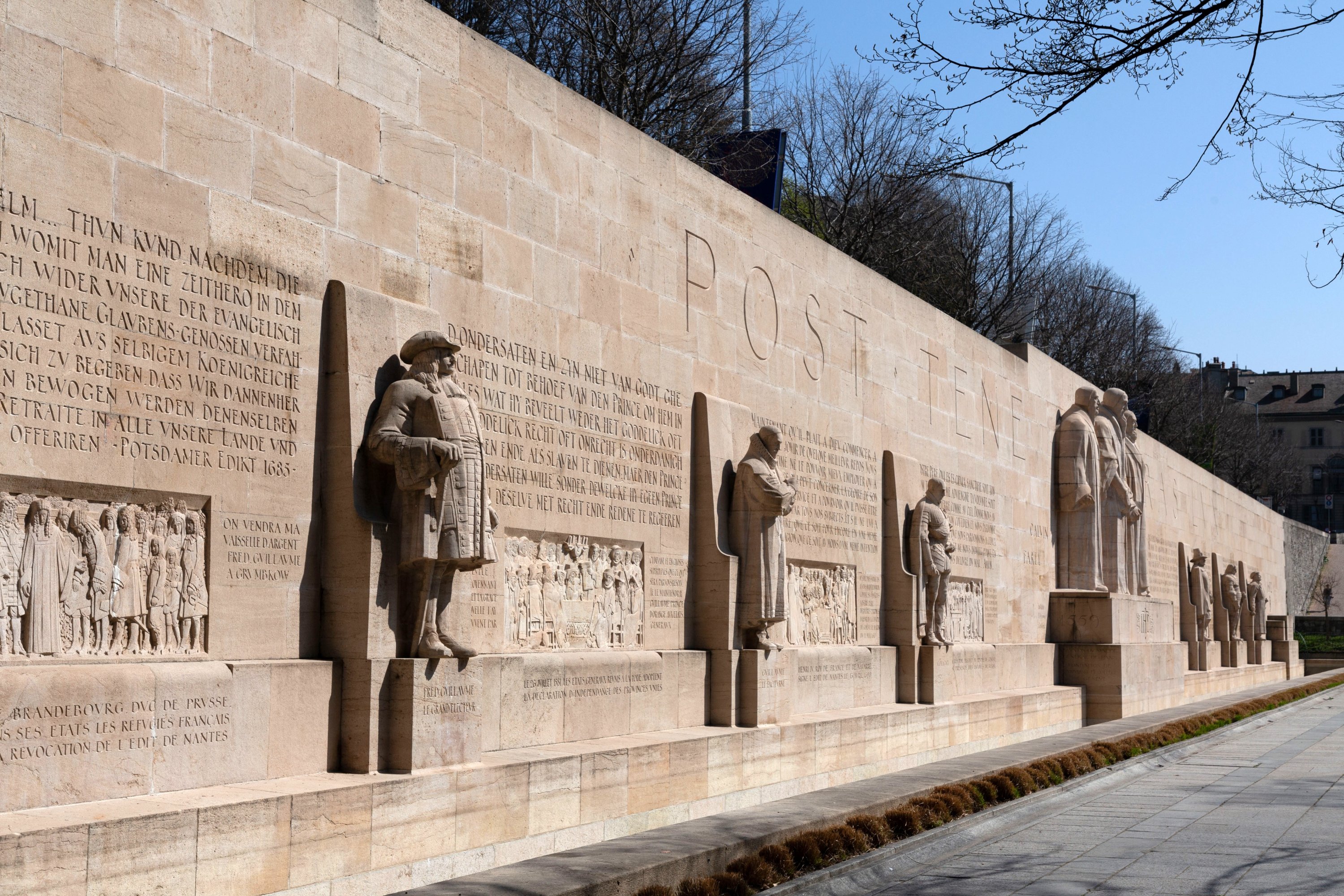
The motto “Post Tenebras Lux” (“Light After Darkness”) is engraved on the wall, symbolizing the philosophy of the movement.
Directly opposite the monument is the University of Geneva, founded by John Calvin and one of the oldest universities in the city.
Place de Neuve is one of Geneva’s most important squares, often overlooked by tourists due to its busy traffic.
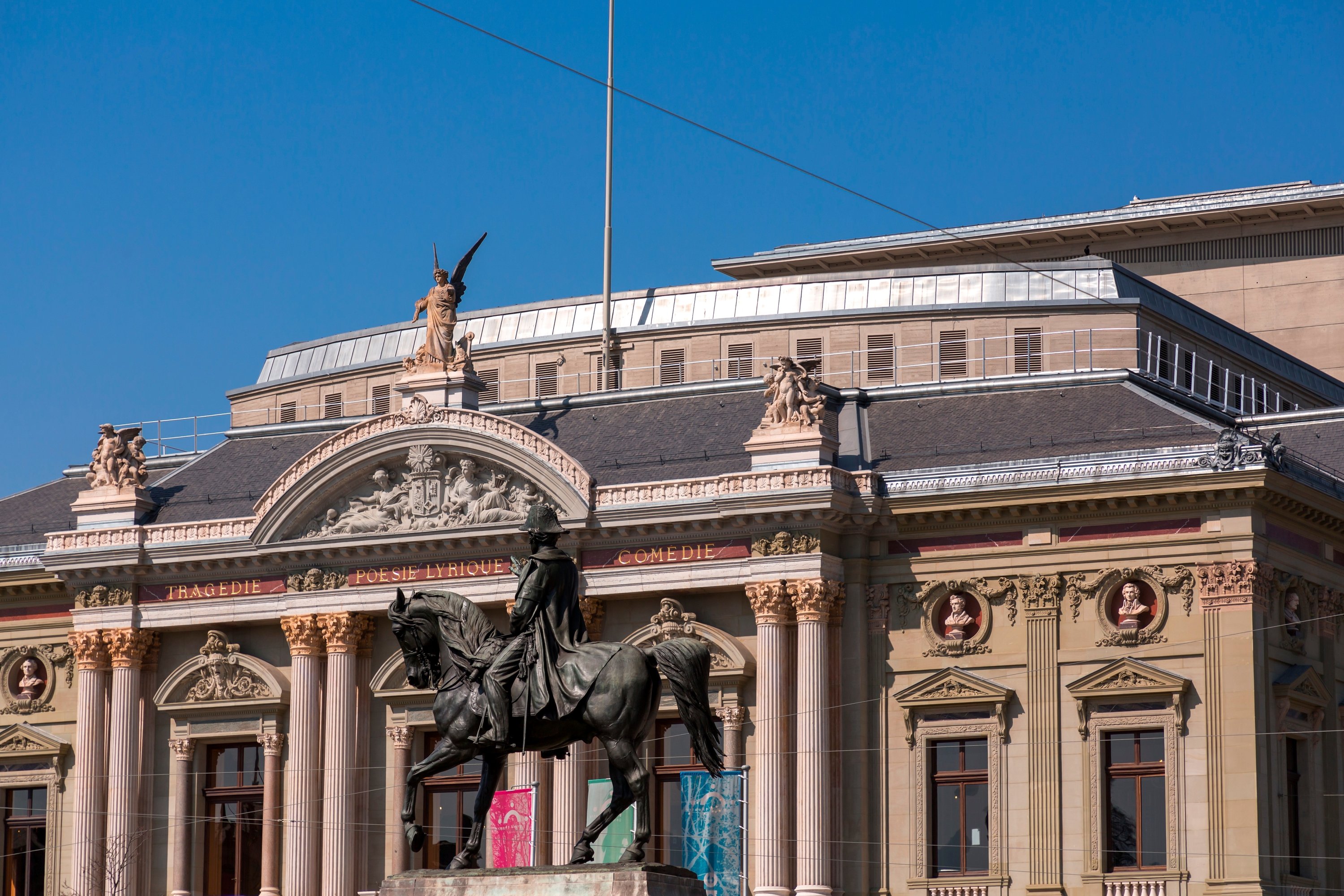
Surrounding the square are important cultural institutions such as the Geneva Conservatory of Music, Rath Museum, Grand Theatre and Victoria Hall.
At the center stands the equestrian statue of General Guillaume Henri Dufour, a key figure in Swiss history who was also the first general of the Swiss Confederation army and the creator of Switzerland’s first detailed topographic map.