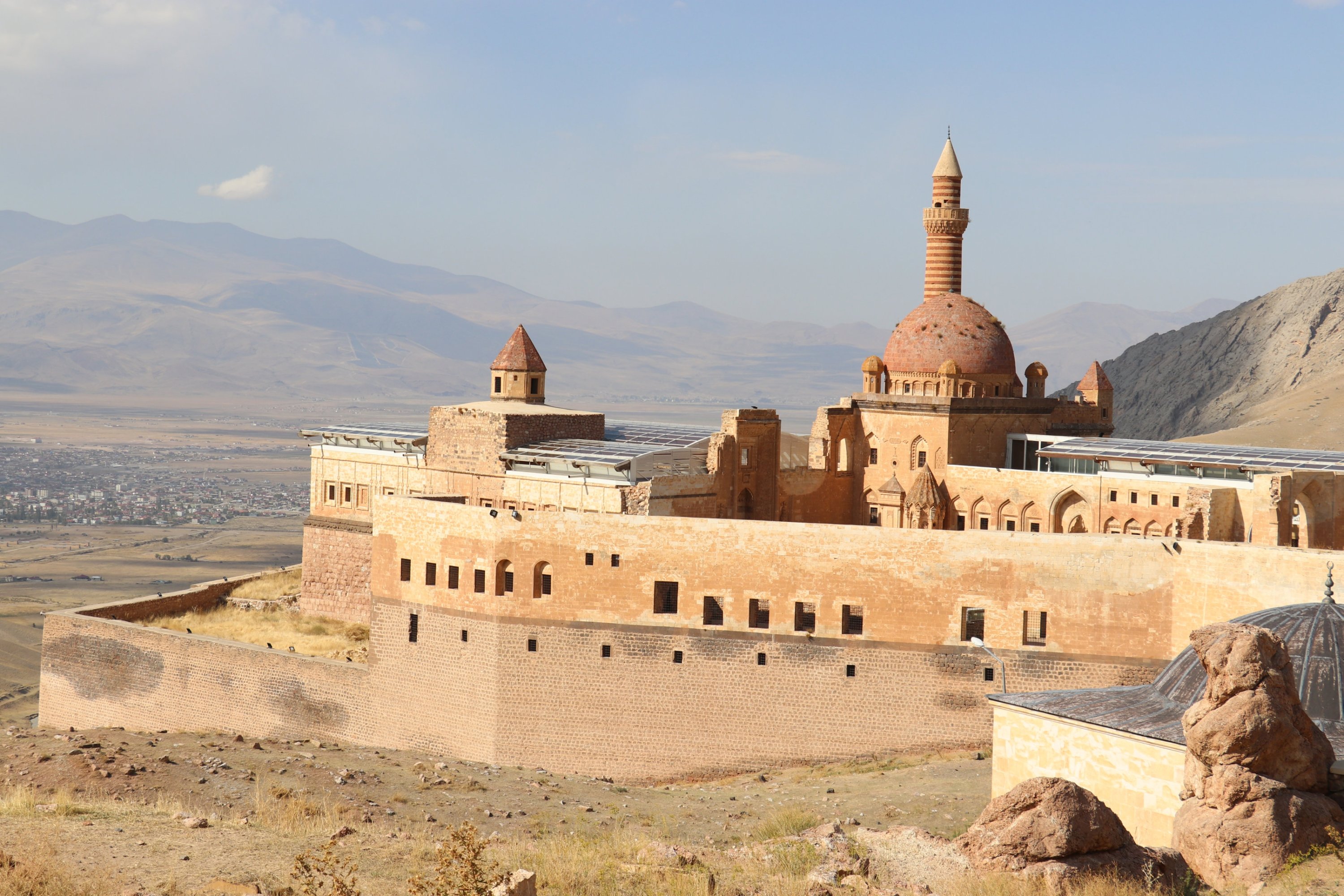
Ishak Pasha Palace, located in the Doğubayazıt district of Ağrı province in eastern Türkiye, was constructed during the Ottoman Tulip Era and is currently on UNESCO’s World Heritage Tentative List. It is now undergoing preparations to meet the criteria for full inclusion on the official World Heritage List. Central to this effort is the development of a formal "site management" system and a comprehensive "management plan."
Şehnaz Eraslan Alıcıgüzel, from the History Department of Ağrı Ibrahim Çeçen University’s Faculty of Science and Letters, is leading a project to draft the palace’s management plan. Along with two assistants, she is conducting this study under a Scientific Research Project within the university. Upon completion, the plan will be shared with relevant institutions.
Alıcıgüzel emphasized the necessity of meeting UNESCO’s specific requirements for heritage sites to transition from the tentative list to the official list. According to UNESCO’s criteria, cultural heritage sites must demonstrate authenticity and integrity and, importantly, possess a defined site management structure and management plan. These elements are critical for sustainable protection and coordinated governance by all stakeholders involved.
Although the Ishak Pasha Palace has been on the tentative list since 2000, it currently lacks a formal management plan and site management system. Since 2005, UNESCO has mandated that cultural heritage sites, especially those on the World Heritage List, must have these frameworks in place; without them, sites cannot be accepted.
The university’s project aims to create a draft management plan as a foundational step. For the plan to become official, a protocol must be signed among the Ministry of Culture and Tourism’s General Directorate of Cultural Heritage and Museums, local government bodies and other stakeholders to initiate the management plan and site management processes.
Currently, the team is in the early phases of the project, conducting field observations and holding discussions with relevant institutions. A SWOT analysis focusing on site preservation and sustainable tourism is planned, which will help shape the main outline of the management plan. Alıcıgüzel clarified that the plan itself is a project that establishes the framework for ongoing site protection.
She noted that UNESCO expects a clear mechanism detailing how a site will be preserved sustainably before granting World Heritage status. While there have been some criticisms of restoration work on İshak Paşa Palace, the structure still retains significant original features.
Alıcıgüzel highlighted the palace’s unique architectural value, as it combines elements of both Ottoman and Seljuk design and technical features. The palace also exhibits Baroque and Rococo influences in its decorative compositions, alongside distinctive Persian artistic traits. This eclectic architectural style aligns with the criteria UNESCO seeks in cultural heritage sites.
Without a proper management plan and site management, the palace’s sustainable protection risks being overlooked. Therefore, it is crucial that the ministry, provincial authorities, universities or municipalities – whichever is deemed most suitable – formalize cooperation through a protocol to initiate this process. This will increase the Ishak Paşa Palace’s chances of moving from the tentative to the official World Heritage List.