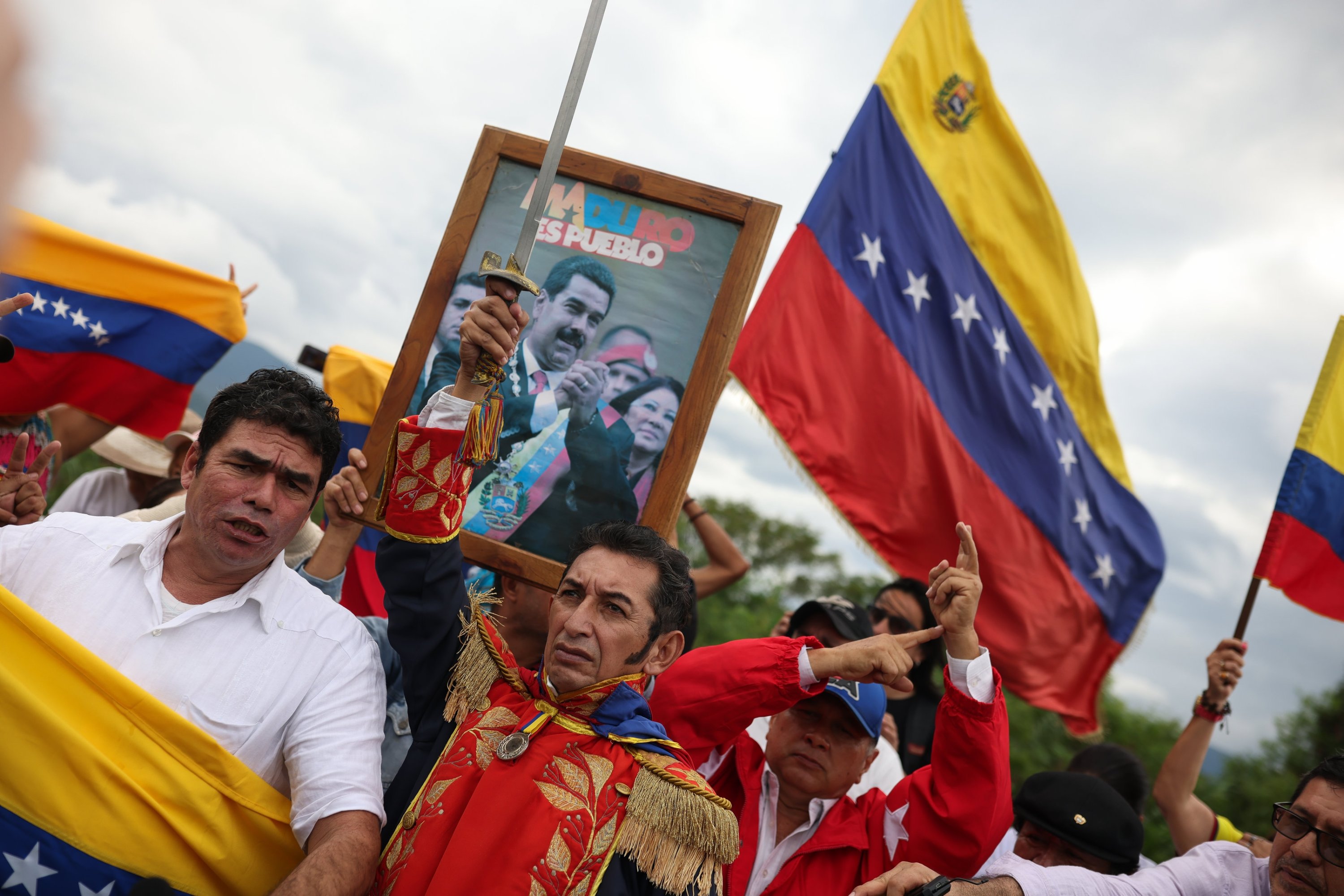
The slogan “Gringo, go home” in Latin America is not rhetorical excess; it is the distillation of two centuries of experience.
The U.S. has never regarded Latin America as a distant region. On the contrary, it has long treated it as its own backyard. This worldview even had an official doctrine: the Monroe Doctrine. On paper, it promised protection from European intervention. In reality, it conveyed a far simpler message: This hemisphere is mine.
At first, this claim was implicit. Over time, it became explicit and coercive. In the early 20th century, the U.S. intervened militarily in the name of “stability,” overthrew governments, and dictated constitutions. From Haiti to the Dominican Republic, from Nicaragua to Panama, the pattern repeated itself. Being democratically elected offered no immunity. Because the issue was never democracy. It was compliance.
With the Cold War, this logic hardened into doctrine. The guiding question was no longer: “Does this government represent its people?” but rather, “Does it serve our interests?”
This is why former President Salvador Allende was overthrown in Chile. This is why tens of thousands were disappeared in Argentina, Brazil and El Salvador. Even when Washington did not intervene directly, it was the invisible hand behind the coups. This is not conjecture or conspiracy. It is documented history, supported by declassified files and official admissions.
The years passed, and the methods evolved. Tanks were replaced by sanctions; soldiers by financial siege. Yet the logic remained intact. The decades-long embargo on Cuba is the clearest illustration. An economic strangulation lasting more than half a century was justified in the name of “democracy,” while its human cost was borne not by political elites but by ordinary people.
What unfolded in Venezuela represents the most unvarnished version of this pattern. Attempts against former President Hugo Chavez failed. President Nicolas Maduro, however, was abducted and subjected to ill-treatment alongside his wife. The country’s oil assets were seized.
But first, Venezuela was suffocated economically. Then the very collapse produced by that suffocation was presented as the rationale for further intervention. It is the logic of arson dressed up as firefighting.
All of this reveals a single, enduring truth. In Latin America, sovereignty has never been fully inviolable. The law is suspended when convenient. Elections are disregarded when inconvenient. Political legitimacy is granted only when it aligns with Washington.
The forcible removal of a head of state from within the borders of a sovereign country and his transfer elsewhere is not a legal procedure. It is a declaration of power. The fact that the indictment attempts to justify this act by citing Maduro’s possession of automatic weapons as a violation of U.S. law only underscores the absurdity. This is not about crime, evidence or legality. The real question is far simpler: Who claims the authority to suspend the law, and under what conditions?
The answer is clear. The one who decides is the sovereign.
Carl Schmitt’s famous dictum, “Sovereign is he who decides on the exception,” now echoes with renewed clarity. Carl Schmitt was the political theorist of the Nazi regime, yet a century later, his concept continues to find concrete expression.
Once again, the U.S. has asserted itself as the sovereign of the global order, discarding all talk of a “multipolar world” on the streets of Caracas.