The latest confrontation between the United States and Venezuela is not an isolated crisis but the newest chapter in a long and bloody history of U.S. interventionism in Latin America. From Guatemala in 1954 and Chile in 1973 to the Contras in Nicaragua and the invasions of Panama and Grenada, Washington has repeatedly used force, covert operations and proxy armies to reshape the region in accordance with its own strategic and corporate interests.
The current escalation in the Caribbean follows this familiar script, repackaged under the language of “counternarcotics” and “security,” but driven by the same underlying logic: establish dominance, enforce compliance and determine who governs. The events of the past three months reveal this pattern with striking clarity.
On Sept. 2, a U.S. naval asset struck a vessel off Venezuela’s coast, killing 11 people. When reports emerged that a second strike may have targeted survivors, the episode instantly entered the realm of potential war crimes. Yet, Washington defended the action as legally sound, invoking the kind of elastic interpretations of international law that have long accompanied U.S. power projection in the hemisphere.
What followed was a rapid militarization of the crisis. U.S. forces expanded surveillance flights, reinforced their presence across the Caribbean, and openly considered labeling Venezuelan entities as foreign terrorist organizations, a tool that historically has served as a gateway to regime-change operations. By late November, reports indicated that President Donald Trump had delivered a private ultimatum demanding the transfer of authority from Nicolás Maduro. Shortly afterward, the U.S. declared Venezuelan airspace effectively closed, disrupting civilian aviation and echoing the coercive tactics used during previous intervention cycles.
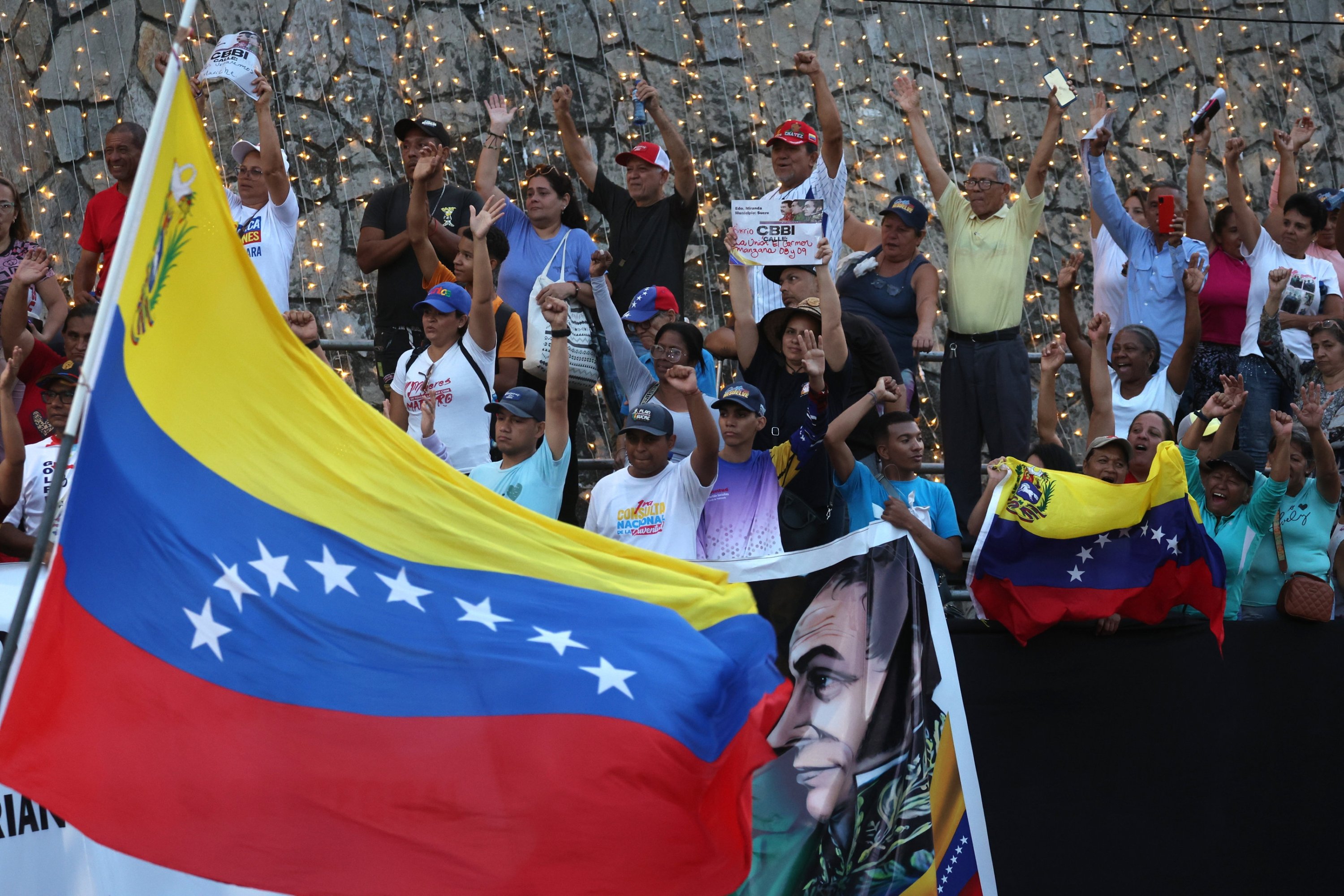
Caracas, confronting a vastly superior military power, reacted with the reflex of a government that believes it is facing an existential threat. Reserve forces and civilian militias were mobilized not out of bravado but out of recognition of the region’s past: Latin American leaders who failed to prepare for U.S. intervention often paid with their governments, their nations’ stability and sometimes their lives. Venezuela’s internal fragilities make the situation even more combustible, yet the logic of resistance is deeply rooted in a collective memory shaped by decades of external domination.
For the international community, the crisis exposes a broader truth. Energy markets may fluctuate and diplomatic alignments may change, but the heart of this confrontation is political: a powerful state once again treating Latin America as a backyard to be disciplined. The possibility that survivors of an attack were struck again underscores just how far Washington is willing to push the boundaries of lawful force when dealing with governments it seeks to delegitimize.
The U.S.-Venezuela standoff is therefore more than a regional dispute. It is a stark reminder that the imperial reflex in U.S. policy remains intact, that legal norms bend easily under the weight of geopolitical ambition, and that Latin America continues to bear the consequences of a history its northern neighbor has never fully reckoned with.