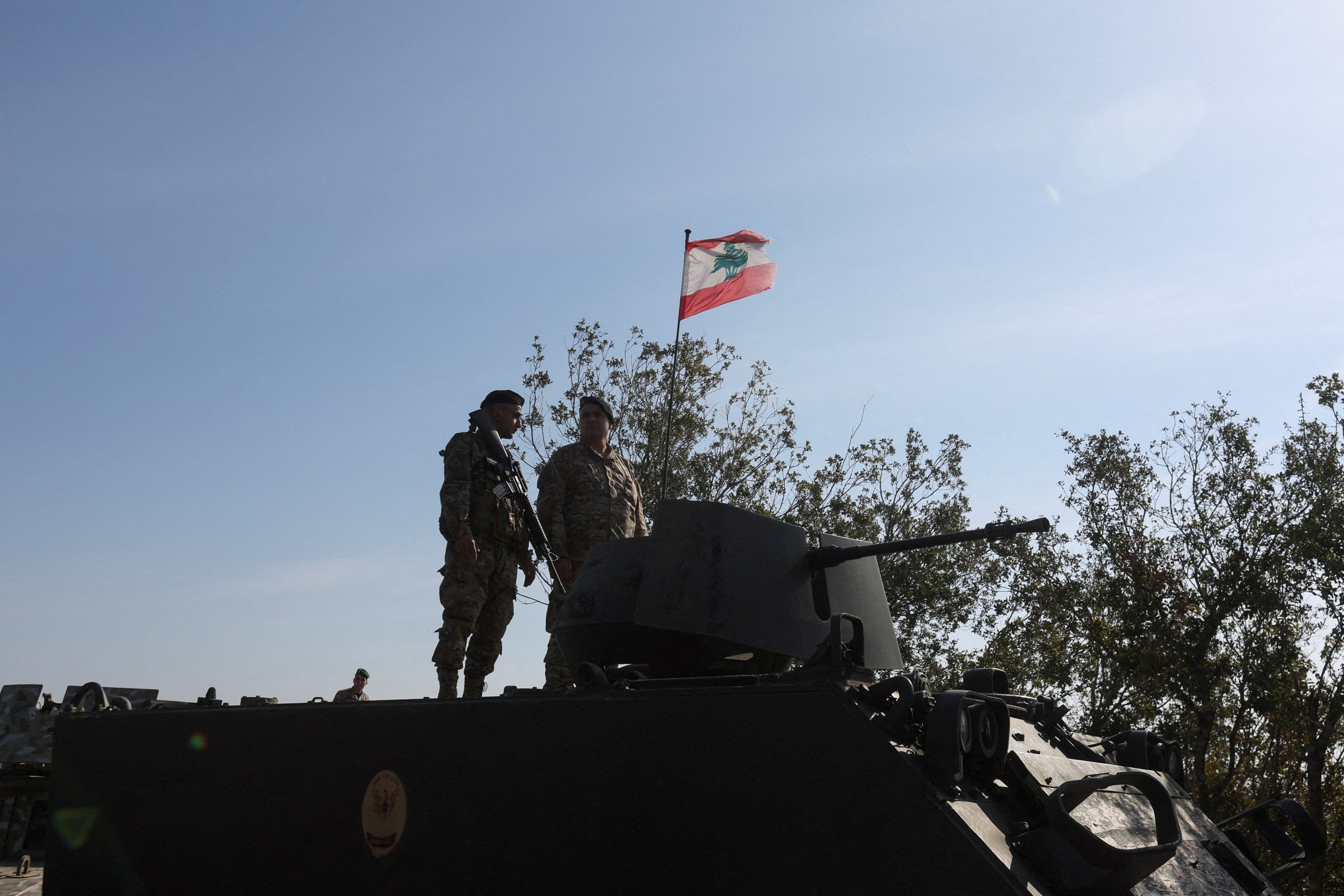
Lebanon is currently undergoing a period where the boundaries of state authority are being severely tested. For over a decade, the political establishment has framed the presence of Syrian refugees as the primary source of instability. However, this focus has obscured a more fundamental reality: the gradual erosion of the state’s own institutional capacity. By prioritizing the policing of a vulnerable population over the consolidation of national defense, the state has inadvertently left itself exposed to the much larger geopolitical shocks now reshaping the region.
The fundamental pillar of a state’s legitimacy is not coercion, but its exclusive authority to uphold the rule of law and protect its borders. In Lebanon, this sovereign capacity has eroded over the last 15 years, replaced by a politics of “exploiting the crisis” rather than managing it. As the ruling elite turns the refugee issue into an object of “securitization” to mask its own administrative failures, the country has been left defenseless against real, conventional threats.
To understand this tragedy, one must look beyond the symptoms and analyze the chain of negligence that stretches from 2011 to 2025.
Lebanon’s recent history is a textbook case of how a nation loses its immunity. The migration wave triggered by the Syrian civil war in 2011 was the first shock. Rather than establishing a legal framework, the state swept the issue under the rug with a narrative of “temporality.”
The real fracture, however, arrived in 2019. The “Oct. 17 Revolution” was a declaration of bankruptcy for the sectarian political system. While the public demanded accountability for corruption, the elite scrambled to preserve the status quo. This internal paralysis, combined with the economic collapse and the catastrophic Beirut Port explosion in August 2020, pushed Lebanon to the brink of state failure. The port explosion was not merely a tragedy but a kind of proof of institutional collapse; it demonstrated that the state was no longer capable of securing even its most strategic assets, leaving its citizens defenseless against the consequences of its own negligence.
This paralysis reached its peak with the presidential vacuum from November 2022 to January 2025. It was precisely during this institutional void that the Israeli attacks, beginning on Oct. 8, 2023, caught Lebanon completely exposed.
To cover up these structural failures, the Lebanese state has systematically framed the refugee issue as the primary “security threat.” This strategy, securitization, treats a manageable administrative issue as an existential danger to justify harsh measures.
The political elite has blamed Syrian refugees for everything from power cuts to economic collapse. This rhetoric, however, masks a dangerous reality: the state’s security apparatus has directed almost all its energy inward. By focusing on checkpoints, raids on camps, and policing vulnerable populations, security institutions have prioritized internal surveillance over reinforcing national defense capabilities.
Furthermore, the state viewed the refugee crisis primarily as a way to attract international financial support. However, this strategy failed to generate sufficient funds, even in the short term. By prioritizing potential aid over legal regulation, the rule of law was allowed to weaken. Ultimately, keeping a vast population legally excluded prevents the state from achieving true social stability.
While the state was busy fighting “imaginary” enemies in refugee tents, the real threat arrived from the south. The Israeli airstrikes that began in October 2023 shifted the crisis from a humanitarian drama to total devastation.
Although Israel claimed to target Hezbollah’s military capacity, civilian infrastructure was placed in the crosshairs. The economic cost is estimated in the billions, encompassing the destruction of power grids, water systems and health facilities. This destruction has generalized the suffering; while refugees remain the most vulnerable, the collapse of essential services has dragged the local population into a similar reality of deprivation.
The decapitation of Hezbollah’s command structure and the weakening of its operational capacity exposed the state’s vacuum. As the “resistance” strategy led by a non-state actor collapsed, it became evident that the Lebanese Army lacked the equipment and political will to fill the void. Israeli jets roam freely in Lebanese skies, yet security forces remain focused on inspecting residency papers. This is a tragic deviation in priorities.
The core of the refugee crisis is not just a lack of resources, but a lack of legal status. Lebanon, refusing to sign the 1951 Geneva Convention, defines refugees as “temporary guests.” This rhetoric of hospitality, while culturally significant, creates a framework of legal ambiguity that leaves millions without defined rights.
Today, over 83% of Syrian refugees lack legal residency. This is not an accident; it is a deliberate policy. By pushing refugees into the informal sector through exorbitant fees and impossible sponsorship conditions, the state turns them into a “ghost population.” They are vulnerable, easily exploitable, and can be deported at any moment.
Crucially, the fall of the Assad regime has eliminated the threat of state-sponsored persecution, thereby removing the primary security barrier to safe returns. Yet, the Lebanese state has failed to pivot towards a policy of organized repatriation or regularization. By maintaining this population in a continuous state of illegality despite the opening of safe return pathways, the administration reveals that its priority is to sustain the “crisis” status quo for political leverage rather than to implement a sustainable solution.
In this chaotic landscape, the election of General Joseph Aoun as President in January 2025 offers a narrow window of opportunity. While a military figure at the helm brings hope for stabilizing security institutions, structural rot cannot be fixed by a general's signature alone.
Lebanon’s future depends on redefining the concept of “security.” If security continues to be equated with policing unarmed refugees, the state will struggle to overcome its structural fragility. However, if security is redefined as protecting borders, establishing state authority across all territories, and upholding the rule of law, a way out is possible.
The international community must also pivot. Financing Lebanon merely as a “buffer zone” to keep refugees out of Europe is unsustainable. Aid must be tied to strict structural reforms, not just border control.
Ultimately, Lebanon must look beyond the “refugee crisis” and address the underlying “state crisis.” The destruction caused by the recent war proves that the old methods are no longer sustainable. Real security comes from a state that upholds the rule of law and focuses on national defense, rather than policing vulnerable groups. Unless these priorities change, Lebanon will remain too fragile to protect its own citizens from future instability.