The notorious al-Hol camp in northeastern Syria that once housed tens of thousands of women and children with alleged links to Daesh has been emptied after a government operation last month freed the area from the control of the YPG terrorist group, officials said Sunday.
Fadi al-Qassem, the Syrian Foreign Ministry representative for the al-Hol camp administration, said the final convoy left the camp Sunday morning.
Hundreds of residents have been transferred to the Akhtarin camp in Aleppo province in recent weeks and others have been repatriated to Iraq.
Officials have said the decision to empty the al-Hol camp was made because of its remote location in the desert, far from services and close to areas where the authorities do not have complete control of the territory.
The U.N. refugee agency said it assisted in the return of 191 Iraqi citizens from Syria's al-Hol camp to Iraq Thursday.
The Syrian Observatory for Human Rights, a U.K.-based war monitor, also reported that an unspecified number of residents "left the camp individually, without waiting for the organized convoys."
After the defeat of Daesh in 2019, around 73,000 people were living at al-Hol, most of them Syrian and Iraqi citizens, but also including thousands from other countries. The camp’s residents are mostly women, including wives or widows of Daesh members, and their children.
Since then, the number has declined, with some countries repatriating their citizens, leaving about 24,000 as of last month.
According to the latest camp data obtained by Reuters, dated Jan. 19 – a day before the government took control of the camp – its population was 6,639 families comprising 23,407 people, mostly Syrians and Iraqis, as well as 6,280 foreigners of more than 40 nationalities.
UNHCR, the U.N. refugee agency, said it had observed "a significant decrease in the number of residents in al-Hol camp in recent weeks," adding in a statement to Reuters that there were no confirmed figures on the remaining population.
"Over the weekend, the camp administration advised UNHCR not to enter the camp due to the unrest and anxiety in the camp," it added.
The camp’s residents were not technically prisoners and most had not been accused of crimes, but they had been held in de facto detention at the heavily guarded facility for years.
Last month, Syrian government forces captured the al-Hol camp in a weekslong offensive against the YPG terrorist group, which had been running the camp near the border with Iraq for a decade. A cease-fire deal has since ended the fighting.
During and after the fighting, many families are believed to have escaped from the camp.
A Syrian government security source said most people in the camp fled that day during a five-hour period when it was unguarded and that some had left with men who came to take their relatives to unknown destinations.
The security source and a source from a non-governmental organization working there said a section of the camp that housed its most dangerous residents, known as the annex, was empty.
The source added that the escapees had spread throughout Syria and that security authorities, working in cooperation with international partners, had established a unit to "follow up on the matter and pursue those who are wanted."
The fate of the similar but smaller Roj camp in northeastern Syria, which is still under YPG control, remains unclear. Most of the residents of that camp are foreigners, whose countries have largely refused to take them back.
Syrian authorities turned back a group of 34 Australian women and children on Feb. 16 after they left the Roj camp, headed toward Damascus to board a flight back to Australia. Australian authorities later said they would not repatriate the families.
A Syrian government official who spoke on condition of anonymity because he was not authorized to comment publicly said Sunday that the issue stemmed from "the lack of prior coordination with the Syrian government" by the YPG and families of the would-be returnees before attempting to send them to Damascus.
The official added that "whether they will be allowed (to return) will depend on the Australian government."
On the other hand, Iraqi deputy prime minister and foreign minister, Fuad Hussein, and the U.S. envoy Thomas Barrack met Monday to discuss coordination and joint cooperation on combating terrorism.
Barrack expressed its appreciation for the important step taken by the Iraqi government in transferring Daesh members from detention centers abroad to Iraqi prisons, as part of strengthening Iraq's sovereignty and fulfilling its legal responsibilities.
The minister affirmed that Iraq continues to communicate with several countries to transfer their citizens involved in terrorism cases to their countries of origin.
He also expressed appreciation for the Turkish government's agreement to receive Turkish citizens among these individuals.
The agreement between the YPG and the Syrian Government was also discussed, with both sides affirming their support for this agreement and the need to adhere to its implementation, given its direct impact on strengthening security and stability in Syria.
Türkiye considers the Daesh terrorist group one of the biggest threats to the country’s security and peace, as the group faces nationwide raids, and was one of the first countries to declare it a terrorist group in 2013.
The National Intelligence Organization (MIT) thwarted the terrorist group's efforts for recruitment, obtaining funds and logistics support after its latest operation in the aftermath of a church shooting in Istanbul in January 2024.
Terrorists from Daesh and other groups, such as the PKK and its Syrian wing, the YPG, rely on a network of members and supporters in Türkiye.
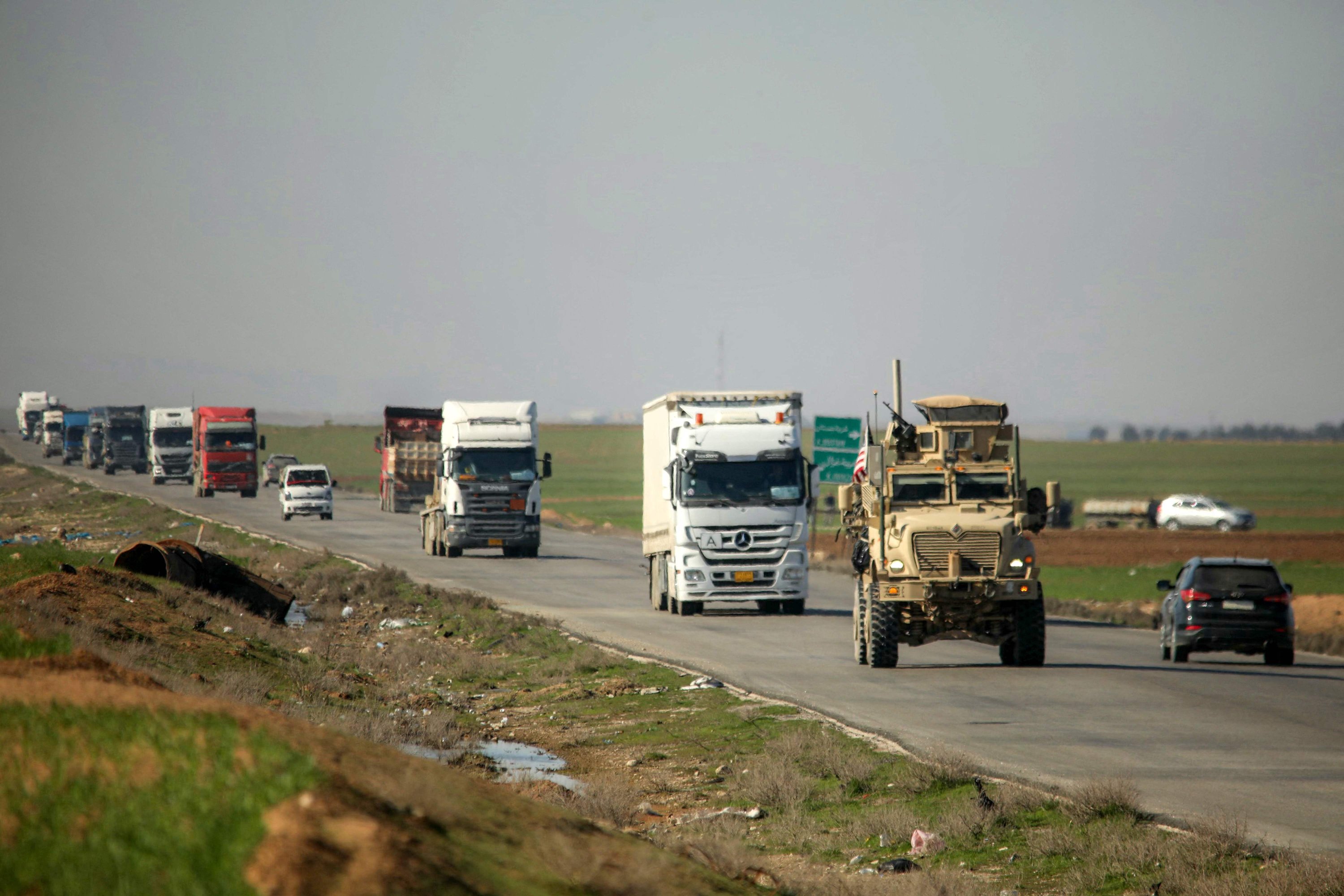
The United States began withdrawing Monday from a major military base in northeastern Syria that remains under the control of YPG, according to a YPG official, who spoke on condition of anonymity.
According to an AFP team, a convoy of dozens of trucks carrying armored vehicles and prefabricated structures was seen traveling along a road linking the Qasrak base in Hassakeh province to the Iraqi border.
The withdrawal follows the departure of American forces from two other bases in recent weeks, al-Tanf in southeastern Syria and Shadadi in the northeast, signaling a continued drawdown of the U.S. military footprint in the country.
Moreover, some U.S. media reports recently noted that the United States plans to withdraw all of its roughly 1,000 troops from Syria within the next two months.
Washington will end its presence in the country after the Syrian government extended its control over the country and the U.S.-backed YPG pledged to integrate into the state, according to reports.
Television network CBS also reported on the plan, citing unnamed U.S. officials.
The U.S. has drawn close to Syria's new authorities since the fall of Bashar Assad in late 2024 and has transferred thousands of Daesh fighters from prisons to secure facilities in Iraq.