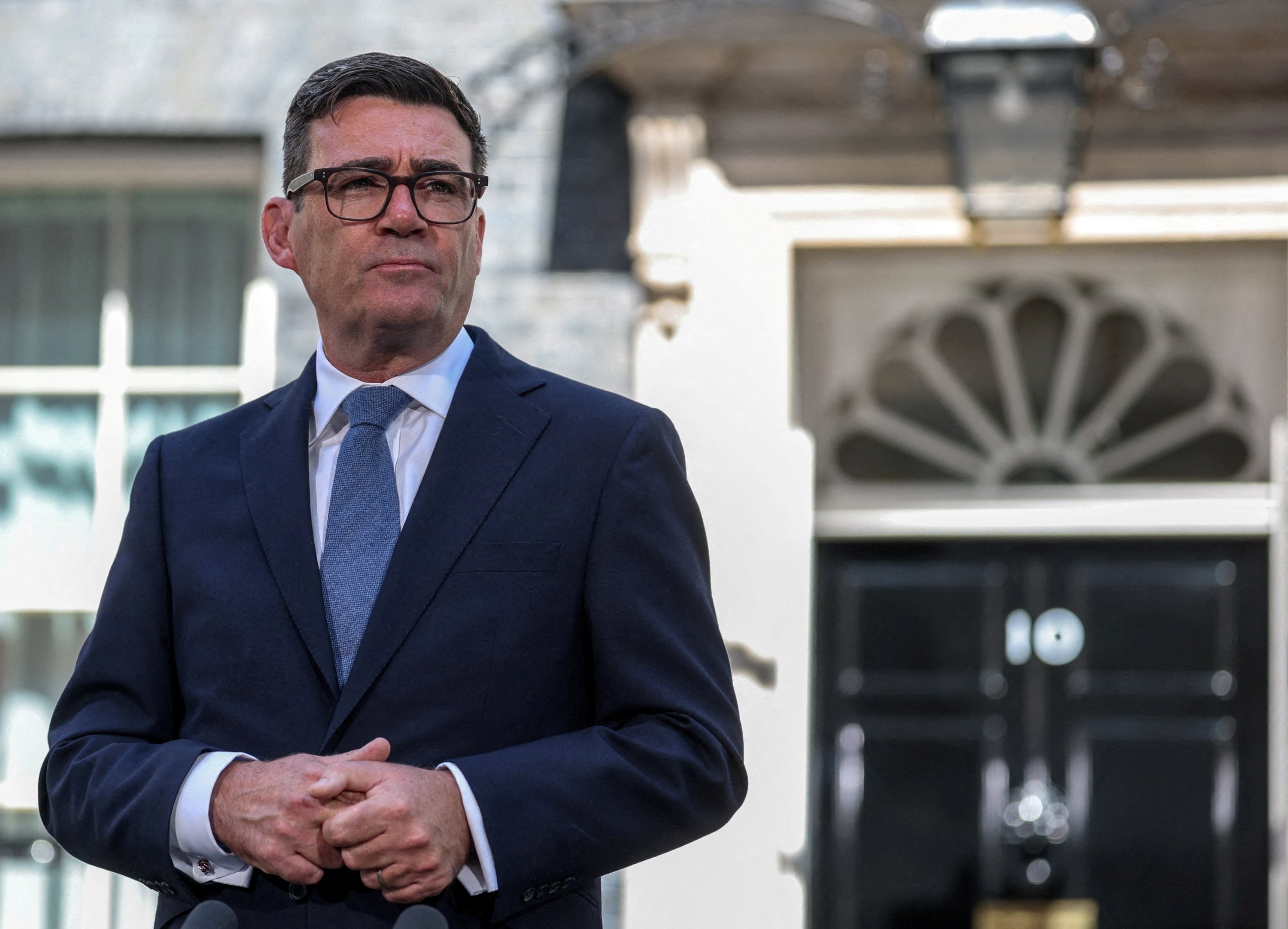
The “King of the North” is expanding his “kingdom” to other domains of the United Kingdom, but what can be expected from Andy Burnham, the seventh prime minister of the country in a decade, in international relations? Burnham has mainly focused on domestic issues, particularly on the economic side, since taking office on July 20, but soon he will have more on his plate in foreign affairs. Among these responsibilities are relations with Türkiye, which somewhat thrived under Keir Starmer. Experts say this momentum may very well continue under Burnham.
Professor Ozan Örmeci, a political scientist and general coordinator of the International Political Academy (UPA), points to Downing Street's pragmatic approach to relations and believes this will carry over into the new era under Burnham, “at a time where transactionalism dominates international relations.”
“Türkiye too favors a relationship based on mutual interests and benefits, though this was not always the case in recent decades,” Örmeci told Daily Sabah. “In this context, Türkiye-U.K. relations will start out the new era strongly,” he underlined.
Relations between the two countries – which inherited the legacies of two great empires – have always been close, even when they were on opposing sides of conflicts such as World War I. Throughout the rest of the 20th century, relations seldom deteriorated, and in recent years, a new momentum has emerged, especially in terms of the economy.
“A Burnham government is unlikely to bring about a fundamental shift in U.K.-Türkiye relations,” said Hacı Mehmet Boyraz, vice chair of the Department of Political Science and International Relations at Kahramanmaraş Sütçü İmam University.
“Bilateral ties have remained stable and constructive in recent years, regardless of changes in government, reflecting a relationship that is increasingly driven by shared strategic and economic interests rather than partisan politics. While a Labour government may differ from its Conservative predecessors on certain foreign policy issues, continuity is likely to outweigh change in its approach toward Türkiye,” Boyraz told Daily Sabah.
Under Keir Starmer, relations remained close and strategic, particularly in defense, security, trade and regional diplomacy. This was especially evident in light of the ongoing Russia-Ukraine conflict and growing tensions in the Middle East, as both countries are important NATO allies. Without a major shift on Burnham's part, this trend may very well continue.
The highlights of the Starmer era were efforts to upgrade the post-Brexit free trade agreement (FTA) between the two countries and the signing of the Strategic Partnership Document last April. There was also the deal to acquire Eurofighter Typhoon jets. Last year, the two countries signed a multibillion-dollar agreement for the acquisition of the jets – “a new symbol of the strategic relationship between us as two close allies,” as President Recep Tayyip Erdoğan said following the signing of the deal during a visit by Starmer to Ankara in 2025.
As Burnham aims for several major economic changes in his country, especially through “re-industrialization” plans, extra funds will come in handy. “Eurofighter sales can do this, and this will be a positive development for the U.K. economy,” Örmeci highlighted.
Boyraz says defense cooperation is an area with “considerable untapped potential.”
“Although the possible sale of Eurofighter Typhoon aircraft has attracted significant attention, bilateral defense relations should not be viewed solely through the prism of a single procurement project. The United Kingdom possesses one of Europe's most advanced defense-industrial bases, while Türkiye has emerged as one of the fastest-growing defense producers in recent years through substantial investments in indigenous capabilities. These complementary strengths create opportunities for a broader strategic partnership based on technology transfer, joint production, research and development, and cooperation in next-generation defense technologies," Boyraz said. "Such cooperation would not only generate mutual economic benefits but also contribute to NATO's long-term defense capabilities. For this reason, the momentum established under the Starmer government is likely to continue under Burnham, and there is even scope for further deepening bilateral defense-industrial cooperation.”
“Burnham showed particular success in the local elections, working a small-scale miracle in Manchester. He turned Manchester into the fastest-growing city not just in England, but in the entire United Kingdom. But of course, this took time; he didn't achieve it in just a year or two. He has reasonable proposals to revitalize the economy, but these are mostly tailored to domestic politics. That is to say, I don't think he has a particularly visionary project regarding relations with Türkiye or Britain's role in the world. He is more likely to maintain existing policies,” Örmeci stated.
He underlined that the government’s main focus would naturally be the economy. “In this context, they may seek closer relations with the European Union, try to align with the Trump administration in the U.S. – perhaps without angering Trump – and revive Chinese investments. In fact, Chinese investment was at the heart of the Conservative Party's economic success during the David Cameron era, and he may try to bring that back to life,” he said.
In this context, the modernization of the FTA is expected to remain the most important item on the bilateral agenda, according to Boyraz.
“Although the existing agreement has provided a solid foundation for bilateral trade, it no longer reflects the evolving nature of the two economies. Expanding its scope to include services, digital trade, investment and other high-value sectors would create significant economic opportunities for both countries. More importantly, the post-Brexit environment has encouraged the United Kingdom to pursue a more pragmatic and interest-driven external economic policy. Freed from the constraints of the EU's common commercial policy, London has sought to strengthen partnerships with countries that offer strategic and economic value. In this regard, Türkiye occupies a unique position due to its large market, dynamic economy, strategic geography, and growing regional influence. Moreover, unlike many of the U.K.'s other international partnerships, relations with Türkiye are characterized by relatively few structural disputes, providing a favorable environment for further economic integration,” Boyraz emphasized.
Türkiye’s bilateral trade volume with the United Kingdom increased from $18.9 billion in 2023 to $24 billion in 2025, according to official figures. Services trade, meanwhile, reached approximately $8 billion. Trade Minister Ömer Bolat noted at a recent meeting with outgoing U.K. Ambassador Jill Morris that the U.K.’s direct investment in Türkiye rose to $15.2 billion from $9.5 billion in the same period.
“At the political level, a Burnham government may adopt a somewhat different tone from previous Conservative administrations, particularly on issues such as human rights and the Middle East. However, these differences are unlikely to redefine the overall trajectory of U.K.-Türkiye relations. The structural foundations of the relationship – economic interdependence, NATO membership, defense cooperation, and shared geopolitical interests – remain sufficiently strong to sustain a pragmatic and strategically oriented partnership. Rather than marking a new departure, a Burnham premiership would most likely reinforce the existing trajectory of bilateral relations while seeking to capitalize on the opportunities created by the post-Brexit environment,” Boyraz said.
"We can argue that the United Kingdom has served as Türkiye's most strategic Western partner, helping maintain Ankara's Western anchor at times when its relations with the United States and the European Union have faced difficulties,” Örmeci notes, offering an in-depth look into the history of relations. “This has been the case at times even during the Cold War,” he underlined.
Örmeci points out that Turkish-U.K. friendship can best be exemplified by the era of Turgut Özal and Margaret Thatcher, two prime ministers who shared similar economic views. “It is safe to say that although it has not been the primary partner in terms of economy, politics, and security, the U.K. has always viewed Türkiye as a strategically important country and a practical ally, especially in times of crisis,” Örmeci said.
Such a crisis may unfold between Burnham and U.S. President Trump. Although Trump was more than relieved to see Starmer leave, Burnham appears more cautious in his approach to the United States. Türkiye similarly had its share of problems with the United States, though this appears to be changing in Trump’s second term, as was evident during the U.S. president’s recent visit to Ankara for the NATO summit.
Örmeci also highlights the strategic framework agreement signed between the two countries, adding that although its contents are not fully public, it is a clear indication that both nations are willing to preserve their alliance over the short and long term.
As two strong diplomatic actors with much to gain or lose in today’s complex foreign policy landscape– where diplomacy is critical amid lingering conflicts – Türkiye and the U.K. pursue different approaches to foreign affairs.
“Türkiye and the United Kingdom share common interests in several areas of foreign policy, yet their approaches diverge significantly when it comes to the Middle East, particularly the war in Gaza. While both governments officially support a two-state solution, have repeatedly called for humanitarian assistance and an end to the fighting, and recognize that prolonged instability threatens regional security, their policies differ both normatively and strategically. Türkiye has consistently defended the Palestinian cause, emphasizing international law, humanitarian principles, and the establishment of an independent Palestinian state. The United Kingdom, despite adopting a more critical tone toward Israel in recent months and announcing its intention to recognize the State of Palestine, has continued to preserve its long-standing strategic and security partnership with Israel,” Boyraz emphasized.
“The two countries also differ fundamentally in their approach to Hamas, with the United Kingdom designating Hamas as a terrorist organization, while Türkiye regards it primarily as a political actor within the broader Palestinian question. Consequently, many observers argue that British policy reflects a gap between its normative discourse and strategic practice. Moreover, Britain's historical legacy, particularly the 1917 Balfour Declaration, continues to shape debates surrounding its role in the conflict,” he added.
Still, Boyraz believes that the new government will not fundamentally alter the U.K.’s Middle East policy. “Britain's strategic partnership with Israel and its broader regional priorities are driven primarily by long-term geopolitical interests, institutional continuity, and alliance commitments rather than by the preferences of a single political leader. Therefore, continuity is likely to outweigh change. Nevertheless, compared with previous Conservative governments, a Burnham administration may adopt a more critical discourse toward Israel and place greater emphasis on humanitarian assistance to Palestinians, accountability under international law, and support for Palestinian statehood. Burnham has already apologized for Labour’s initial response to the Gaza war, called for increased pressure on Israel through sanctions and restrictions targeting illegal settlements, and argued that potential war crimes should be investigated by international courts. These positions suggest that the tone of British policy could become more balanced. However, they are unlikely to translate into a fundamental reorientation of the U.K.'s strategic posture toward Israel,” he noted.
On the other hand, the two countries are more aligned regarding the Russia-Ukraine conflict. “Both countries reject Russia's annexation of Crimea, support Ukraine's sovereignty and territorial integrity, and oppose the use of force to alter internationally recognized borders. They also view NATO as the cornerstone of European security and share a common interest in preserving stability in the Black Sea region. The principal difference lies in the policy instruments they employ. The United Kingdom has pursued a strategy centered on military assistance, sanctions, and deterrence, whereas Türkiye has sought to balance its support for Ukraine with continued dialogue with Russia, refraining from joining Western sanctions while positioning itself as a mediator through diplomatic initiatives such as the Black Sea Grain Initiative. In this respect, the two countries largely share strategic objectives but differ in the methods they employ to achieve them,” Boyraz stated.
For Örmeci, the U.K. is inclined to view relations with Türkiye more from the perspective of regional power and security, especially in the post-Brexit period. “Türkiye became a critical country in terms of the UK’s growing conflict with Russia, similar to the Great Game,” Örmeci says. The 19th-century rivalry between the two powers was also reflected in Anglo-Turkish relations, particularly through British involvement in the Crimean War, where it joined an alliance with the Ottoman Empire against Russia.
“The United Kingdom will likely continue its relations with Türkiye within the context of economy and security. Burnham will be preoccupied with the economy and Labour’s performance in the next election anyway. Türkiye, on the other hand, has a growing strategic importance, as it demonstrated at the NATO summit, especially regarding the U.S.-Iran tension and the Russia-Ukraine conflict,” Örmeci added.