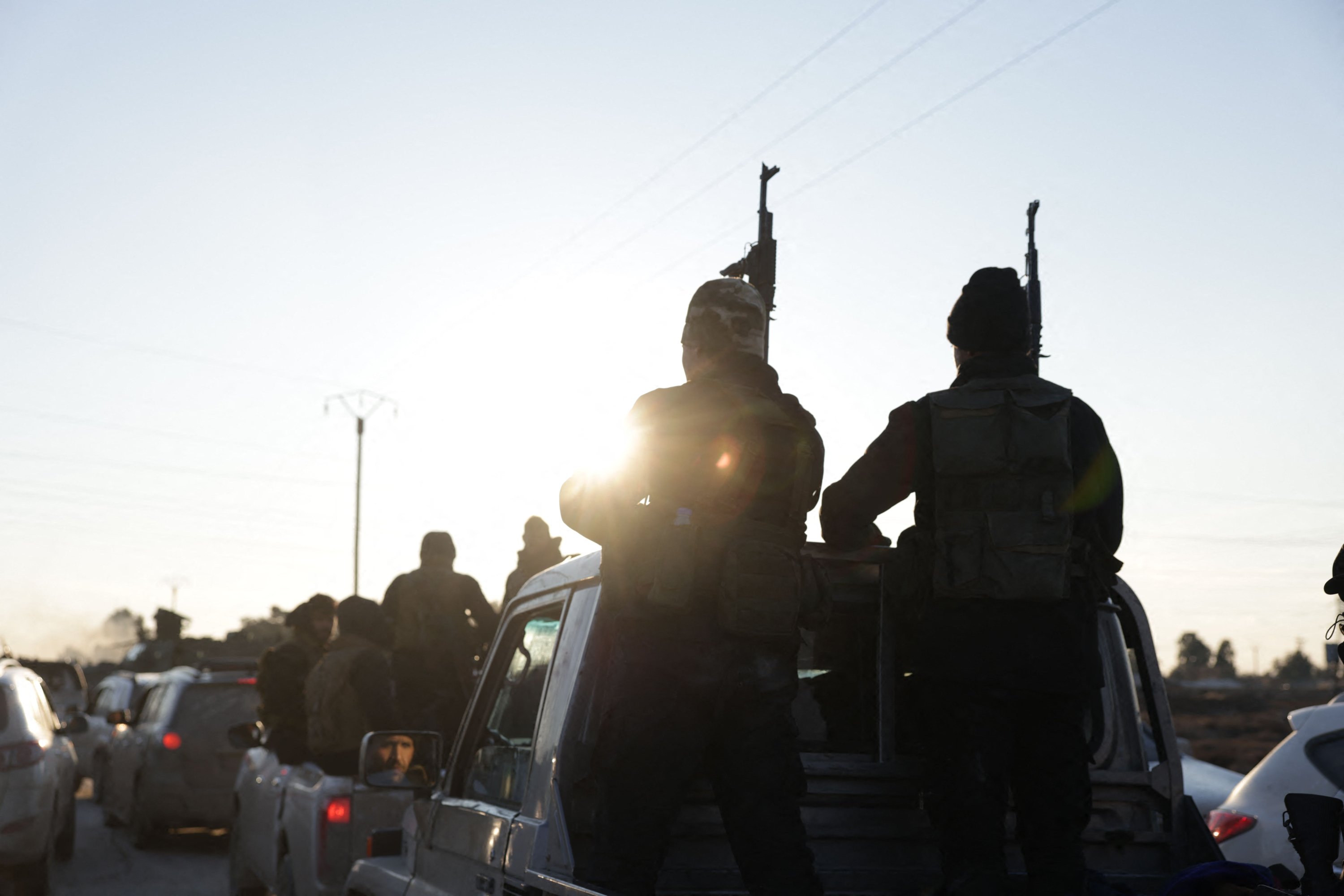
The YPG terrorist group only agreed to the current arrangement after rapidly losing control of a wide range of territory, an expert said, noting that during the March 10 talks, the group was at the peak of its power and enjoyed broader support among Western countries than the al-Sharaa administration.
“The most fundamental difference between the March 10 memorandum and the new agreement lies in the YPG’s current position. At the time the March 10 memorandum was signed, the YPG controlled more than a quarter of Syrian territory. The areas under its control were not only extensive in size but also of significant economic and strategic value,” Hamza Haşıl, a foreign policy analyst with Middle East and Africa expertise and researcher in Middle Eastern Studies Center (ORSAM), told Daily Sabah.
On Jan. 18, the Syrian government signed a new 14-article cease-fire and integration deal with the U.S.-backed YPG, which is considered the Syrian branch of the PKK terrorist group. Since the March 10 agreement collapsed, the new agreement also stipulated that the government forces will take the wide areas of northeast Syria back from the terrorist group, and the YPG will integrate into the government forces.
Reiterating the group’s past behavior, Haşıl said, “It can be expected that the YPG will attempt to stretch the terms of the agreement and revert to maximalist demands once it finds an opportunity and regains strength. In short, assuming that the YPG will fully adhere to the agreement would be a romantic approach.”
On March 10, 2025, the Syrian presidency announced that Ferhat Abdi Şahin, the ringleader of the U.S.-backed YPG, would merge the YPG into the government's forces by the end of 2025; however, the YPG did not meet the terms of the agreement.
“If implemented, the agreement can be described as a major step toward a process of centralization in Syria,” Haşıl asserted regarding the March 10 deal.
“The validity of the deal can only be sustained if the Syrian government acts swiftly and decisively on the ground, rather than relying solely on the text of the agreement,” he continued.
He also warned that the group may withdraw from the agreement at any moment once it regains strength and conditions become favorable.
On the other hand, Ankara hopes the new agreement in Syria will advance efforts for stability based on territorial integrity and unity, the Turkish Foreign Ministry said last week after the deal was announced.
“We hope it is fully understood that Syria's future lies not in terrorism or division, but in unity and integration,” the ministry said in a statement.
While drawing attention to the reflections of the Jan. 18 agreement, in the context of terror-free Türkiye, Haşıl noted: “The Syrian government’s ability to exercise control across nearly the entire country is a development of critical importance for Türkiye. In particular, expectations are that terrorist attacks directed at Türkiye from along the border would come to an end.”
If the YPG follows the recent agreement, the likelihood of state-building along Türkiye’s southern border has largely diminished, as the terrorist group’s efforts to pave the way toward autonomy have been significantly thwarted, according to Haşıl.
The terror-free Türkiye initiative was launched by Nationalist Movement Party (MHP) leader Devlet Bahçeli, a key government ally, in October 2024 and centers on the complete disarmament of the PKK, which is designated as a terrorist group by Türkiye, the United States and the European Union.
The PKK has carried out a violent campaign since 1984 that has killed tens of thousands of people, targeting civilians and security forces under the pretext of establishing a self-styled Kurdish state in southeastern Türkiye. Its attacks have also extended into neighboring Iraq and Syria.