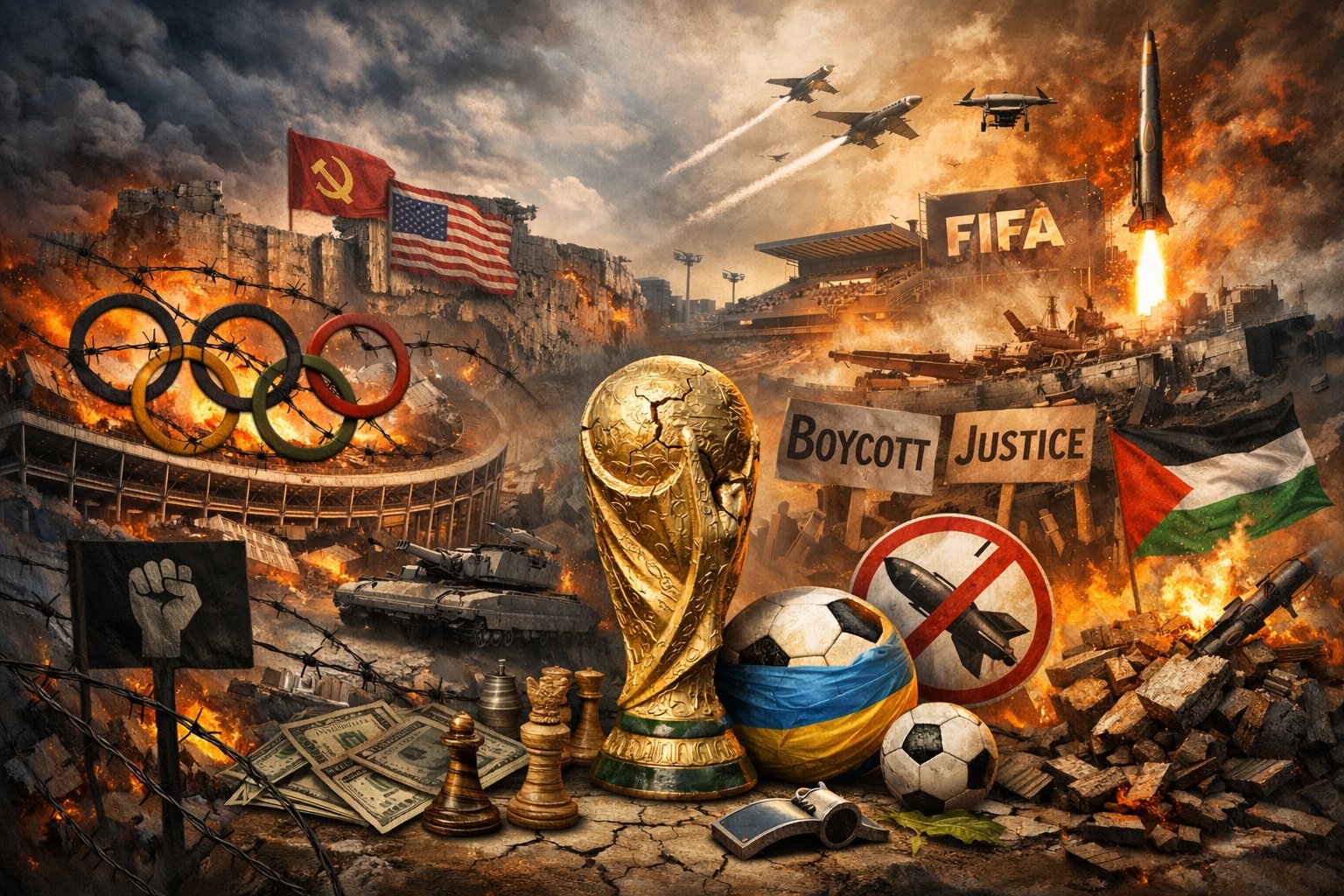
Sports and politics have never really been separate. Sport markets itself as fair play and unity, but politics is driven by power and interest.
When they face off, the results shape national identity, fuel protest, and sometimes steal the spotlight from competition itself.
From Cold War boycotts to Russia’s war in Ukraine and the Gaza conflict, the past decade has shown that this partnership can be as divisive as it is inevitable.
The belief that sport should be apolitical has always been more ideal than reality.
FIFA President Gianni Infantino has forged an unlikely bromance with U.S. President Donald Trump. With the 2026 FIFA World Cup on the horizon, Infantino has become a frequent visitor to the Oval Office, a visible sign of the governing body’s close ties to the White House.
That relationship was on full display at the World Cup draw in Washington in December, when Trump was presented with FIFA’s inaugural Peace Prize. Standing beside him, Infantino praised the president’s leadership, saying the world wanted “hope” and “unity” and that Trump deserved the honor.
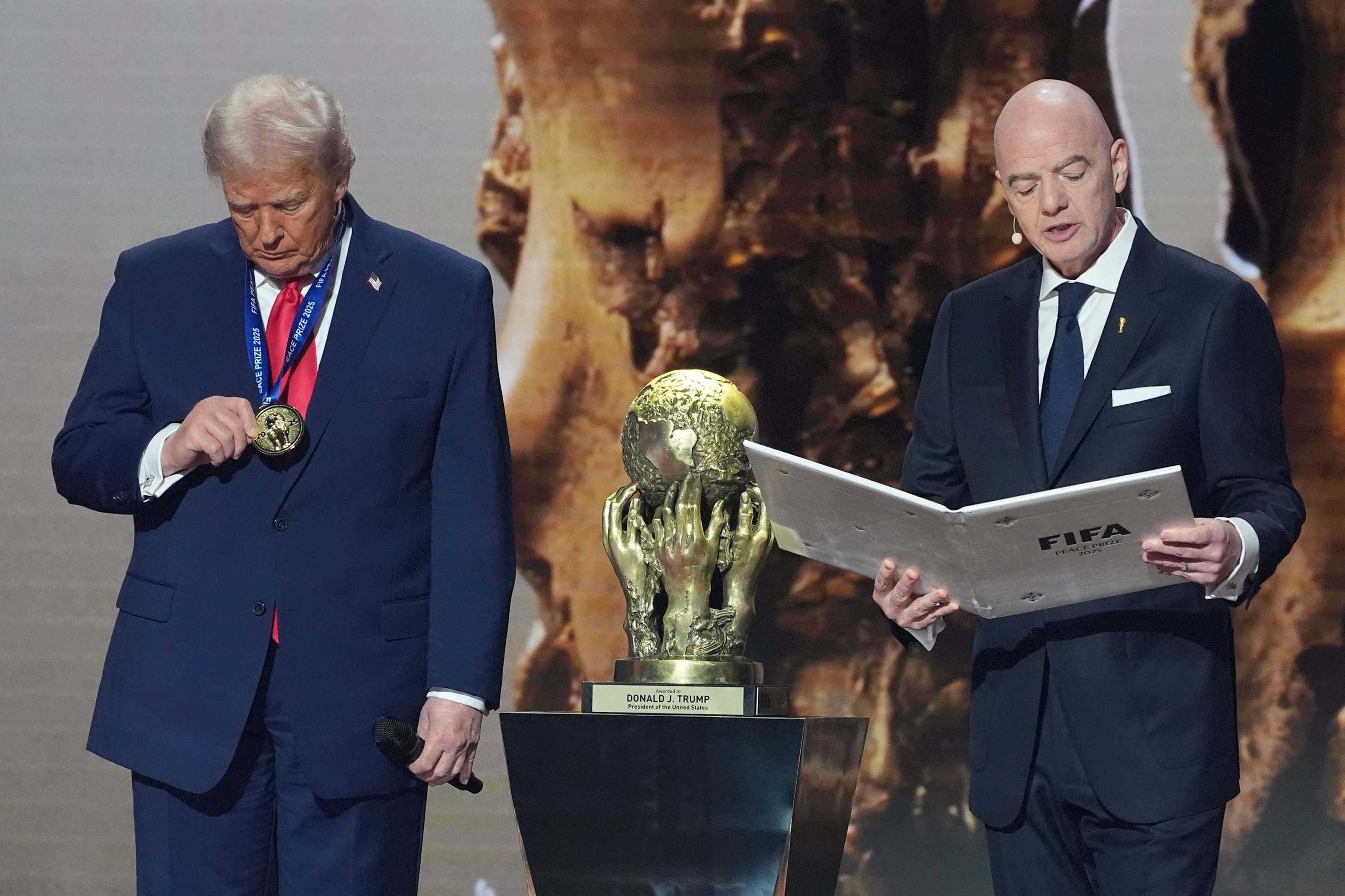
The decision sparked immediate controversy. Critics questioned the optics of awarding such a prize to a sitting political figure, especially in a deeply polarized climate. Despite the backlash, the award stands.
Behind the scenes, there is said to be growing unease within FIFA itself. Mid-level and senior officials have privately expressed embarrassment over the move, concerned that the gesture blurred the line between global sport and partisan politics at a moment when the organization is already under scrutiny.
Even the ancient Olympics reflected city-state rivalry and alliances. In 1936, Nazi Germany tried to turn the Berlin Games into a propaganda victory, only to be undermined by Jesse Owens’ performance on the track.
The Cold War turned Olympic arenas into ideological battlefields. The 1972 Munich Games were scarred by terror. The U.S. boycotted the 1980 Moscow Olympics over the Soviet invasion of Afghanistan, and the Soviets returned the gesture in 1984. Athletes lost career-defining moments because of state decisions.
Athlete protest has a long tradition. Tommie Smith and John Carlos were expelled in 1968 after raising black-gloved fists at the Mexico City Games. Muhammad Ali was stripped of his heavyweight title for refusing the Vietnam draft. These moments, once controversial, are now part of sporting lore.
Even club football has reflected political fault lines. Football Against the Enemy explored how football often mirrors wider political currents, revealing that when the sport matters to billions, it becomes inseparable from national narratives and conflict. Kuper travelled to 22 countries to show how football both reflects and shapes cultural identity and political tensions.
The 2020 murder of George Floyd sparked a wave of athlete activism.
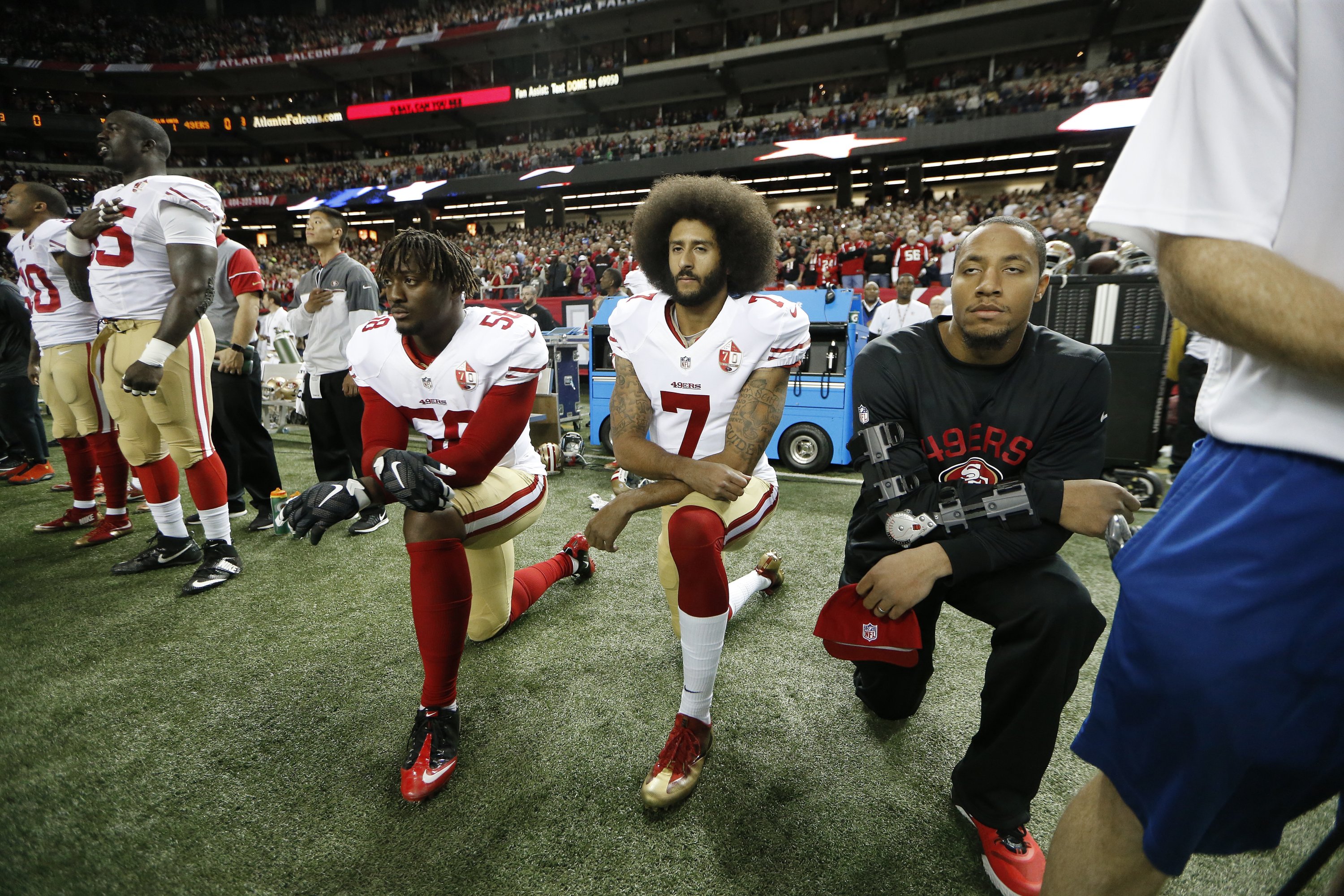
NBA players wore social justice messages. Premier League teams knelt before matches. The WNBA campaigned against a sitting U.S. senator who was a team owner. The NFL, after sidelining Colin Kaepernick for kneeling in 2016, later embraced anti-racism messaging in stadiums, a shift some saw as genuine and others as commercially driven.
International football brought its own controversies. The 2022 FIFA World Cup in Qatar drew intense scrutiny over workers’ rights, human rights concerns and allegations tied to the bidding process, with some players staging symbolic protests and FIFA trying to enforce a facade of neutrality.
Russia’s 2022 invasion of Ukraine forced global sport into political action. FIFA, UEFA and the International Olympic Committee (IOC) imposed bans or neutral status on Russian teams and athletes in many competitions, decisions that brought praise and criticism for inconsistency.
At the same time, the Gaza conflict sparked calls from some federations and public figures to exclude Israel from international competitions, highlighting how geopolitical disputes spill into sport and expose questions about fairness and sanctioning.
Government interference has also blurred boundaries. FIFA suspended Zimbabwe in 2022 after state authorities dissolved its football association, a ban that sidelined national teams before being lifted in 2023. Early in 2026, Gabon briefly suspended its national team after humiliation at the Africa Cup of Nations, risking FIFA penalties before reversing course. In both cases, political decisions threatened athletes’ opportunities in global sport.
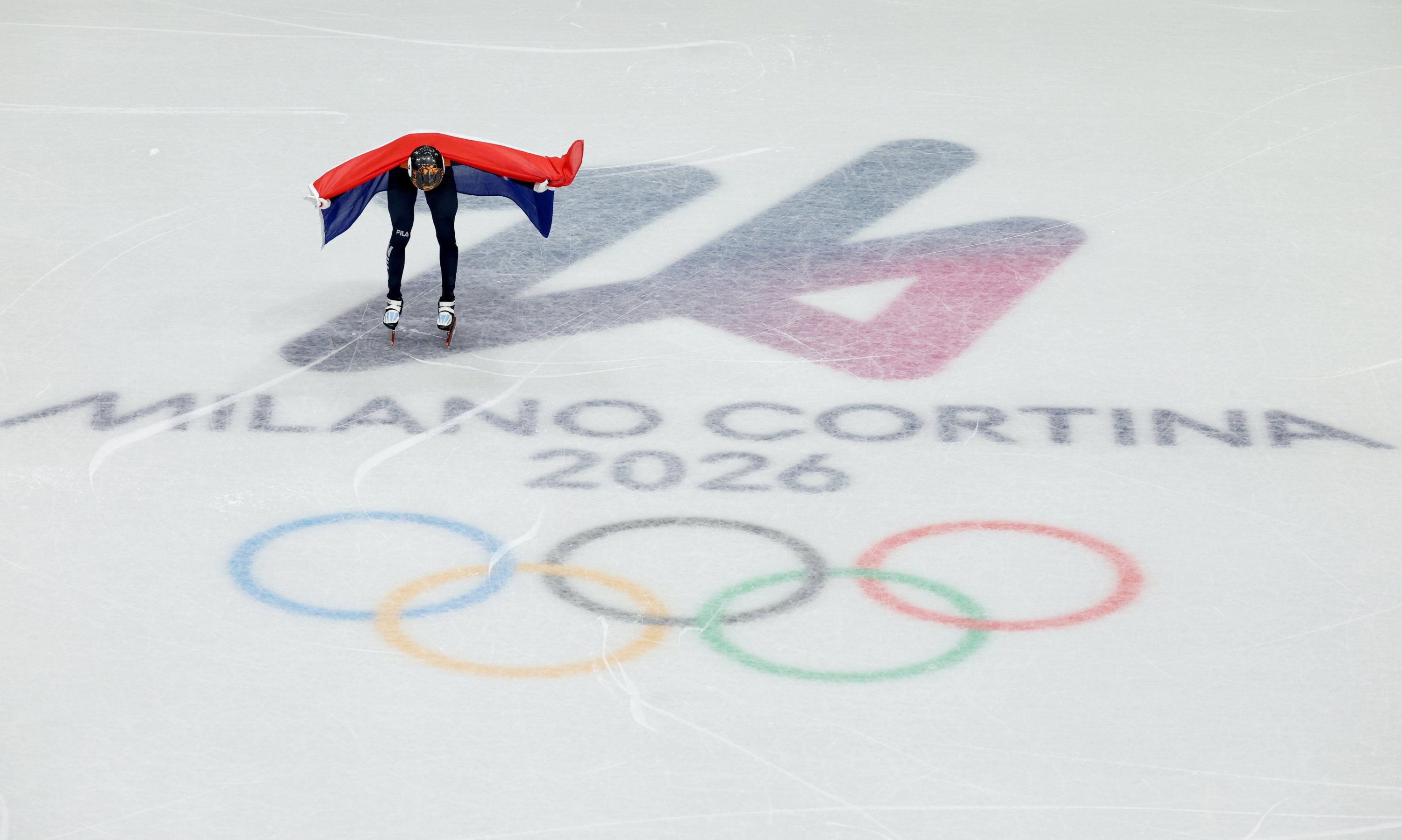
In the United States, the 2024 presidential cycle played out on sporting stages as well. High-profile athletes endorsed candidates. Political leaders appeared at games. By the run-up to the 2026 FIFA World Cup, diplomatic tensions around visas and policy disputes were influencing media narratives around teams and fans just as much as match preparation. Even the ongoing Milan-Cortina Winter Olympics are shadowed by broader social debates, from athlete eligibility to national policy clashes reverberating beyond the slopes.
Despite the tension, political engagement in sport can drive meaningful change.
Maya Moore retired from basketball to fight for criminal justice reform, helping secure a wrongful conviction reversal. Brittney Griner’s release from detention in Russia was supported by sustained advocacy from teammates, the WNBA and public pressure. Didier Drogba’s televised plea after Ivory Coast qualified for the 2006 World Cup helped encourage a cease-fire during civil war and later became a symbol of unity when the national team played in a former rebel-held city.
Sport has also brought athletes into governance. George Weah became president of Liberia after a celebrated football career. Imran Khan transitioned from cricket legend to prime minister of Pakistan. In these cases, sporting influence became political capital.
Yet the dangers are clear. Mega events can be used to soften international criticism of host nations. Boycotts often punish athletes rather than policymakers. Governing bodies face accusations of selective enforcement. Fans who turn to sport for escape increasingly find themselves entangled in the world’s sharpest debates.
The war in Ukraine and the Gaza genocide have demonstrated how quickly global tournaments can become extensions of wider conflict, turning venues into stages where power, protest and politics play out against the backdrop of competition.
Sport cannot be divorced from society. Its global reach ensures politics will always follow. The challenge for organisations such as FIFA and the IOC is to act consistently, protect athletes’ rights and resist becoming instruments of political theatre.
The relationship between sport and politics may be uneasy, but it is not new and is unlikely to disappear. The test ahead is whether global sport can preserve its integrity while standing at the centre of the world’s most heated disputes.
After all, it is a toxic relationship built to endure. A stormy marriage that survives every crisis, bound together for better or worse, with no real prospect of separation.