Daily Sabah logo

Politics
Diplomacy Legislation War On Terror EU Affairs Elections News Analysis
TÜRKİYE
Istanbul Education Investigations Minorities Expat Corner Diaspora
World
Mid-East Europe Americas Asia Pacific Africa Syrian Crisis Islamophobia
Business
Automotive Economy Energy Finance Tourism Tech Defense Transportation News Analysis
Lifestyle
Health Environment Travel Food Fashion Science Religion History Feature Expat Corner
Arts
Cinema Music Events Portrait Reviews Performing Arts
Sports
Football Basketball Motorsports Tennis
Opinion
Columns Op-Ed Reader's Corner Editorial
PHOTO GALLERY
JOBS ABOUT US RSS PRIVACY CONTACT US
© Turkuvaz Haberleşme ve Yayıncılık 2025

Daily Sabah - Latest & Breaking News from Turkey | Istanbul

  • Politics
    • Diplomacy
    • Legislation
    • War On Terror
    • EU Affairs
    • Elections
    • News Analysis
  • TÜRKİYE
    • Istanbul
    • Education
    • Investigations
    • Minorities
    • Expat Corner
    • Diaspora
  • World
    • Mid-East
    • Europe
    • Americas
    • Asia Pacific
    • Africa
    • Syrian Crisis
    • Islamophobia
  • Business
    • Automotive
    • Economy
    • Energy
    • Finance
    • Tourism
    • Tech
    • Defense
    • Transportation
    • News Analysis
  • Lifestyle
    • Health
    • Environment
    • Travel
    • Food
    • Fashion
    • Science
    • Religion
    • History
    • Feature
    • Expat Corner
  • Arts
    • Cinema
    • Music
    • Events
    • Portrait
    • Reviews
    • Performing Arts
  • Sports
    • Football
    • Basketball
    • Motorsports
    • Tennis
  • Gallery
  • Opinion
    • Columns
    • Op-Ed
    • Reader's Corner
    • Editorial
  • TV
  • TÜRKİYE
  • Istanbul
  • Education
  • Investigations
  • Minorities
  • Expat Corner
  • Diaspora

Why is Turkey so prone to earthquakes?

by DAILY SABAH

ISTANBUL Jun 04, 2021 - 6:49 pm GMT+3
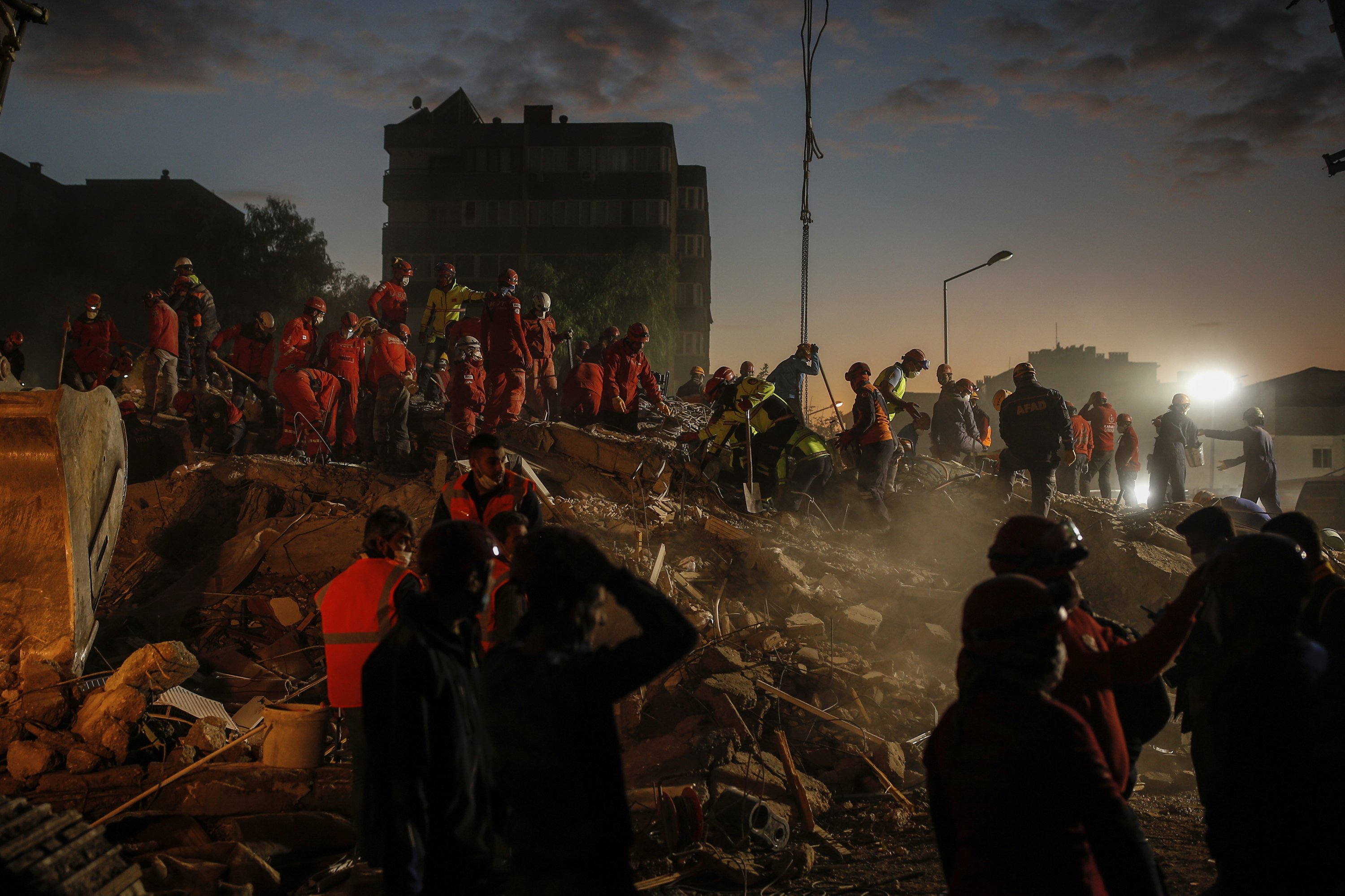
Members of rescue services search for survivors in the debris of a collapsed building in Izmir, Turkey, Nov. 2, 2020. (AP Photo)
by DAILY SABAH Jun 04, 2021 6:49 pm

In Turkey, earthquakes are nothing out of the ordinary with thousands of tremors taking place all over the country.

The country's Disaster and Emergency Management Authority (AFAD) recorded more than 33,000 earthquakes in 2020 alone, including 322 of magnitude 4.0 and higher.

In fact, last year's three deadliest earthquakes all took place in or near Turkey. Forty-one people were killed in eastern Elazığ in January and a month later 10 died in southeastern Van. In October, a magnitude 6.6 tremor struck western Izmir, killing 117 people, while two more died on the Greek island of Samos.

But why is Turkey such a hot spot for earthquakes?

There is a well-known saying in Turkish – "coğrafya kaderdir" which means "geography is destiny." And it perfectly describes Turkey's proneness to earthquakes.

Most of Turkey is located on the Anatolian tectonic plate, which sits between two major plates, the Eurasian and African, and a minor one, the Arabian. As the larger African and Arabian plates shift Turkey is being literally squeezed, while the Eurasian plate impedes any northward movement. Thus, Turkey sits on several fault lines.
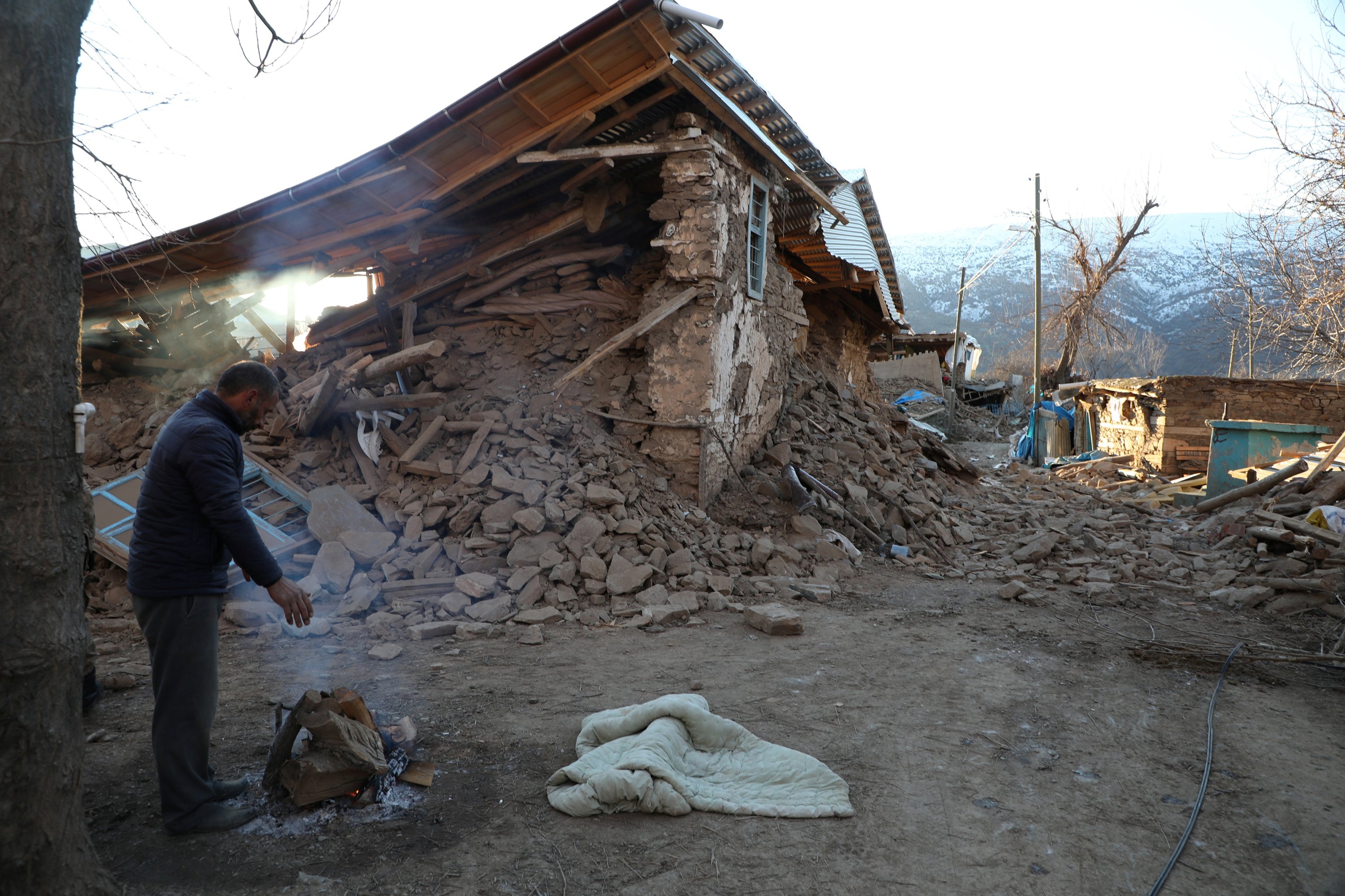
A villager stands next to his collapsed house after an earthquake in Sivrice near Elazığ, Turkey, Jan. 25, 2020. (Reuters Photo)

The most potentially devastating fault line in the country is the North Anatolian fault line (NAF), where the Anatolian and Eurasian plates meet. It runs from just south of Istanbul all the way to northeastern Turkey.

The NAF has produced devastating earthquakes throughout history.

More than 17,000 people were killed and over 43,000 were injured when a magnitude 7.4 quake rocked the Marmara region for 37 seconds in the early hours of Aug. 17, 1999, with its epicenter located in Gölcük, some 75 kilometers (46.60 miles) southeast of the Bosporus. Three months later, on Nov. 12, 1999, 845 people were killed and nearly 5,000 injured when a magnitude 7.0 earthquake hit Düzce province, about 120 kilometers northeast of Gölcük.

A woman weeps as the remains of her 16 year-old brother are taken by rescue workers to an ambulance after being pulled out of the rubble in Gölcük, Turkey, Aug. 23, 1999. (AP Photo)

At the same time, the East Anatolian fault line stretches some 650 kilometers from eastern Turkey's highlands to the Mediterranean, from where it turns southward and meets the northern end of the Great Rift system separating the African and Arabian plates. The strike-slip fault was formed millions of years ago as the Anatolian plate was being pushed northwestwards by the Arabian plate.

Meanwhile, western Turkey is also effected by another minor tectonic plate, the Aegean Sea Plate.

An unfortunate tectonic location and a traumatizing history of deadly earthquakes have made the fear of tremors evident in everyday life as Turks are taught how to behave during earthquakes from a young age and many take certain precautions in case a quake suddenly strikes, such as preparing an emergency bag and establishing safety zones at home or work.

Meanwhile, experts continue to issue warnings and predictions that a potentially catastrophic earthquake may hit Turkey's largest city, Istanbul, sometime in the near future.


  • shortlink copied
  • Last Update: Jun 04, 2021 9:48 pm
    KEYWORDS
    turkey earthquake
    The Daily Sabah Newsletter
    Keep up to date with what’s happening in Turkey, it’s region and the world.
    You can unsubscribe at any time. By signing up you are agreeing to our Terms of Use and Privacy Policy. This site is protected by reCAPTCHA and the Google Privacy Policy and Terms of Service apply.
    No Image
    In photos: Typhoon Vamco hits Philippines' capital Manila
    PHOTOGALLERY
    • POLITICS
    • Diplomacy
    • Legislation
    • War On Terror
    • EU Affairs
    • News Analysis
    • TÜRKİYE
    • Istanbul
    • Education
    • Investigations
    • Minorities
    • Diaspora
    • World
    • Mid-East
    • Europe
    • Americas
    • Asia Pacific
    • Africa
    • Syrian Crisis
    • İslamophobia
    • Business
    • Automotive
    • Economy
    • Energy
    • Finance
    • Tourism
    • Tech
    • Defense
    • Transportation
    • News Analysis
    • Lifestyle
    • Health
    • Environment
    • Travel
    • Food
    • Fashion
    • Science
    • Religion
    • History
    • Feature
    • Expat Corner
    • Arts
    • Cinema
    • Music
    • Events
    • Portrait
    • Performing Arts
    • Reviews
    • Sports
    • Football
    • Basketball
    • Motorsports
    • Tennis
    • Opinion
    • Columns
    • Op-Ed
    • Reader's Corner
    • Editorial
    • Photo gallery
    • DS TV
    • Jobs
    • privacy
    • about us
    • contact us
    • RSS
    © Turkuvaz Haberleşme ve Yayıncılık 2021