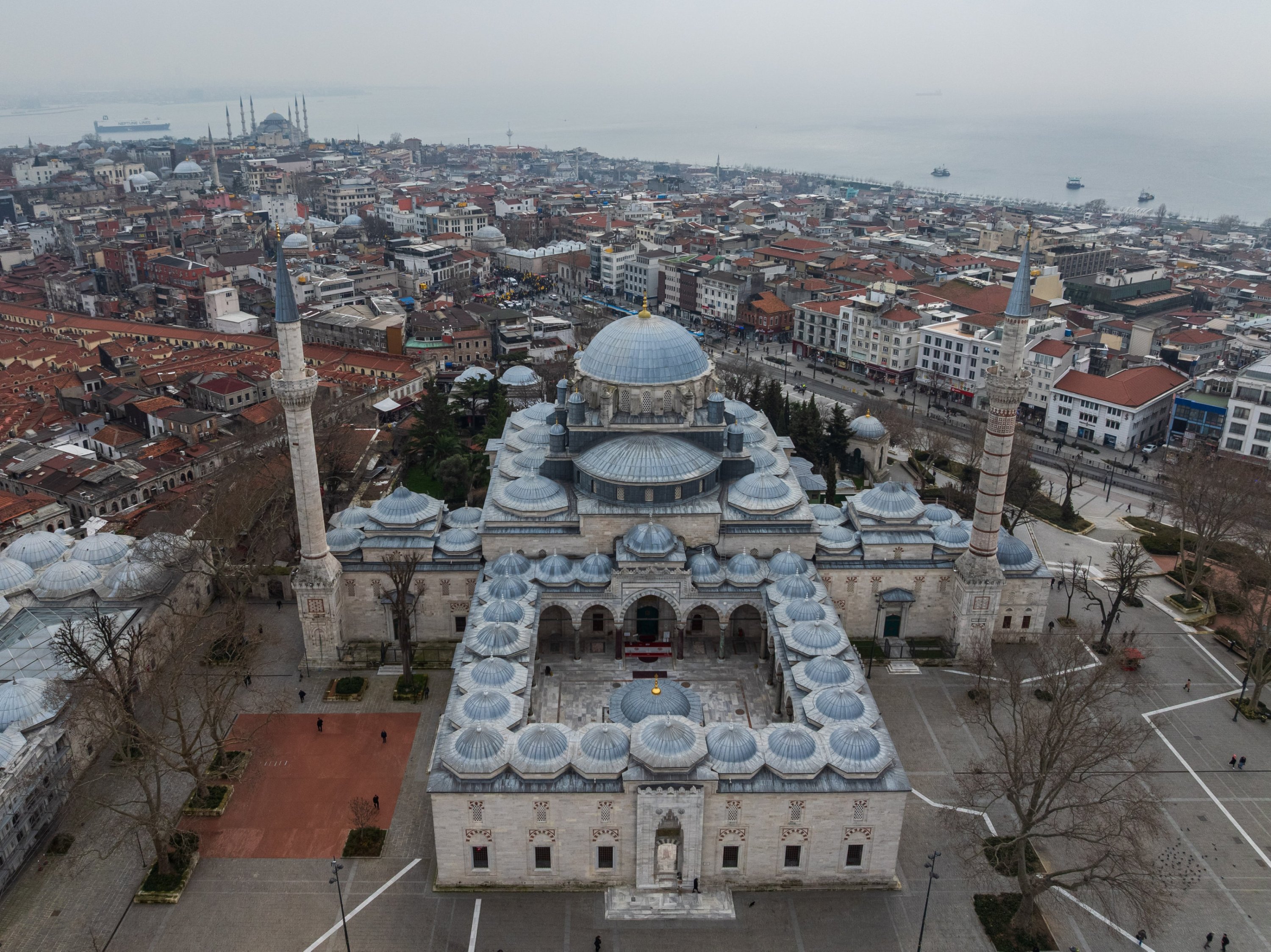
Beyazıt Mosque, one of the early examples of classical Ottoman architecture, continues to draw attention with its strategic location at the intersection of the Grand Bazaar, the Sahaflar (Secondhand Books) Bazaar, Istanbul University, libraries and publishing houses.
The mosque, constructed in the early 16th century by Sultan Bayezid II, son of Fatih Sultan Mehmet, is notable not only as a place of worship but also for the surrounding külliye complex. This complex includes a madrassa, soup kitchen, bathhouse, caravanserai and tombs, integrating religious, social, and educational functions within a single urban hub.
As the iconic structure of Beyazıt Square, the mosque continues to witness significant pedestrian and visitor traffic, particularly during Friday prayers and kandil nights. Its facade faces the square, and the courtyard remains a center of activity throughout the day, reflecting its continued role as a civic and spiritual focal point in Istanbul.
The mosque’s architecture demonstrates the maturation of the centralized dome plan in Ottoman design. Its expansive prayer hall features a large central dome supported by four piers, extended on both the entrance and mihrab sides by two large semi-domes measuring approximately 17 meters in diameter (55.77 feet). Smaller domed units surround the central hall, while the courtyard and arcades incorporate classical architectural elements.
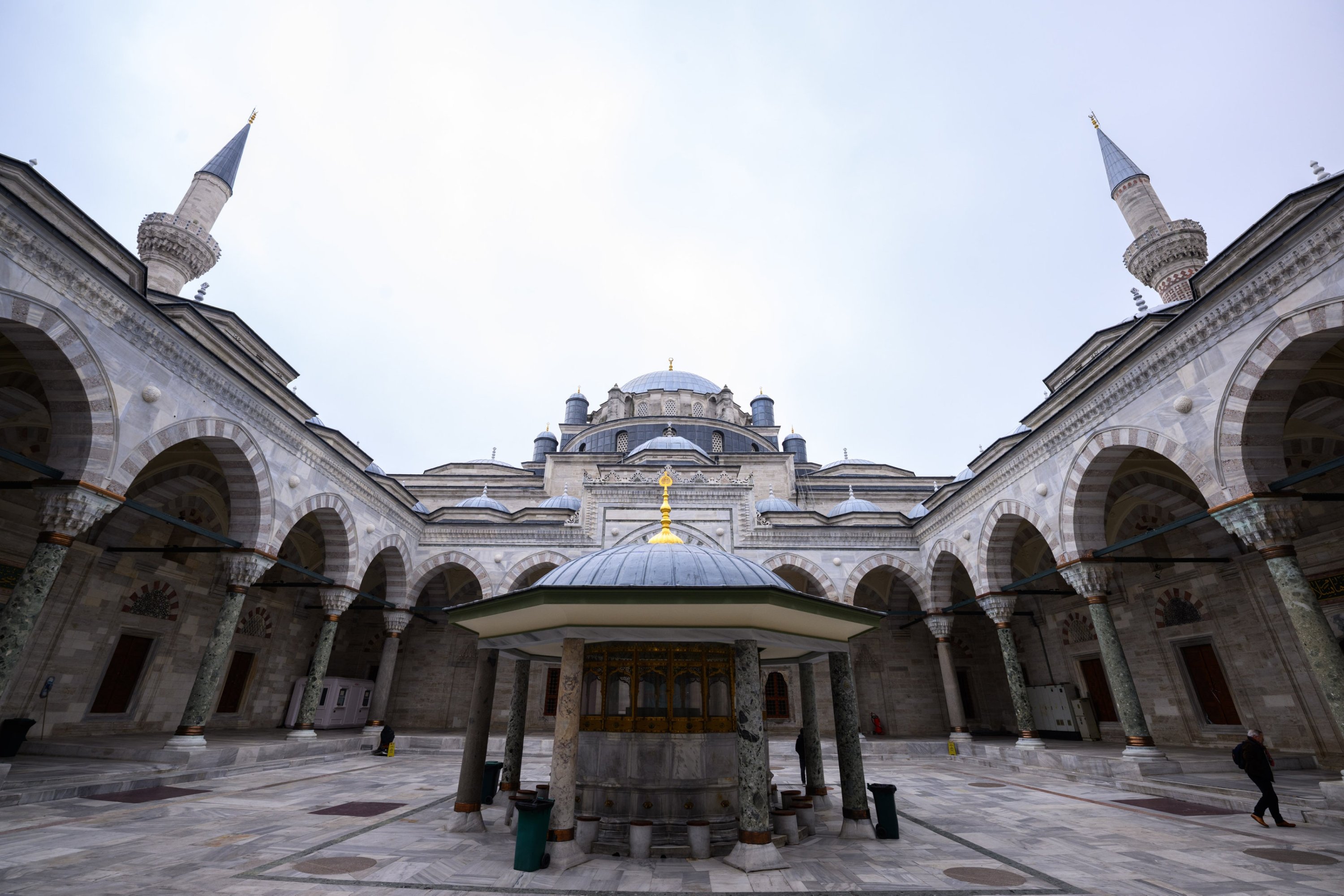
Explaining the mosque’s historical and architectural significance, professor Kadir Pektaş, head of the Art History Department at Istanbul Medeniyet University, noted that the külliye was built on one of Istanbul’s “seven hills” and gave its name to the surrounding district. He emphasized that the mosque was designed as part of a scattered yet unified complex, referencing Hagia Sophia in its central dome and semi-dome arrangement.
“The mosque’s tabhanes, located at the corners of the prayer hall, form a T-shaped plan, although such plans are rare in early Ottoman architecture. Here, the tabhanes are more independent and function as separate units. The minarets are positioned at the far ends of these tabhanes, making them more distant from one another compared to other sultanic mosques,” Pektaş explained. Tabhane is a Persian word, "tab" meaning strength, strength in "hane" ("house").
The mosque was constructed between 1501 and 1505, and although its architect remains a topic of scholarly debate, it is generally attributed to Mimar Hayrettin. Mimar Sinan later adapted elements of this plan approximately 50 years later for the Süleymaniye Mosque.
The külliye’s cemetery houses the tomb of Sultan Bayezid II, known as “Bayezid-i Veli,” further emphasizing the complex’s historical significance. Pektaş also highlighted the mosque’s strategic location, across from the main gate of Istanbul University. The site was historically part of the Ottoman Palace, later referred to as the Old Palace (Saray-ı Atik), with the New Palace (Saray-ı Cedid), known today as Topkapı Palace, becoming the primary administrative center. This proximity reinforced the mosque’s importance in state ceremonies and hierarchy during the early Ottoman period.