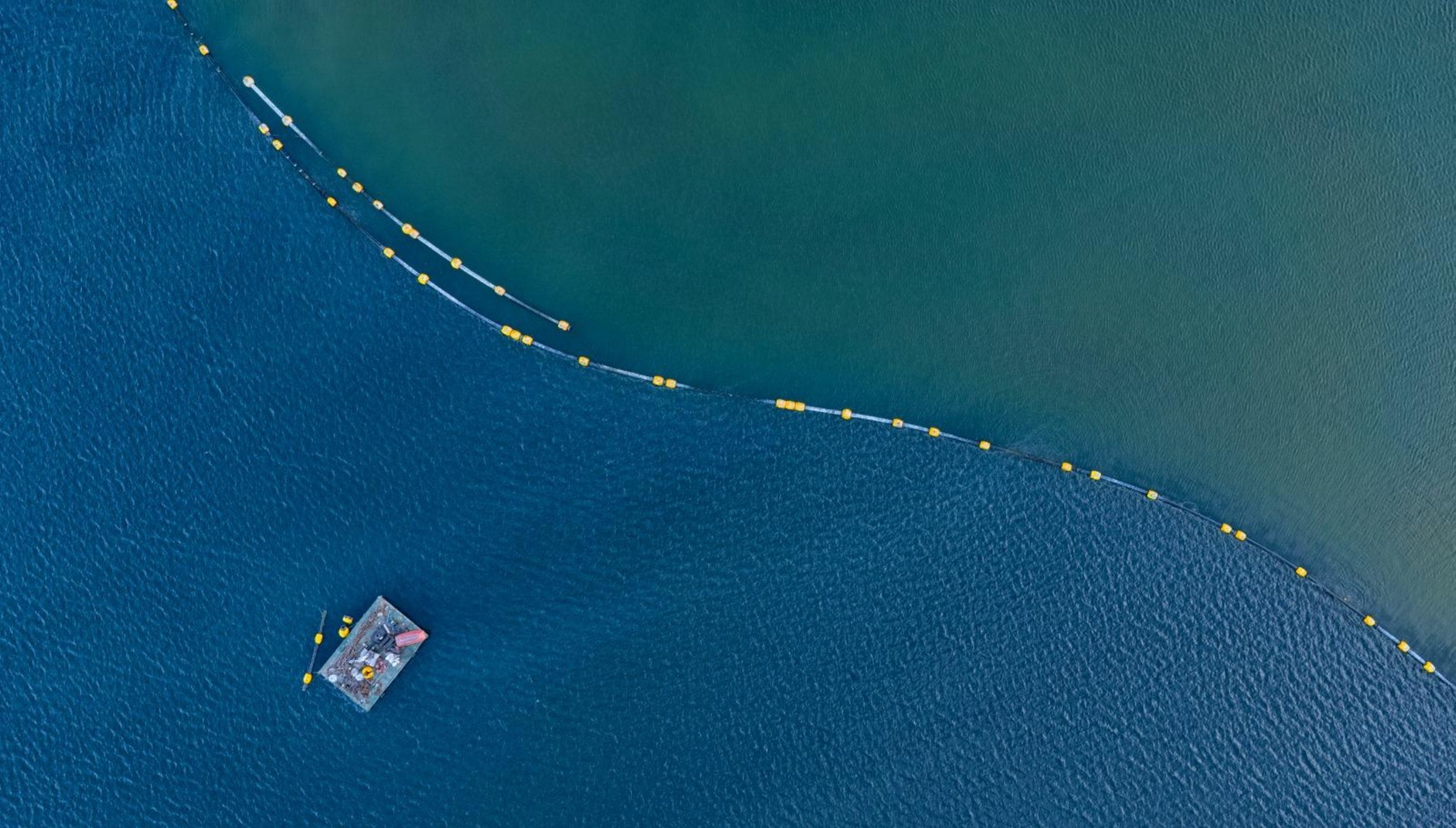
The Gulf of Izmit restoration project in Kocaeli, northwestern Türkiye, has reached 70% completion, with 2.4 million cubic meters of seabed sludge removed since work began in 2022 under the Marmara Sea Protection Action Plan, Environment, Urbanization and Climate Change Minister Murat Kurum said on Saturday, noting that marine life is returning to the area as the ecosystem recovers.
The cleanup operation was initiated in response to the severe mucilage outbreak that affected the Marmara Sea in 2021 and is being carried out in cooperation with the Kocaeli Metropolitan Municipality.
"We have completed two phases of the project and removed a total of 2.4 million cubic meters of seabed sludge. Our target is 3.8 million cubic meters, meaning nearly 70% of the work has now been completed," Kurum said.
The minister described the initiative as one of the world's largest marine restoration projects and said underwater observations confirmed that ecological conditions in the gulf are steadily improving.
According to Kurum, seagrass meadows, starfish, sea cucumbers and other marine species have begun returning to areas that were previously covered by thick layers of accumulated sludge.
"The ecosystem is recovering on its own. Species that we had not seen before are now appearing again. The sea has started breathing," he said.
The recovery is expected to improve water quality and coastal conditions for residents across Kocaeli, a major industrial province bordering the Marmara Sea.
Kurum said citizens would increasingly benefit from cleaner coastlines and a healthier marine environment as the project advances toward completion.
He said Türkiye plans to use its upcoming COP31 presidency to showcase large-scale environmental projects and promote practical solutions to climate and ecological challenges.
"Under the theme of seas and oceans, we will share these experiences with the world. Türkiye is demonstrating that environmental protection is achieved through action and implementation, not merely through promises," Kurum said.
Beyond the Gulf of Izmit, the government is preparing to expand similar efforts to other coastal regions.
Kurum announced that new dredging operations will begin in the Gulf of Fethiye, southwestern Türkiye, where two additional dredging vessels have recently joined the ministry's fleet.
He also noted that the Environmental Agency had completed mooring buoy projects in 17 bays, helping protect sensitive marine habitats by preventing uncontrolled anchoring.
Kurum reiterated the country's commitment to its 2053 net-zero emissions target and called on all municipalities around the Marmara Sea to fulfill their responsibilities under the Marmara Sea Protection Action Plan.
He urged local administrations to modernize wastewater treatment facilities, expand advanced biological treatment systems and strengthen waste management infrastructure to reduce pressure on the sea.
"Protecting the Marmara Sea is a shared responsibility. We must continue implementing the commitments we have made and take concrete steps to safeguard these ecosystems for future generations," he said.
The Gulf of Izmit cleanup project is expected to continue until the remaining sludge is removed, with officials expressing confidence that the ongoing restoration will further improve biodiversity and environmental quality across the region.