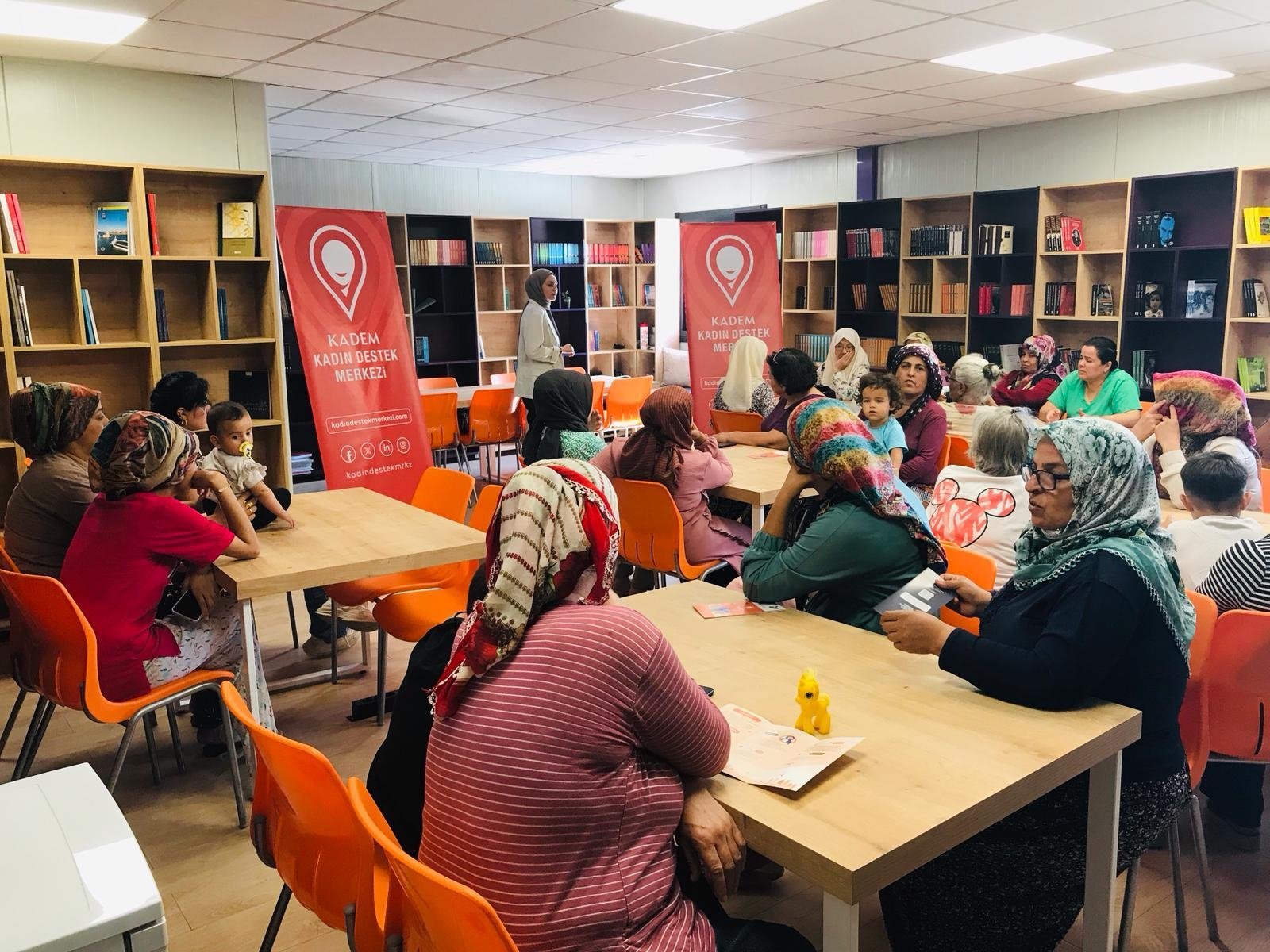
In the aftermath of the Feb. 6 earthquakes that devastated 11 provinces in southern Türkiye, the Women and Democracy Foundation (KADEM) emerged as one of the civil society actors providing structured, women-centered support at both the emergency response and long-term recovery stages.
In Kahramanmaraş, the center of earthquakes, KADEM’s field presence began under conditions that its local representatives describe as unprecedented in scale and intensity. KADEM Kahramanmaraş Representative Ayşe Taşkıran recalls that the first day she entered the field remains etched in her memory as a moment of profound rupture.
“The first day I went into the field after the earthquake was a day that will remain with me for the rest of my life one that felt like witnessing an apocalypse,” Taşkıran said. She described a city submerged in a “deathly silence,” a silence she says was filled with despair.
After first ensuring that her family had been moved to a safe area, she attempted to reach the municipality in line with her responsibilities. The journey itself was marked by devastation, with roads blocked by debris and voices calling for help from beneath the rubble.
“As I passed through roads blocked by debris, the cries for help I heard are something I will never forget. Those voices still echo in my mind,” she said.
At debris sites across the city, Taşkıran said the same scenes repeated themselves, families waiting helplessly for news of their loved ones, people moving between rubble piles with fragile hope, and a sense that time itself had come to a standstill. “At every pile of debris, there was the same pain, the same waiting, the same fear,” she recalled.
Amid the destruction, she said, a single unspoken question seemed to dominate the expressions of those affected: “What happens now? What am I supposed to do?”
In those early days, women consistently raised concerns related to shelter, personal security, hygiene, access to toilets, and the needs of their children.
According to Taşkıran, many women set aside their own grief to care for their children, elderly relatives and families, while living with deep insecurity and uncertainty about the future. She said it quickly became clear that women needed not only material aid but also emotional support.
One moment that left a lasting impact on her was witnessing a Syrian mother bidding farewell to all 5 of her children lost in the earthquake, an experience she described as beyond comprehension.
“With composure and prayers, she was trying to place two of her children into each coffin,” Taşkıran said, adding that she struggled to understand how a mother could endure such pain. Even as she buried her children, the woman urged her husband to return to the rubble to help neighbors who were still searching for survivors.
“I still think about it,” Taşkıran said. “Where did this woman’s strength and composure come from? From faith? From motherhood? Or from the last reserves of a heart pushed beyond its limits?”
Taşkıran also shared a deeply personal moment from the fifth day after the earthquake, when exhaustion and grief had overtaken her after days of uninterrupted work in the field.
That day, the Chair of the KADEM Board of Trustees, Sümeyye Erdoğan Bayraktar, and their delegation arrived in Kahramanmaraş.
“That first embrace was not just a greeting for me,” she said. “Until that moment, no one had hugged me to console me. No one had said, ‘I am here, don’t be afraid.’”
For the first time since the disaster, she allowed herself to cry openly and speak about what she had experienced. “In that moment, I did not see them as representatives of an institution, but as members of my own family,” she said, adding that KADEM’s leadership stood not only by her but by thousands of women across the disaster zone. “That was when I truly understood that we are, in fact, a very large family.”
From an institutional perspective, KADEM Director General Emine Yürükoğulları Kork outlined how the organization moved swiftly to establish a structured response immediately after the earthquake.
“Psychological first aid activities, along with emergency intervention and support efforts, were initiated without delay,” she said. Specialists assigned to the disaster zone were enrolled in accelerated training programs to ensure informed and effective engagement on the ground.
One of the most critical decisions taken in the early days, Yürükoğulları Kork emphasized, was not to postpone services aimed at protecting and empowering women. Within this framework, KADEM implemented a range of interventions, including the distribution of hygiene kits and clothing for women and children, the provision of essential items such as power banks, fuel, and tents, and the organization of courses in tent settlements to support emotional recovery.
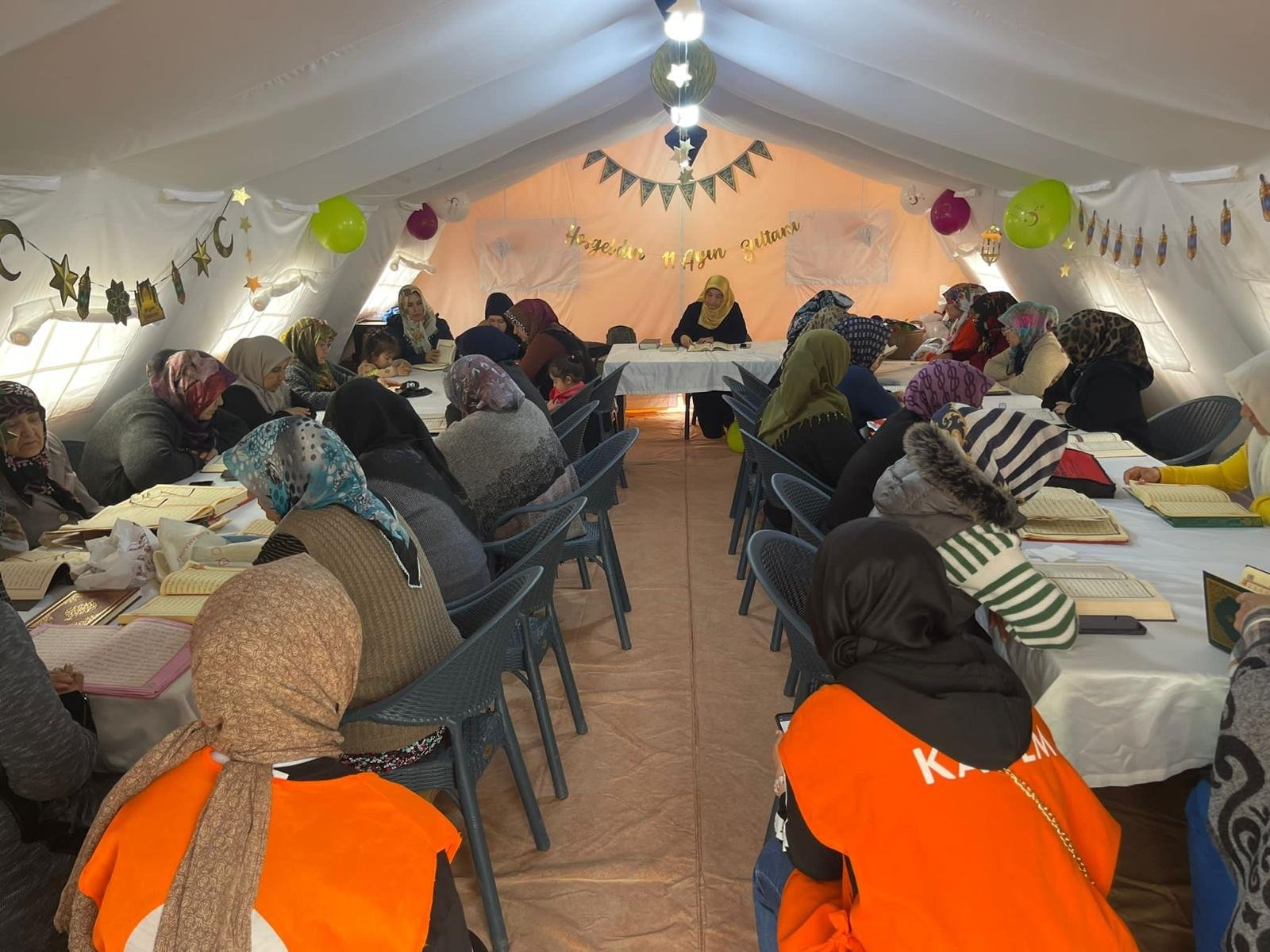
In response to women’s requests, KADEM also hosted iftar meals during Ramadan and organized Quran recitation gatherings. Social service specialists were deployed to identify urgent needs on the ground and manage support and referral processes based on clear prioritization. In parallel, supervision support was provided for professionals affected by the disaster, alongside peer support mechanisms through KADEM’s other centers.
“Women’s priority needs were systematically identified, and all services were planned and delivered in alignment with these assessments,” Yürükoğulları Kork said.
While emergency aid marked the first phase of KADEM’s response, long-term recovery was built into the work from the very beginning. Support Centers for Women, initially set up to meet urgent needs, gradually shifted toward sustained psychosocial and economic support. Early risk and needs assessments showed that many women were seeking help not only for earthquake-related trauma but also for long-standing social and economic challenges.
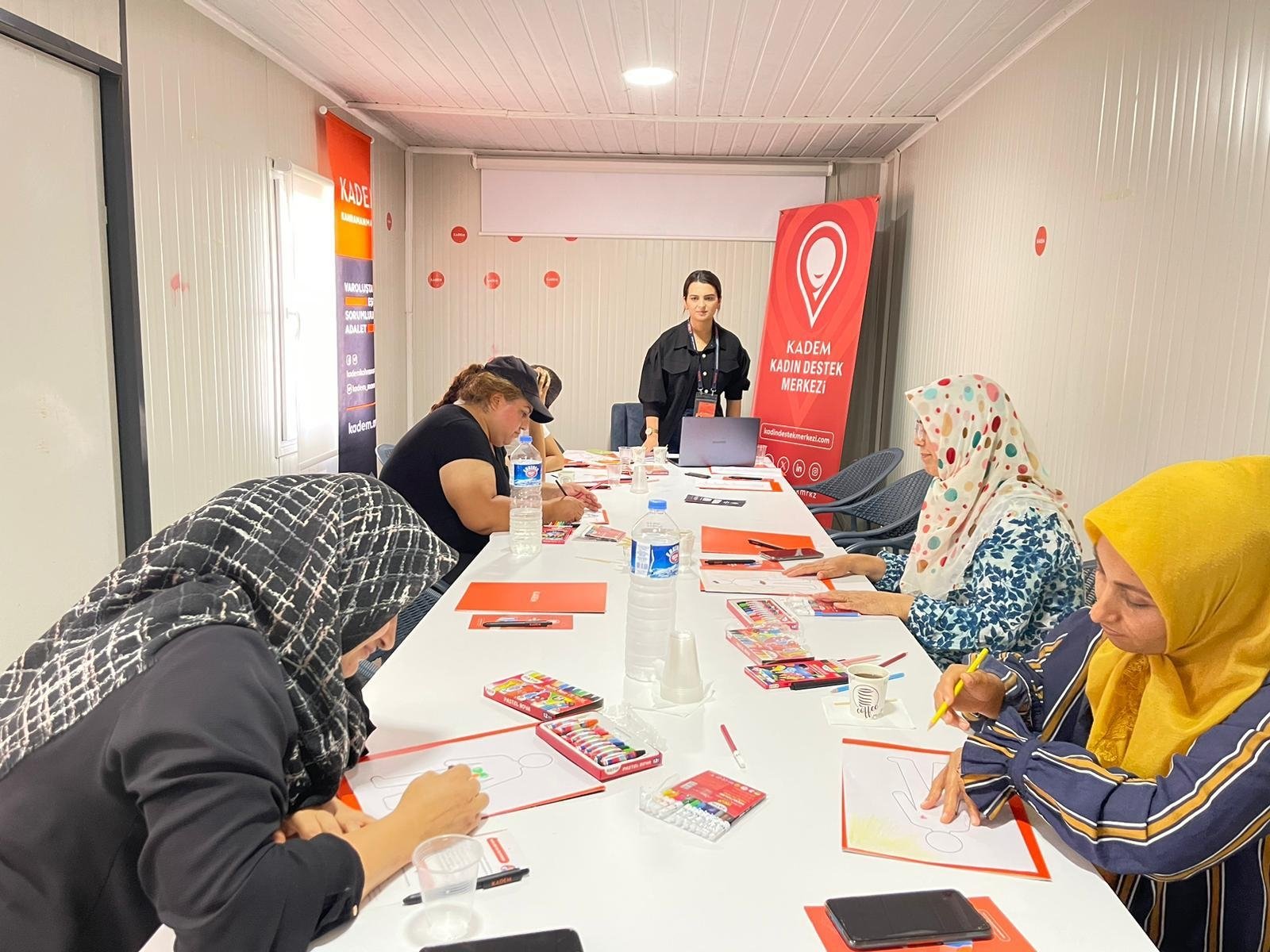
In response, KADEM expanded psychosocial support, created solidarity and group activities focused on healing and empowerment, and launched vocational training to help women regain economic independence. Employment was addressed directly through referrals to short-term public work programs and job-matching meetings organized in cooperation with IŞKUR.
Throughout this process, KADEM worked closely with public institutions, holding regular coordination meetings to strengthen referral systems and improve service delivery. All support was designed with cultural sensitivity, reflecting the social realities of the region.
One of the most striking challenges identified during the fieldwork, Yürükoğulları Kork noted, was the prolonged uncertainty surrounding permanent housing and reconstruction. This uncertainty affected women’s ability to plan for the future, their children’s education, and the reestablishment of daily life.
In response, Support Centers for Women organized informative meetings in cooperation with institutions such as the Provincial Directorate of Environment and Urbanization and Disaster and Emergency Management Presidency (AFAD) to clarify processes and address concerns.
From the third month onward, Yürükoğulları Kork observed a notable shift; women increasingly sought support for long-standing familial, psychosocial and economic issues that predated the earthquake.
This development underscored the necessity of a comprehensive, sustained support framework extending beyond immediate emergency response.
A.K., one of the earthquake survivors in Kahramanmaraş, said she benefited from KADEM’s Support Centers for Women and described the assistance as life-changing.
“This support changed many things for me,” she said. “At that time, I was in a very bad state, especially psychologically. Talking during the sessions helped us feel relieved, and it made it easier for us to cope. If they hadn’t been there during that period, we would have struggled much more, and our mental health could have deteriorated.”
She added that the support provided by KADEM helped her get through the process more smoothly. “Thanks to their help, we tried to overcome everything more easily. They really supported us. I was very satisfied. The meetings and the positive work they carried out were extremely beneficial for us.”