Hopes for a diplomatic breakthrough in the U.S.-Israeli war on Iran faded Sunday as efforts to revive talks stalled, with both Tehran and Washington showing little willingness to compromise.
Iranian Foreign Minister Abbas Aragchi flew back to the Middle East from mediation talks in Pakistan over the weekend, while U.S. President Donald Trump scrapped a planned visit to Islamabad by his envoys Steve Witkoff and Jared Kushner.
Although a cease-fire has paused full-scale fighting in the conflict, which began with U.S.-Israeli strikes on Iran on Feb. 28, no agreement has been reached on terms to end a war that has killed thousands, driven up oil prices, fuelled inflation and darkened the outlook for global growth.
Tehran has largely closed the Strait of Hormuz, which normally carries a fifth of global oil and liquefied natural gas shipments, while Washington has imposed a blockade of Iran's ports.
Iranian President Masoud Pezeshkian told Pakistani Prime Minister Shehbaz Sharif by phone that Tehran would not enter "imposed negotiations" under threats or blockade, according to a statement from the Iranian government.
He said the United States should first remove obstacles, including its maritime blockade, before negotiators could begin laying the groundwork for a settlement.
Aragchi nevertheless described his visit to Pakistan as "very fruitful." After leaving Islamabad, he flew to Oman – another mediator in the war – where he held talks on ending the conflict with the country's leader, Haitham bin Tariq al-Said, state media reported. He was due to visit Russia next.
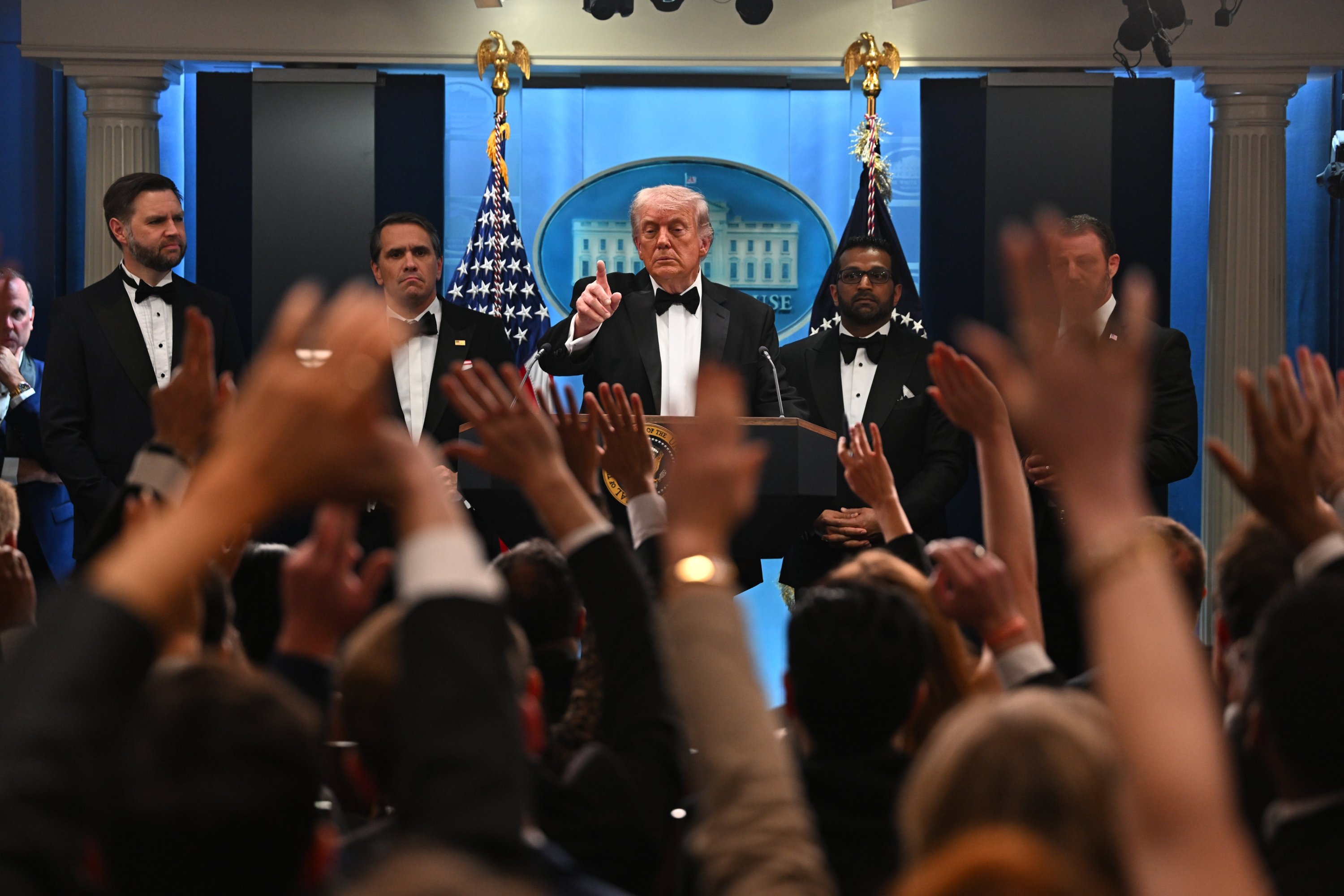
Speaking in Florida before he was rushed out of the White House Correspondents' Association dinner in Washington after a man opened fire on security personnel, Trump said he cancelled his envoys' visit due to too much travel and expense for what he considered an inadequate Iranian offer.
After the diplomatic trip was called off, Iran "offered a lot, but not enough," Trump said.
On Truth Social, he wrote that there was "tremendous infighting and confusion" within Iran's leadership.
"Nobody knows who is in charge, including them," he posted. "Also, we have all the cards, they have none! If they want to talk, all they have to do is call!!!"
Pezeshkian said last week that there were "no hardliners or moderates" in Tehran and that the country stood united behind its supreme leader. Iran's top negotiator, Mohammad Bagher Ghalibaf and Araqchi echoed the message in recent days.
The war has destabilized the Middle East, with Tehran having struck its Gulf neighbors and fighting reignited between Israel and Hezbollah in Lebanon.
Israeli Prime Minister Benjamin Netanyahu on Saturday ordered troops to forcefully attack Hezbollah targets in Lebanon, his office said, further testing a U.S.-mediated cease-fire there.
Earlier, White House press secretary Karoline Leavitt said the U.S. had seen some progress from the Iranian side and that Vice President JD Vance was ready to travel to Pakistan. Vance led an unsuccessful first round of talks in Islamabad this month.