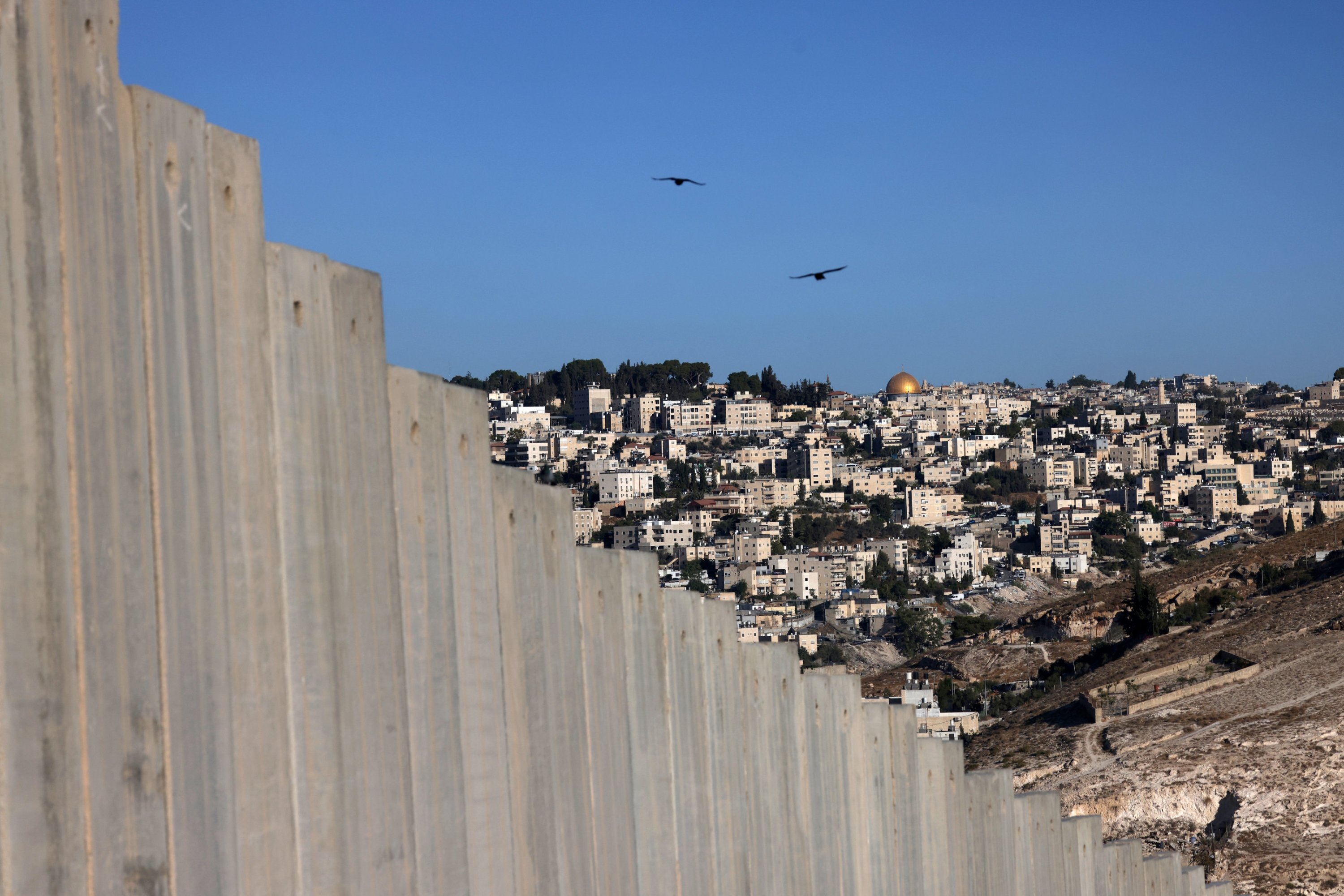
Expanding Israeli settlements threatens a Palestinian state and U.S.-led peace efforts, French President Emmanuel Macron warned Thursday, as France hosted Arab and European ministers hours after a Gaza cease-fire deal was announced.
Macron hailed the deal as a "great hope" for the region, but said ramped up settlement construction in the occupied West Bank was an "existential threat" to a Palestinian state.
It was "not only unacceptable and contrary to international law" but "fuels tensions, violence, and instability," he said as he presided over the meeting in Paris.
"It fundamentally contradicts the American plan and our collective ambition for a peaceful region."
Israel and Hamas earlier agreed on a Gaza cease-fire deal to free the remaining living Israeli hostages held by the Palestinian resistance group in exchange for Palestinian prisoners, the withdrawal of Israeli forces, governance of Gaza by a transitional committee and its rebuilding.
It is being seen as a major step toward ending a genocidal campaign by Israel that has killed more than 67,000 people in Gaza, mostly women and children, and unleashed a humanitarian catastrophe.
The deal brokered through indirect talks in the Egyptian resort of Sharm el-Sheikh came two years after the Oct. 7, 2023 incursion by Hamas. The war also triggered other conflicts in the region, sparked worldwide protests and led to what rights groups and experts call genocide in Gaza by Israel.
While Europe has strongly supported the cease-fire efforts led by U.S. President Donald Trump, Washington and several European countries are at odds over whether it is the right moment to recognize a Palestinian state.
Macron, in a Sept. 22 speech at the United Nations, recognized a Palestinian state on the heels of similar announcements by Canada, Portugal and the United Kingdom.
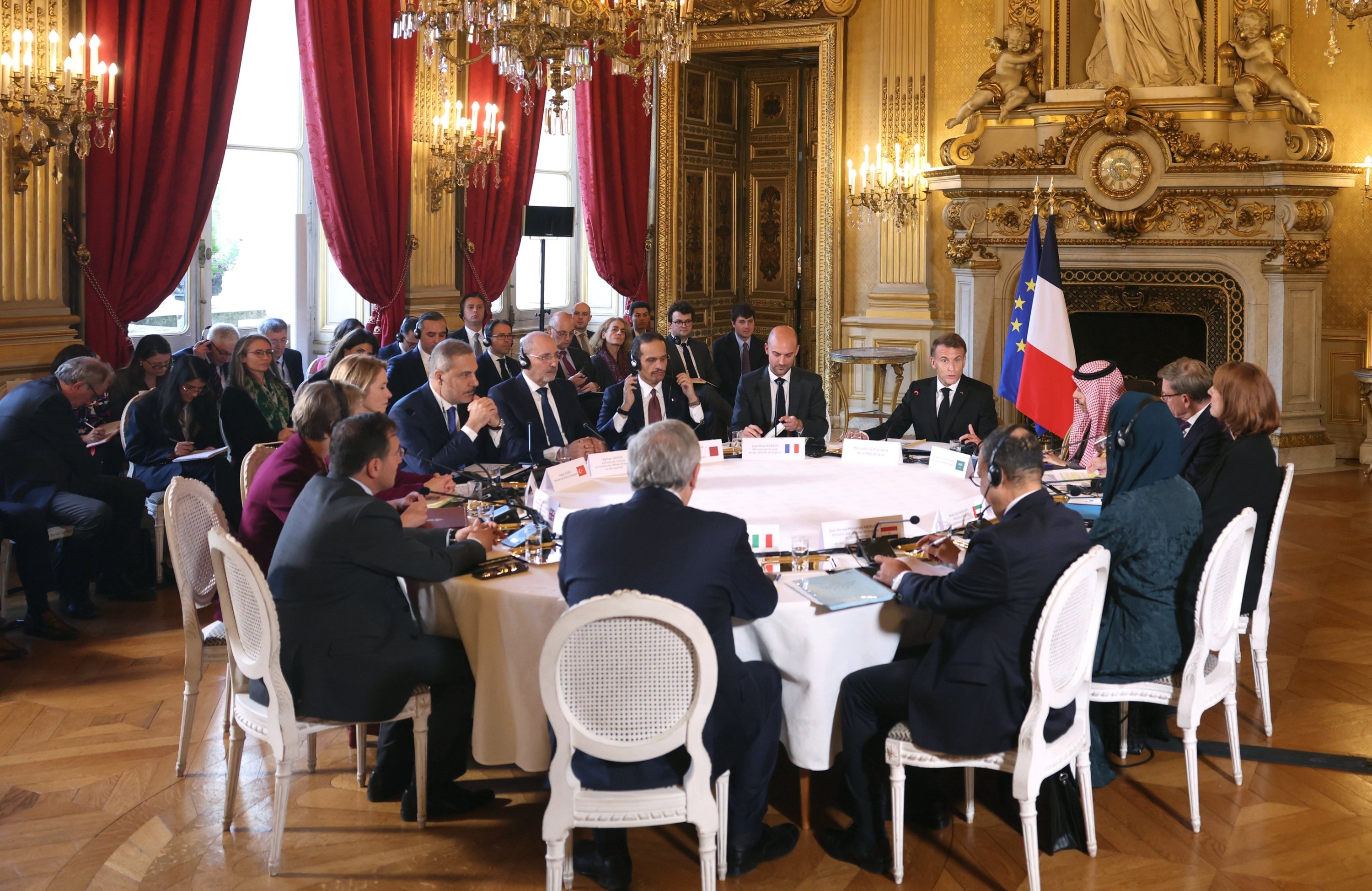
The Paris meeting brought together the top diplomats of five key Arab states – Egypt, Jordan, Saudi Arabia, Qatar and the United Arab Emirates (UAE) – with European counterparts from France, Italy, Germany, Spain and the U.K.
Türkiye and the European Union were also represented.
Before the cease-fire deal was announced, the Paris meeting had angered Israel, further straining French-Israeli relations in the wake of Macron's recognition of a Palestinian state.
Israeli Foreign Minister Gideon Saar had, in a message on social media platform X, denounced the "unnecessary and harmful" meeting "concocted behind Israel's back" at the sensitive moment of the negotiations in Sharm el-Sheikh.
But France is hoping that backing up its recognition of a Palestinian state can boost the prospects of a two-state solution, which Paris still regards as the sole prospect for long-term regional peace.
The agenda at the meeting included the International Stabilization Force evoked by Trump as part of his peace plan and support for the Palestinian Authority which runs the occupied West Bank, a French diplomatic source said this week, asking not to be named.
"It is essential to act together and get down to work," said German Foreign Minister Johann Wadephul.
Berlin has repeatedly said it disagrees with the move by France and other European countries to recognize a Palestinian state now.