Donald Trump said Sunday that the U.S. is in talks with seven countries about securing the strategic Strait of Hormuz following Operation Epic Fury.
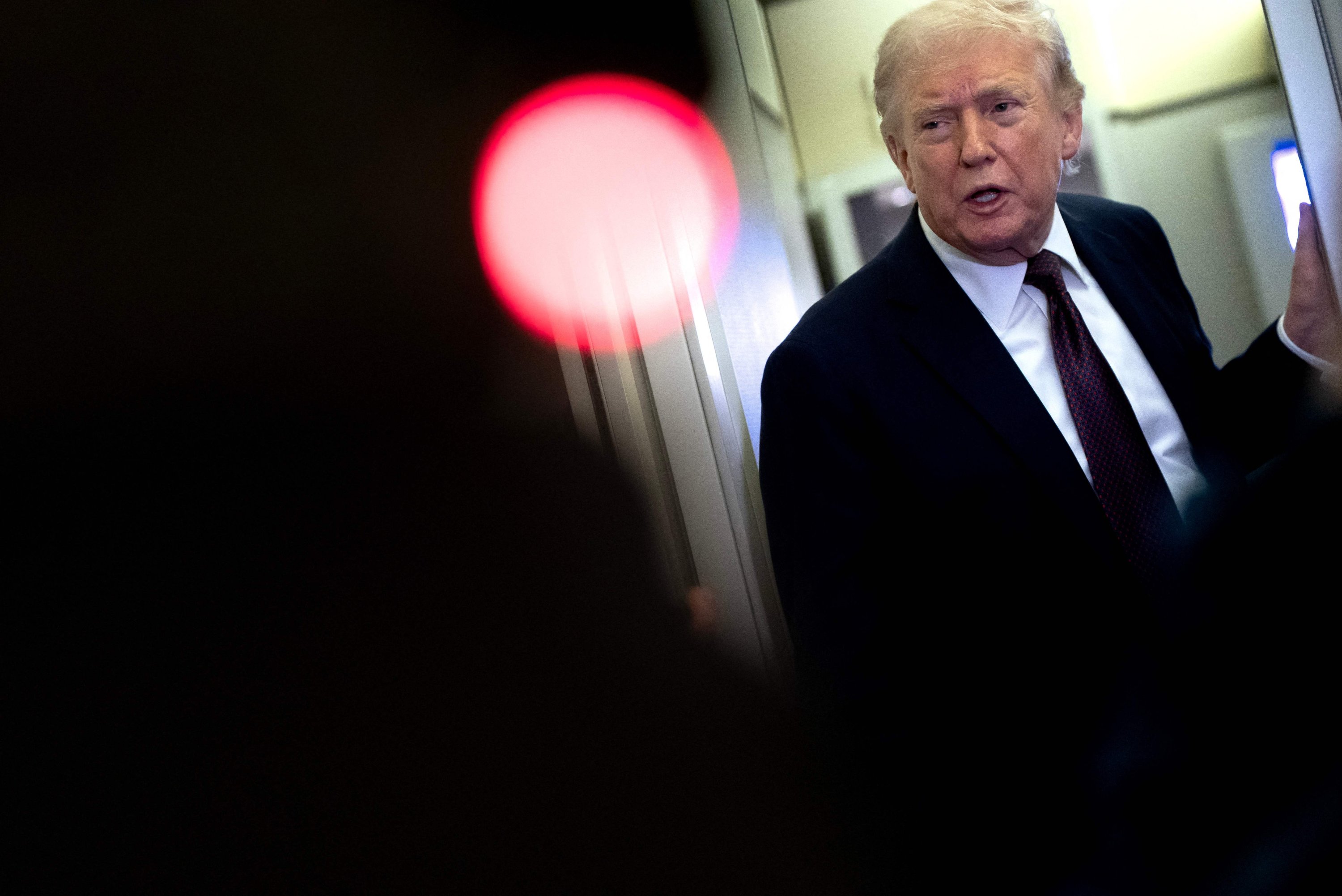
Speaking to reporters aboard Air Force One, Trump said the U.S. was talking to other countries heavily reliant on Middle East crude to join a coalition to police the waterway, where about one-fifth of the world's traded oil normally flows, but declined to name them.
He, however, said that China, which receives up to 90% of its maritime crude oil shipments through the waterway, was invited to cooperate.
"They get most of their oil, they get a lot, about 90%, from the strait. So I said ‘Would you like to come in?’ And we'll find out. Maybe they will, maybe they won't,” he said.
A Chinese government spokesperson did not respond directly to questions about Trump's request for military support from several countries to help reopen the Strait of Hormuz.
The Foreign Ministry's Lin Jian, at a daily briefing in Beijing, instead repeated China's calls for an end to the fighting, noting the impact on energy and goods trade.
Speaking about Iran’s newly appointed Supreme Leader Mojtaba Khamenei, he claimed that a video on social media showing 250,000 people cheering for him in a square was "AI-generated" and "never took place."
"Totally AI-generated. It never took place. The media knew it didn't take place, but they built it up like they have great support. They don't have support,” he said.
Trump also said that oil prices will come down as soon as the war is over, stressing that it's going to end "pretty quickly."
The Strait of Hormuz, a critical maritime chokepoint between Iran to the north and Oman’s Musandam Peninsula to the south, is one of the world’s most important shipping lanes for oil and gas.
Iran has effectively closed the strait since early March following the launch of joint attacks by Israel and the U.S. against the country on Feb. 28, which have so far killed around 1,300 people, including then-Supreme Leader Ayatollah Ali Khamenei.
Disruptions to shipping through the strait have pushed up global oil and fertilizer prices, raising concerns about energy supplies and food costs.
Trump said Saturday that countries receiving oil through the strategic waterway should take responsibility for securing the key maritime passage and that the U.S. would assist. Earlier, he said U.S. Navy escorts for oil tankers transiting the strait could begin "soon."