Culture and Tourism Minister Mehmet Nuri Ersoy visited an exhibition at the Museum of Anatolian Civilizations in Ankara highlighting the Yalburt Spring sacred monument and archaeological research into the Hittite Empire.
The exhibition, titled "A Hittite King at Yalburt Spring," was organized in collaboration with the Museum of Anatolian Civilizations and the University of Illinois and curated by professor Ömür Harmanşah.
The exhibition focuses on a sacred water monument discovered in 1970 at Yalburt Plateau in the Ilgın district of Konya, central Türkiye. The monument contains blocks bearing hieroglyphic Luwian inscriptions and is attributed to Tudhaliya IV, a king of the Hittite Empire, who ruled from approximately 1245 to 1215 B.C.
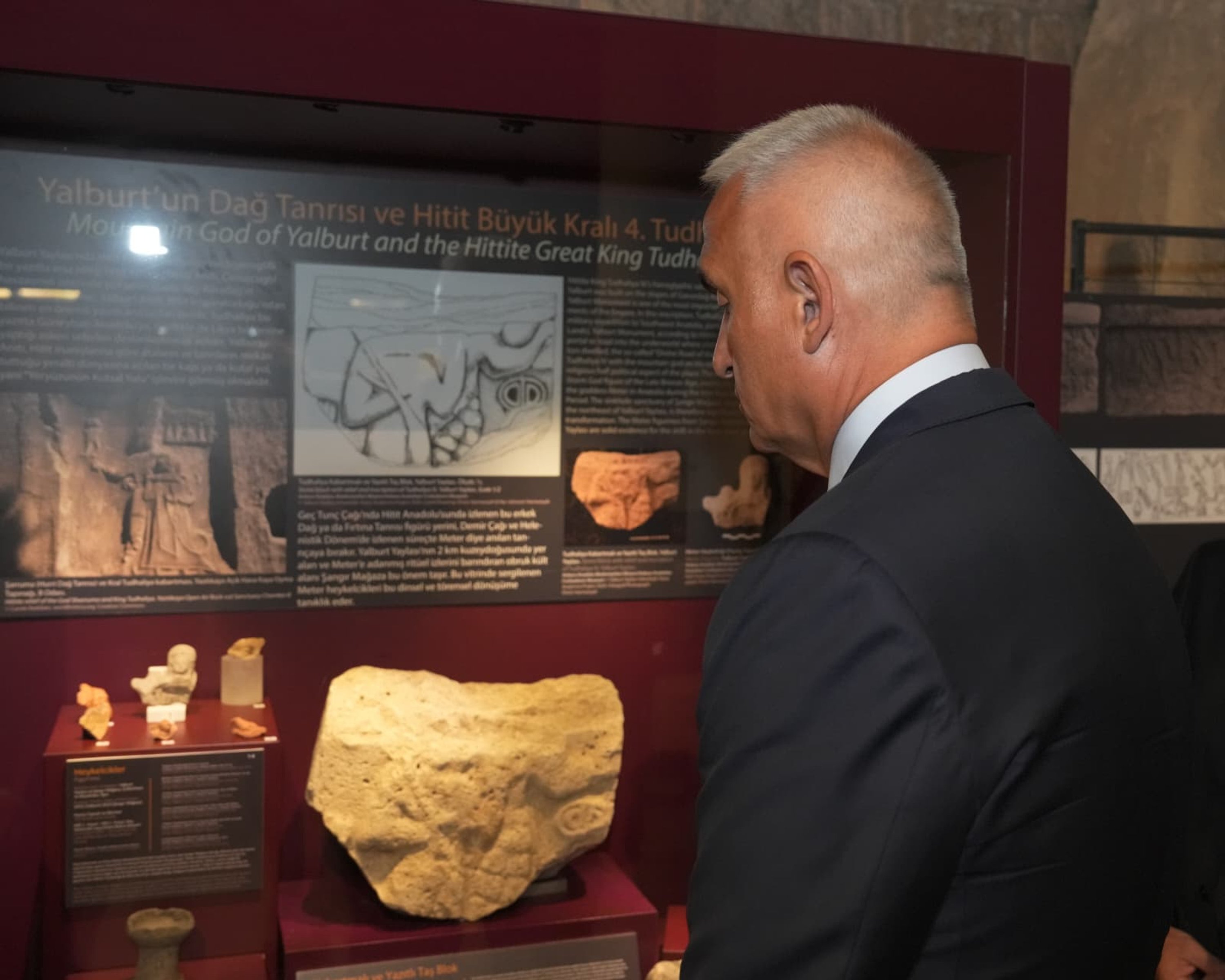
Ersoy said the exhibition offers visitors an opportunity to explore a significant part of the Hittite Empire's cultural legacy and follows the archaeological research surrounding the monument from its discovery to modern scientific documentation.
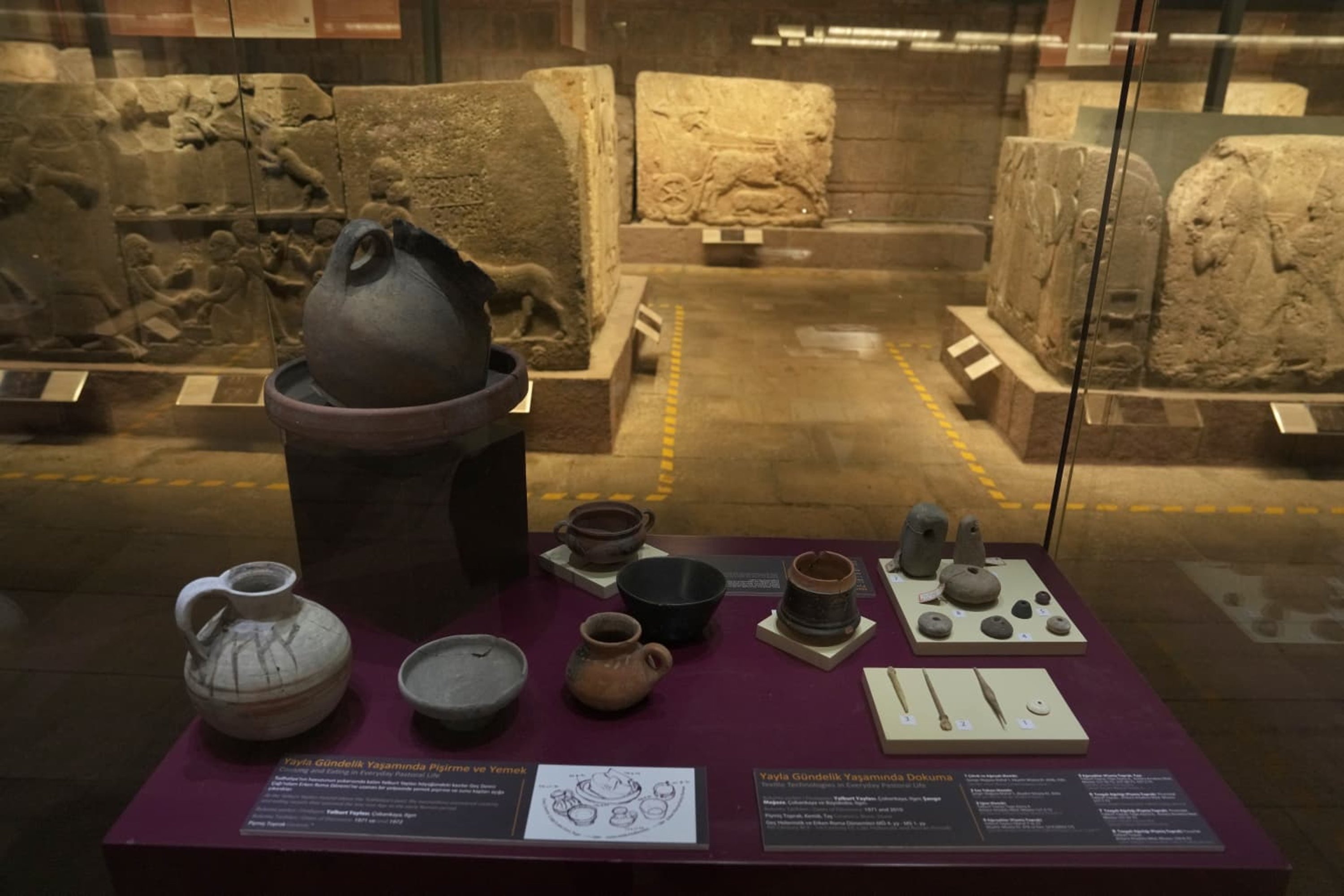
Some 40 artifacts recovered during archaeological excavations and restoration work conducted between 1970 and 1975 are displayed as part of the exhibition.
The initial work was led by Raci Temizer, with a team that included Mahmut Akok, Aliye Öztan, Levent Zoroğlu and Kemal Balkan. The artifacts provide insight into Anatolia's ancient history and the cultural legacy of the Hittites.
The exhibition also documents the research process surrounding Yalburt, going beyond the archaeological objects themselves. Visitors can examine photographs, videos, archaeological finds, drawings, field notebooks and survey forms documenting the site's investigation.
Ersoy said the materials allow visitors to follow the full archaeological process, from the discovery of a site through excavation, restoration, field surveys and scientific documentation.
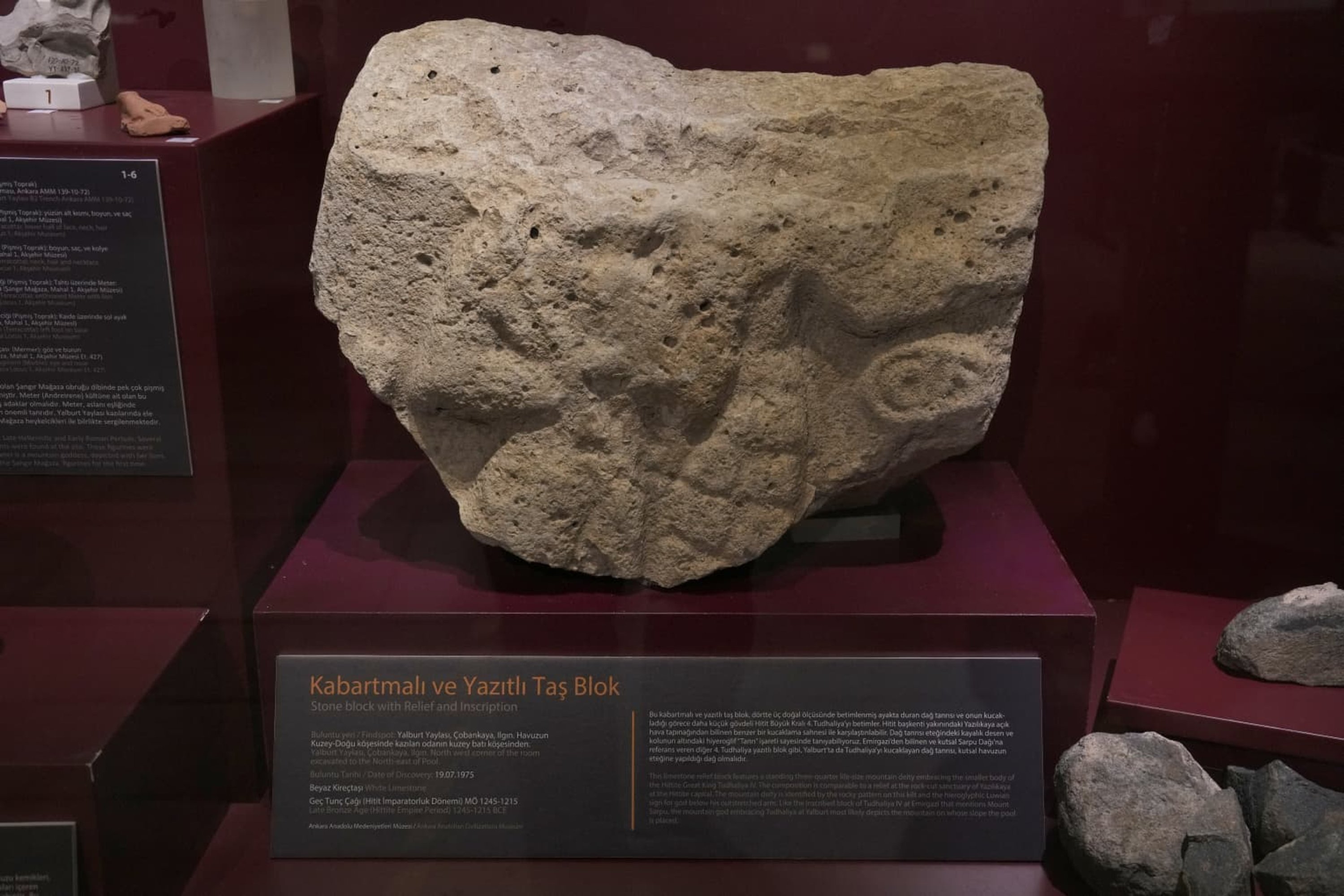
The discovery of the Yalburt monument began in September 1970, when the then-General Directorate of Roads, Water and Electricity (YSE) began excavations at Yalburt Spring to channel spring water. Workers uncovered stone blocks bearing hieroglyphic inscriptions.
Researchers from the museum were subsequently invited to the Yalburt Plateau. Archaeological excavations, architectural conservation and restoration work were carried out at the site from 1970 to 1975.
Excavations in 1971 and 1972 uncovered the original foundations and flooring of the sacred pool, allowing researchers to reconstruct its east-west layout at approximately 12.7 by 8.3 meters.
The research showed that the Hittite pool at Yalburt Spring remained in use for an extended period in antiquity. During the Early Roman period, Hittite blocks bearing hieroglyphic inscriptions were reused in a reconstruction of the pool measuring approximately 5 by 4 meters.
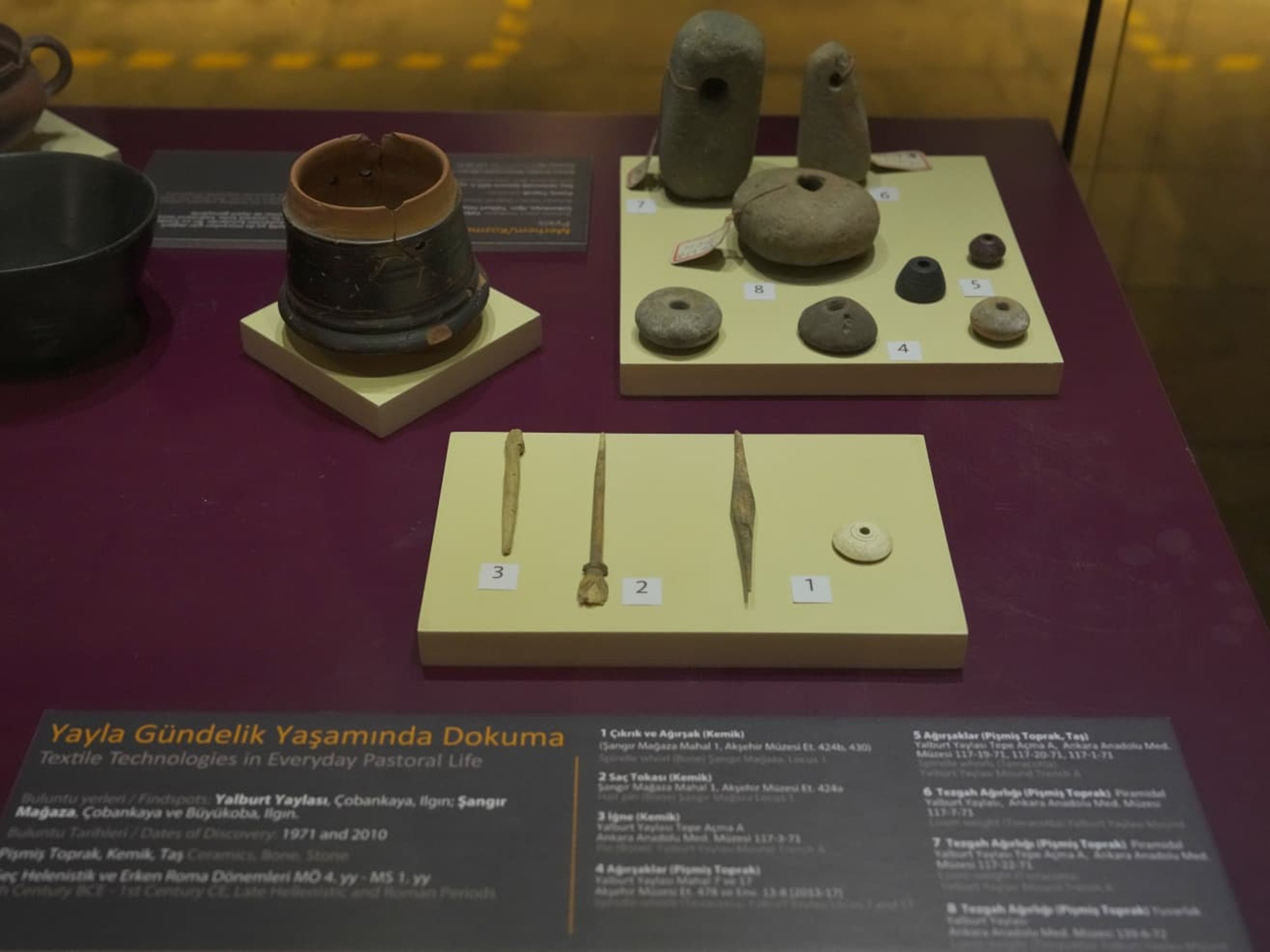
Following the discovery of the sacred pool, Temizer and his team continued excavations and test trenches in an effort to identify the Hittite settlement associated with the monument.
Work carried out in 1971 and 1972 at Yalburt Mound and the Kalkamak Cemetery ridge revealed evidence of settlements dating from the Iron Age through the Hellenistic and Early Roman periods.
The monument currently visible at Yalburt Plateau was reconstructed by Temizer and his team in 1972.
A separate archaeological surface survey project conducted between 2010 and 2021 under Harmanşah and Dr. Peri Johnson is also represented in the exhibition. The project produced additional findings and documentation concerning the Yalburt Plateau.
Ersoy thanked the Museum of Anatolian Civilizations, the University of Illinois, Harmanşah, Johnson, scientists, specialists and other members of the research teams involved in preparing the exhibition.
He also invited the public to visit the exhibition at the Museum of Anatolian Civilizations.