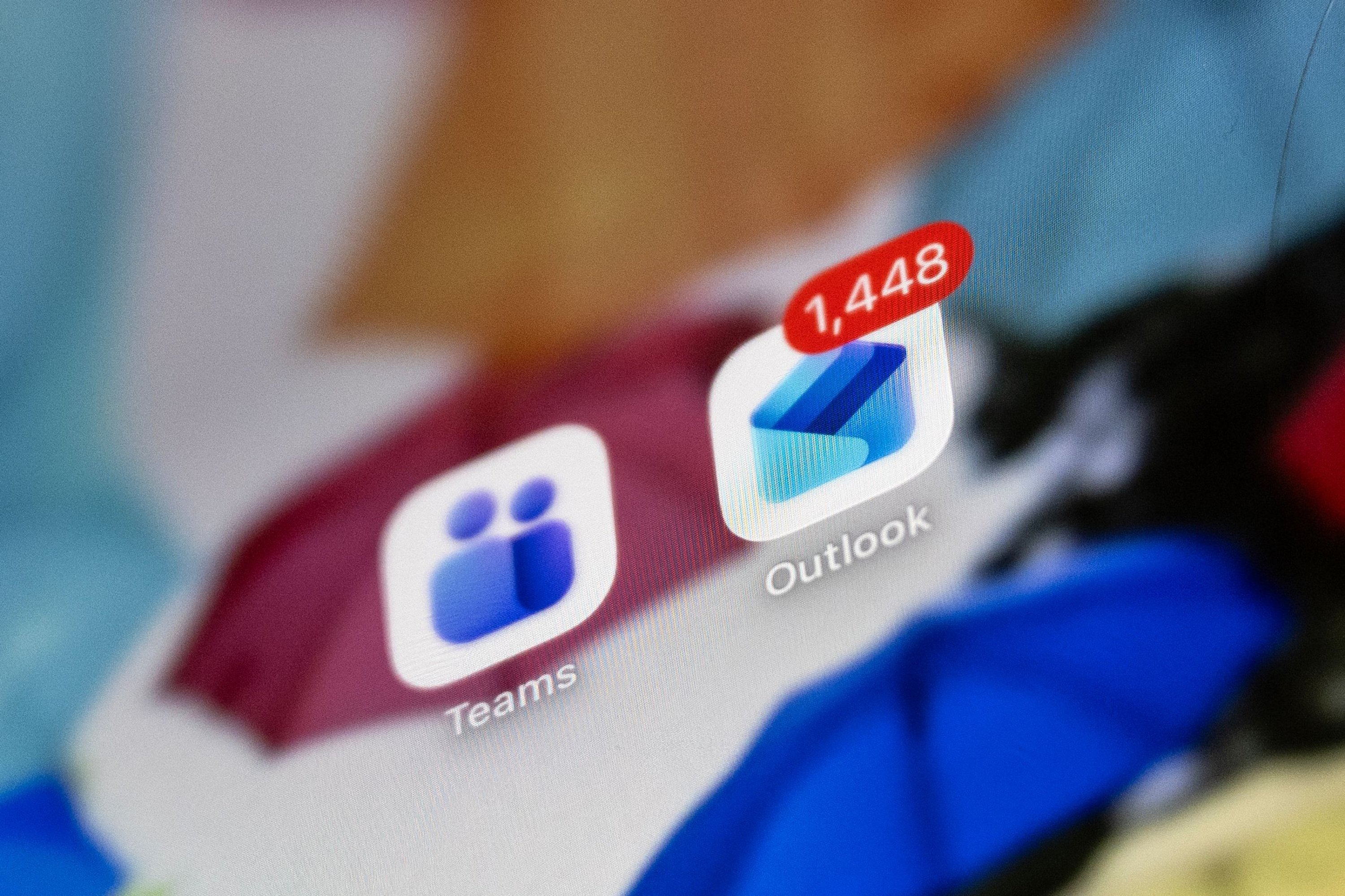
From booking tickets and paying bills to managing finances and staying connected, the internet and digital applications have become woven into almost every aspect of daily life, but also raising questions about how vulnerable we are when the technology we rely on suddenly fails.
Recent Microsoft and U.S. aviation disruptions, alongside reported cyberattacks involving institutions and companies, have exposed how failures in shared technology can spread across organizations, with experts warning that backups and alternative suppliers may retain the same underlying vulnerabilities.
The incidents had different causes, but each showed how a problem in a critical dependency could affect services far beyond its starting point.
"Shared services concentrate risk. When thousands of organizations depend on one provider, a single failure or compromise at that provider becomes thousands of incidents at once," Scott Helme, a security researcher and founder of Report URI, told Anadolu Agency (AA).
Disruptions and outages, often said to be originating from technical failures, have raised a dose of skepticism and panic among the public, starting with the U.S., but also elsewhere, with many questioning the high occurrence of such incidents in the recent period.
Starting from the issue impacting Microsoft services in dozens of countries, to the outage at JPMorgan Chase which disrupted banking services in the U.S. to the cyberattack targeting the European Commission and Ethiopian Airlines data breach – the list of disruptions taking place in the past weeks becomes lengthy.
Tech outages have become so prevalent that they are fueling a new "doomsday economy" according to CNBC, with consumers reportedly increasing spending on emergency preparedness products.
"At Ready America, which sells products like emergency survival kits, prepackaged water and high-calorie food bars, sales through e-commerce platforms have seen a roughly five-fold increase in recent days," the recent report states.
The concerns about outages, also amplified by social media, have also brought to the surface theories about artificial intelligence being the potential reason behind the disruptions.
At the same time, an aviation disruption that lasts only for a couple of hours can leave days or weekslong issues for companies and travelers, while banking glitches can leave consumers unable to access their assets, raising questions about the fragility of systems but also humans' increasing dependence on them.
However, our dependence is not limited merely to infrastructure and business operations. The way people communicate has also undergone a fundamental transformation, with messaging applications and social media platforms replacing many traditional forms of interaction.
From work through Microsoft Teams to keeping in touch with family through WhatsApp, much of our daily communication now depends on platforms operated by a relatively small number of technology companies.
Similarly, much of the data generated worldwide is stored across a handful of major cloud providers, including Microsoft Azure, Amazon Web Services (AWS) and Google Cloud, meaning that an enormous amount of information underpinning everyday activities remains dependent on a limited number of platforms and potentially exposed to disruptions or data loss.
Beyond cloud computing, the internet relies on a complex network of interconnected services, such as DNS providers, authentication systems and payment processors, which all play essential roles in keeping digital services operational.
A failure in any one of these layers can prevent users from accessing an otherwise functioning website or application, illustrating how even seemingly minor technical disruptions can have far-reaching consequences.
Saman Zonouz, an associate professor at the Georgia Institute of Technology's School of Cybersecurity and Privacy and School of Electrical and Computer Engineering, stressed that publicly available information does not establish direct AI involvement with recent disruptions.
Still, Microsoft CEO Satya Nadella on Wednesday warned that artificial intelligence could cause more technology outages.
Speaking at The New York Times DealBook Summit in New York, Nadella said AI tools were rapidly identifying software vulnerabilities, increasing pressure on companies to address security flaws before attackers could exploit them.
Nadella said AI could enable "essentially a nation-state level persistent attacker going after you all the time, so that means we have a lot of fragility."
Meanwhile, U.S. President Donald Trump downplayed the disruptions when questioned Tuesday, saying: "It's life."
His administration has made accelerating AI development and deployment a central policy objective.
Its July 2025 AI Action Plan outlined more than 90 federal policy actions, including removing regulatory barriers, speeding infrastructure development and expanding exports of American AI technology.
Asked about the risks surrounding that push, Zonouz said the outages primarily highlighted the challenges of integrating new technology into aging infrastructure.
"These outages say more about adding new technology to aging infrastructure than about AI itself," he told AA.
"Whatever the pace of AI adoption, the goal should not be bulletproof AI but systems that keep operating safely when AI or software fails."
He called for staged deployments, tested procedures for reversing changes, manual fallbacks, human oversight of safety-critical decisions and transparent incident reporting.