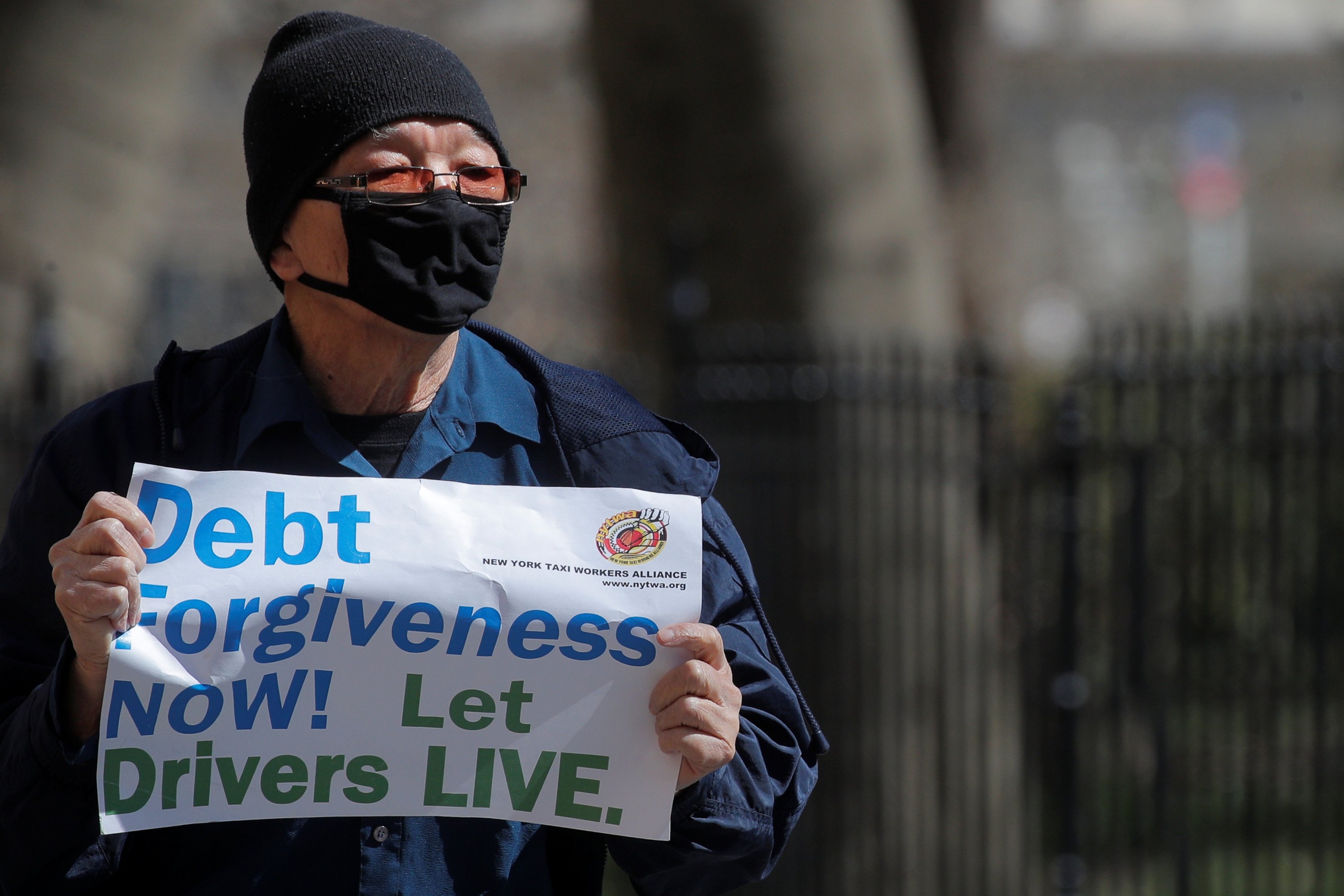
Could money shame, or a collection of painful and negative feelings toward money, be a major contributing factor behind the dramatic rise in U.S. suicide rates in recent years? Certified money coach Tammy Lally of Washington, D.C. seems convinced that it is.
Lally’s brother died by suicide in 2007 after receiving a foreclosure notice. Shortly afterward, Lally’s mortgage business collapsed in the Great Recession. She says she went from driving a Mercedes and living in an oceanfront house to filing for bankruptcy.
“It blew me away, the level of pain and sadness that I was experiencing,” Lally says. “I didn’t tell anybody. I was pretending like nothing was going on.”
She eventually realized she was experiencing shame – a deep sense that she was fundamentally flawed and unworthy because of her financial problems. When she switched careers to become a financial advisor, she began to notice how pervasive those feelings were. Some clients were ashamed of their debts, or their wealth. Others lived beyond their means or “played the big shot,” picking up the tab at restaurants or constantly rescuing others.
“I’m seeing every one of my clients having shame around their money,” she says. “We live in a culture where our money is our worth.”
We aren’t born knowing how to manage money, and everyone makes mistakes with their finances, says Lindsay Bryan-Podvin, a financial therapist in Ann Arbor, Michigan. Plus, there are many factors beyond our control, such as the economy, industry trends and unemployment rates.
Too often, though, people feel there’s something deeply wrong with them if they struggle with their finances. They may feel they’re stupid, immoral, lazy or “bad with money,” or ruminate on what they should have done differently.
“When we make mistakes with money or things happen to us, we tend to internalize it and make it really personal,” says Bryan-Podvin, author of “The Financial Anxiety Solution. ” “If you’re beating yourself up, that’s a good sign that there is money shame.”
Money shame can lead us to overspend to “keep up with the Joneses,” avoid our finances or criticize others who are struggling, says certified financial planner Edward Combs, a marriage and family therapist in Charlotte, North Carolina.
“Shame induces us to be judgmental,” Coambs says. “Because when we see other people struggling with something, it creates discomfort for us.”
Many therapists and researchers say that shame differs from guilt: We feel guilt when we’ve done something bad, but feel shame when we believe we are bad or deeply flawed. People may believe they’re so defective that they are unworthy of ever being loved or connected to others, Coambs says. In extreme cases, that could lead to thoughts of suicide.
“Shame really is about the loss of a relationship,” Coambs says. “It’s communicating to you that I’m not worthy or valuable of being in a relationship either with myself or with another person.”
Suicides rarely have a single cause, and researchers can only speculate about why the suicide rate rises and falls. Studies show that suicides tend to rise with the unemployment rate, and a 2020 study for the American Journal of Epidemiology found that financial strain is a significant risk factor for suicide attempts. A recent suicide in India over dowry shaming also supports this finding.
But in the past couple of decades, suicide rates have increased in good economic times and bad. The suicide rate rose 35% from 1999 through 2018, according to the Centers for Disease Control and Prevention (CDC), before dropping in 2019 from 14.2 suicides per 100,000 people to 13.9. Statistics for 2020 are not yet available.
Lindsay speculates that income stagnation and increased economic insecurity could be contributing factors. This has rung especially true over the last year, with families all over the world plunged into economic crisis over the COVID-19 pandemic. Although parents bear most of the brunt, children have been gravely affected too.
Coambs notes that the suicide rate for men in the U.S. is more than three times higher than that for women, which could be in part due to internal pressure to be “providers and performers.”
“Men struggle more with their mental health (after financial setbacks) because they tend to associate their self-worth to their income or their net worth,” Coambs says.
All this is scary stuff. But suicide is preventable, and money shame can be tamed, financial therapists say. The first step is acknowledging what you’re feeling.
“The first and most pragmatic piece is being able to name it,” Coambs says. “Having the language to describe experiences does help to start to alleviate the distress.”
So can getting support. Being able to discuss money shame with a trusted person can help you feel less alone, Lindsay says.
“Many people think they’re the only person in the world or the only person in their community who has experienced money shame,” Lindsay says.
Being compassionate with yourself and looking for lessons from the experience may also help. Ask yourself what you can learn, or what you can do differently next time.
Lally turned her experience into a TED Talk that’s been viewed more than 2 million times, “Let’s Get Honest About Our Money Problems,” and a book, “Money Detox .”
“I didn’t have a name for it until it happened to me,” Lally says. “And my mission is to get people to talk about it.”