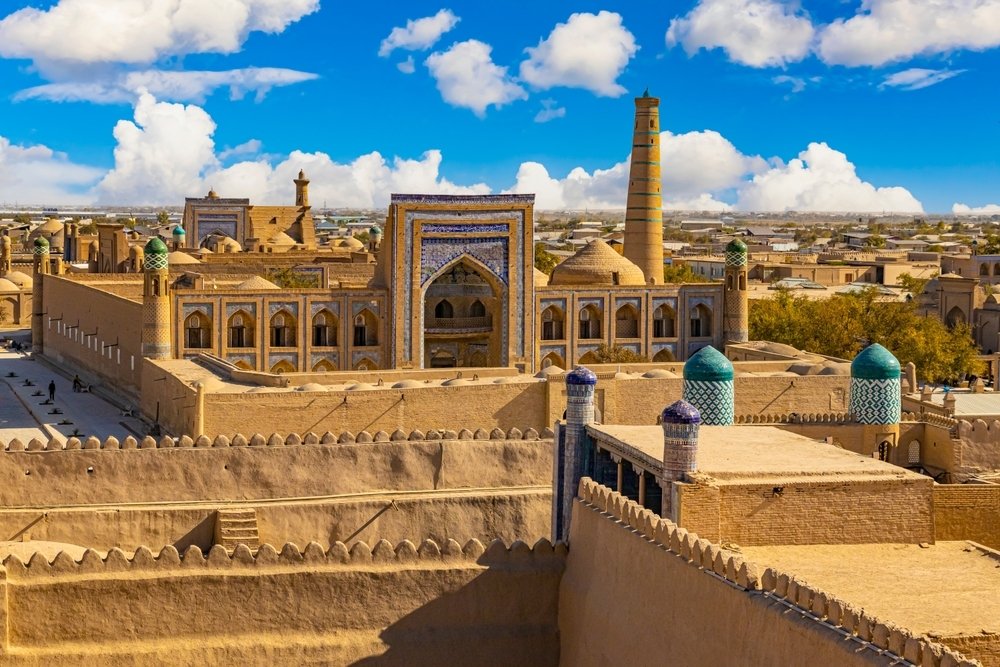
Rich in energy resources, strategically located and distinguished by its deep-rooted history, Central Asia has been a ground of rivalry for great powers for centuries. At the heart of this struggle lies Uzbekistan, a nation whose story is key to discovering the soul of the region. Today, Uzbekistan has stood out as one of Central Asia’s most dynamic countries, shaped by political reforms, economic diversification and a revived cultural life since independence. With a young population exceeding 34 million, rich underground resources and the legacy it has bestowed upon the Turkish-Islamic civilization, these lands are at the center of both the past and the future.
The best way to experience Uzbekistan is by wandering through its historic cities. A journey from the walls of Khiva to the spirituality of Bukhara, from the splendor of Samarkand to the modern streets of Tashkent, offers the key to understanding the nation’s story. The moment you step into Uzbekistan, it is as if an invisible voice whispers in your ear, "Welcome to the land of your ancestors." For centuries, these lands have been the very heart of the Silk Road, where caravans, travelers and scholars once crossed paths. To understand Central Asia’s story, there is no better place to begin than Khiva.
Khiva, located in the Khwarezm region south of the Oxus River, served as the capital of the Khiva Khanate from 1512 to 1924. Though relatively small in size, it flourished for centuries as a center of trade, culture and politics. Today, walking through its narrow streets allows visitors to trace the legacy of the Khans and uncover stories etched into humanity’s collective memory.
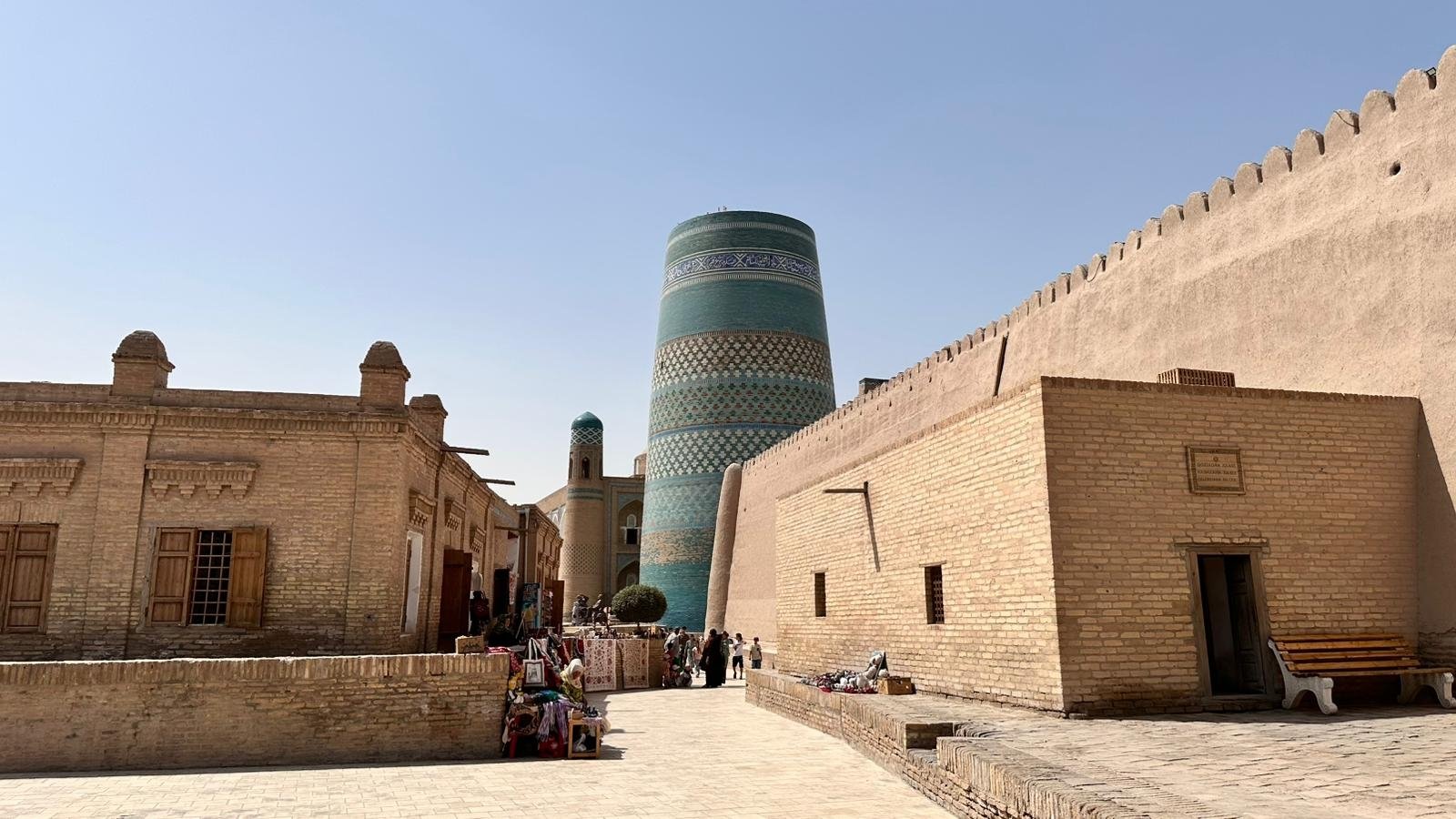
Arriving at Urgench Airport and passing through Ata Darvaza, the northern gate of the old city, you step into Itchan Kala – a walled inner town that now stands as a living open-air museum. Here, history breathes through every stone. Just beyond the gate rises the Kalta Minor Minaret, shimmering with turquoise tiles, the first enchanting sight Khiva offers. Within the walls lie hundreds of mosques, madrassas, minarets and mausoleums – each whispering its own story across the centuries.
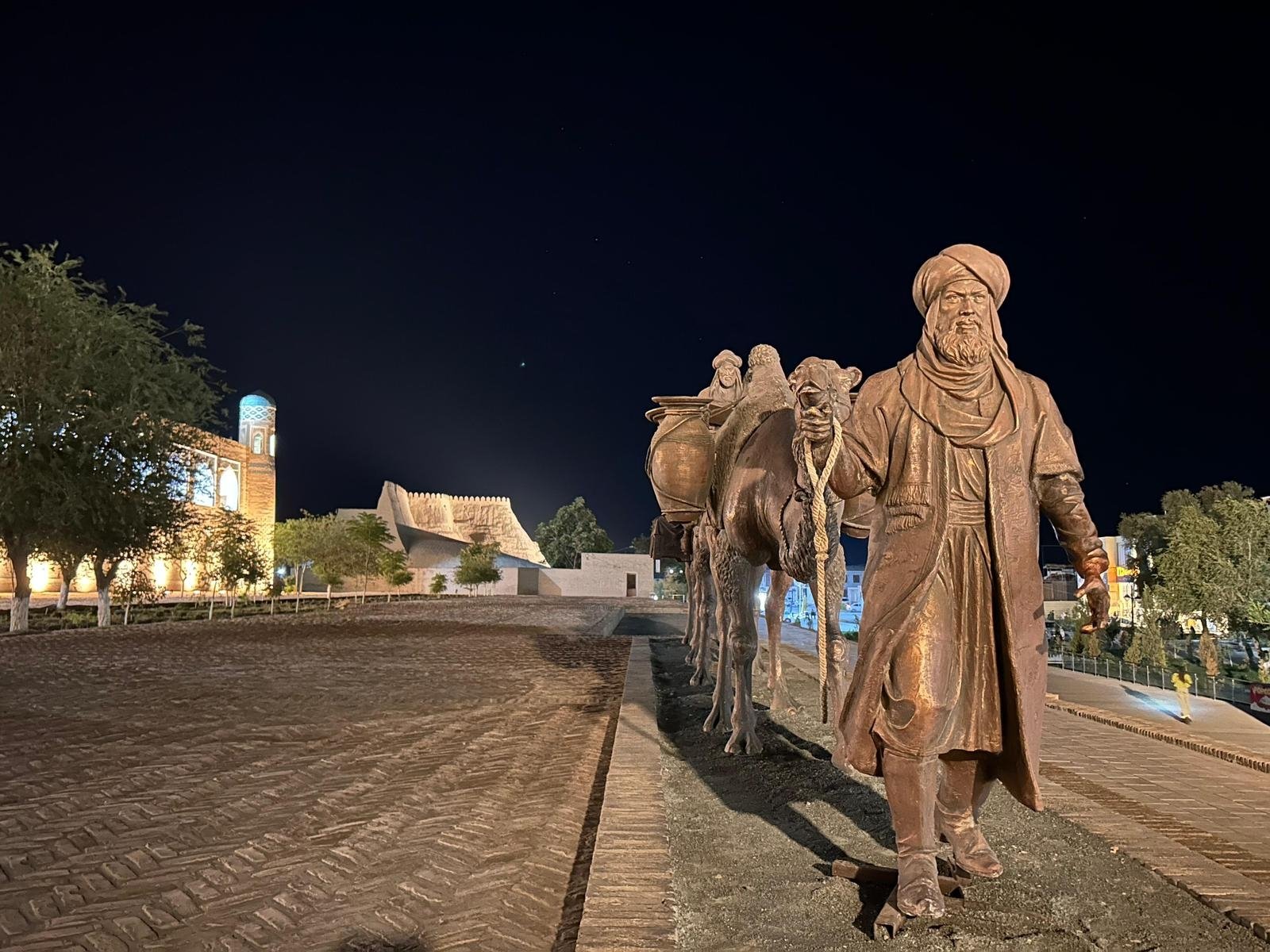
Khan palaces, caravanserais and bathhouses recall the vibrant days of the Silk Road, while the State Puppet Theater and Avesta Museum highlight the city’s cultural wealth. With its near-desert climate, Khiva sees hot, windy summers and cold winters; spring and autumn remain the best seasons to explore its timeless beauty. Often left in the shadow of Bukhara’s spirituality and Samarkand’s grandeur, Khiva distinguishes itself with serenity and authenticity. Walking through its narrow lanes, you encounter not just the memory of a city, but traces of humanity’s collective past.
Kalta Minor is Khiva's most recognizable symbol and the city's most striking structure. Construction began in the 19th century with the ambition of making it the tallest minaret in Central Asia, but it was left unfinished after the death of Khiva Khan Muhammad Emin Khan in 1855. Yet, even at 29 meters, the minaret dazzles with its grandeur. As the only minaret entirely covered in tiles and majolica, it is unique. The shades of turquoise and green shift with the sunlight, their shimmering hues turning the scene into something out of a fairy tale. In Uzbekistan, erecting grand and imposing minarets was as much a display of political power as it was an architectural achievement. The spirit of Khiva still breathes within this unfinished yet magnificent minaret.
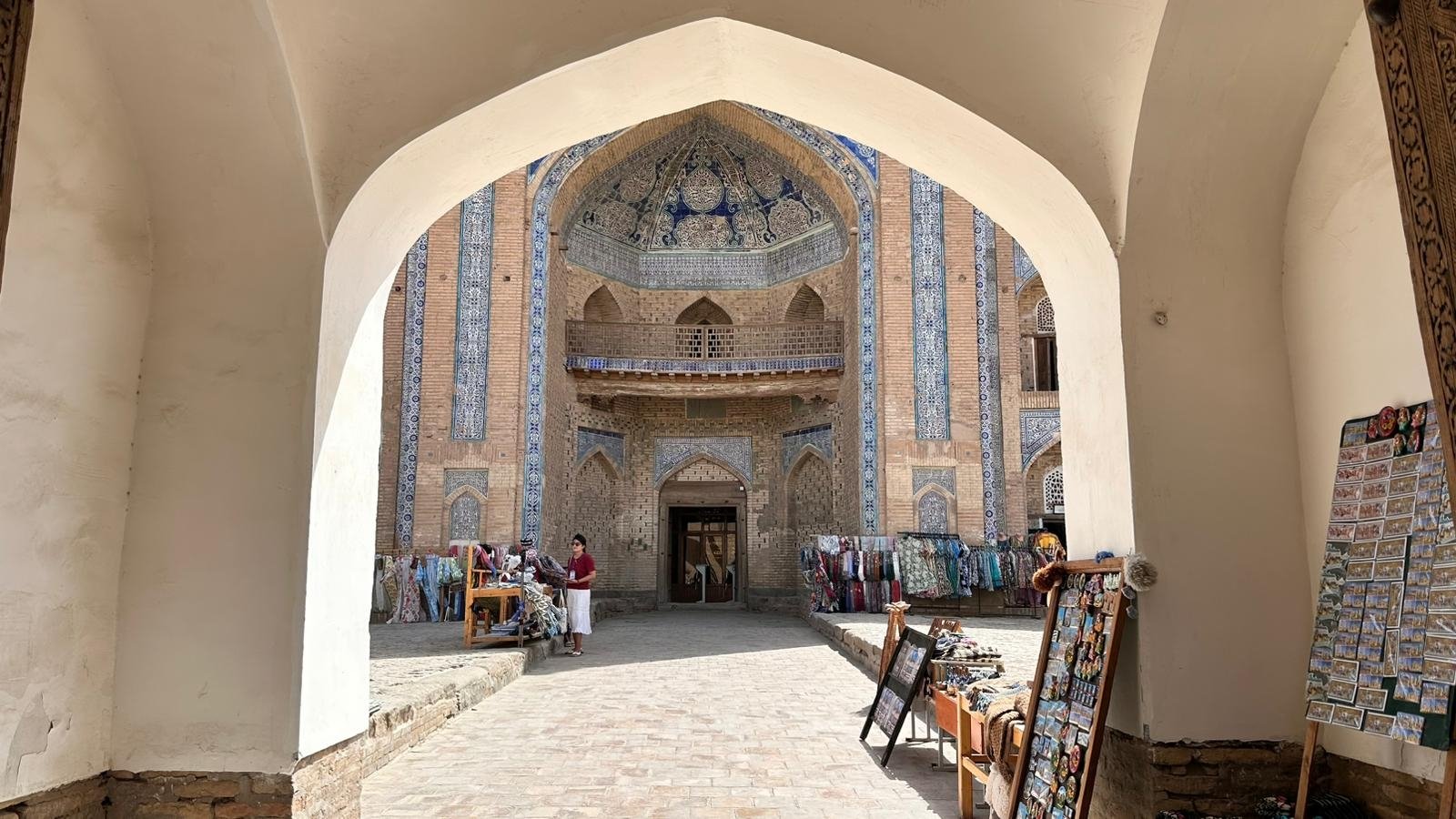
Köhne Ark, the first palace of the Khiva Khanate, rises right next to the madrassa. Completed in 1688, this magnificent structure was the political and administrative center of Khiva for centuries. It houses winter and summer mosques, a harem, a mint, a dungeon, stables and rooms for the khan's private life. The palace was a center where the Khiva khans conducted state affairs, received ambassadors and held ceremonies.
One of the most striking details is that the inns had two reception halls. The first was a simple tent in the garden; foreign guests were first welcomed here and then ushered into the magnificent reception hall inside the palace, showcasing the power and prestige of the Khiva Khan. This arrangement reflected both respect for the guest and the tradition of gradually imbuing the Khiva Palace with its grandeur.
The gate of the Old Ark is as striking as the palace itself. Both wings of the gate are adorned with floral ornaments, and Persian couplets are embedded within these decorations. The poems praise the ruler's justice and the perpetuity of his reign, while also emphasizing the gate's beauty: "May this beautifully ornamented gate be perpetuated by justice; may our ruler live long on his throne. I inscribed it with his blessed name, may justice increase in his domain. This gate is adorned with precious ornaments; if a Chinese miniaturist saw it, he would surely be astonished." These couplets are among the unique examples that show how art and politics are intertwined in the Khiva palace architecture.
Tosh-Hovli Palace, built between 1830 and 1838 on the orders of Allakuli Khan, remains one of Khiva’s most remarkable landmarks. As its name suggests, the “Stone Courtyard Palace” is distinguished by its wide, stone-paved courtyards. Originally designed as a royal residence, it soon became both the daily home and the administrative center of the Khiva khans. Over time, reception halls were added, where ambassadors and guests were welcomed with the grandeur befitting the khan’s court.
One of the palace's most striking features is its special harem section and its elaborately decorated rooms. The rooms surrounding the courtyards are adorned with turquoise tiles, plasterwork and wood carvings. These decorations, crafted by renowned Khiva masters, reflect the artistic sensibility of the period.
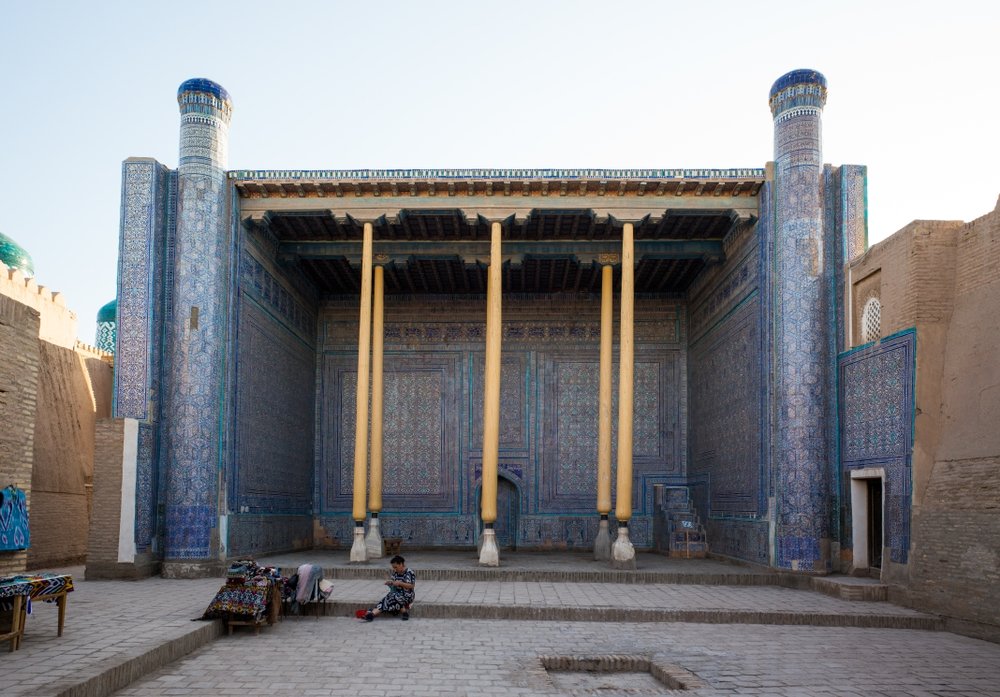
Today, shops selling items unique to Khiva culture are located in some sections of the palace. These include traditional Khiva kalpaks, handcrafted carpets and local headdresses called "Turkestan doppas.” Visitors have the opportunity to both explore history and experience the culture as part of daily life. Turkestan music is occasionally performed in the palace courtyards, offering visitors a visual and an auditory journey through history.
The Friday Mosque in Khiva stands out as one of the city's most distinctive works of art. Built in the late 18th century, the mosque is supported by 212 wooden columns, seven of which date back to much earlier periods. Each column is uniquely carved, as if crafted by a different master: one bears motifs in the Seljuk style, while another reflects the elegance of later centuries. This diversity makes the mosque a place where eras intersect. While it may appear plain from the outside, its interior is dazzling with a forest of carved columns and a serene atmosphere. Today, the mosque officially serves as a museum, but its floors remain carpeted and prayers continue within its walls, a reminder of Khiva's vibrant history, steeped in faith and tradition.
Although Khiva is often overlooked in today's Uzbekistan tours, it holds the distinction of being the country's most authentic city. Amid the spirituality of Bukhara and the grandeur of Samarkand, Khiva stands out for its tranquility and preserved texture. Here, you'll discover traces of humanity's collective memory in every street you walk through.