The Middle East region emerged after the collapse of the Ottoman Empire in the wake of the first imperialist war. The region was largely shaped by the traditional colonial powers, namely the United Kingdom and France. The colonial powers did not allow Sharif Hussein, a prominent Arab leader best known for leading the Arab revolt against the Ottoman Empire during World War I, and his allies to establish a pan-Arabic state, which was promised by the colonial powers in return for Hussein’s support against the Ottoman Empire. Instead of establishing a pan-Arab state, the colonial powers divided the Arab world into many artificial states.
The colonial powers created a dependent Arab world and the region is still under direct or indirect control of the colonial powers. The colonial powers sowed the seeds of hostility between Arabs and Turks and successfully built a wall or barrier between the two most influential states in the region. Despite the effective support given by a group of Arabs to the colonial Western states, they did not allow Arabs to establish a pan-Arab state after World War I. They not only kept Arabs divided but also created many artificial political entities in the region. In other words, they kept the Arabs dependent on Western global powers.
Since then, they haven't allowed Arab people to unite their relatively small political entities. This can be seen in today’s regional system, which is still largely dependent on the West. As long as the Arab states remain dependent on the West, they will continue to remain passive in most regional issues. Therefore, there is no meaningful political Arab world today and the Arab states cannot react to the Israeli atrocities in Palestine. The Arab regimes put immense pressure on their respective populations not to resist the blatant oppression of the Palestinian people by Israel. Eventually, all these regimes left the region full of domestic and regional crises.
Second, Western colonial powers agreed to divide the territory of the region and to keep it dependent. Literally, the Sykes-Picot Agreement is a secret agreement signed by France and Britain in 1916 dividing the Ottoman Middle Eastern territories. In reality, it does represent the imperialist spirit of the division of the region by the traditional colonial powers. Similar to the spirit and trauma of the Treaty of Sevres, the Sykes-Picot Agreement has been haunting the regional people and states since then. Hence, many scholars coined the term “Sykes-Picot Version 2” to describe the further fragmentation of Middle Eastern states following the so-called Arab Spring. These already-divided territories experienced another wave of division.
Third, the process of creating the Israeli state in the Palestinian territories was initiated by the colonial powers after World War I. Historically, the Balfour Declaration was the first official document promising a “national home” for the Jewish people. In reality, it paved the way for the establishment of a Jewish state, which has been one of the main sources of regional conflicts. The declaration of the Israeli state and its aggressive and expansionist policies since then are among the main reasons for Middle Eastern insecurity and instability. With the unconditional support of Western colonial powers, Israel has been using violence against both the Arab states and the Palestinian people.
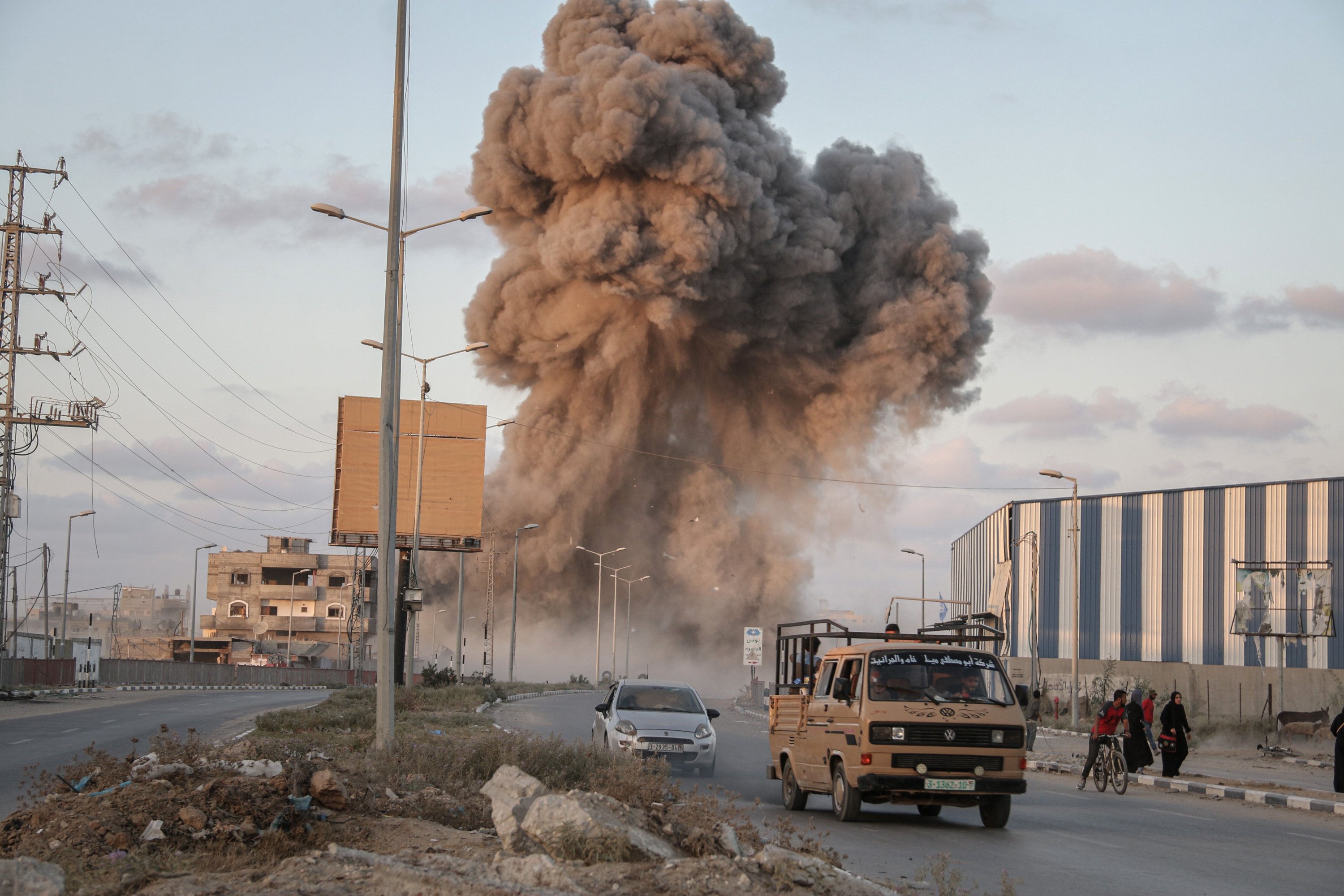
The region has been experiencing one of the most dramatic transition periods since Oct. 7. Representing the Gaza Strip, which has been under Israeli blockade since 2007, Hamas attacked Israeli targets and caused great damage on the Israeli side. It was an overall reaction to the continuous Israeli expansionism and the ongoing ethnic cleansing of the Palestinian people living in Jerusalem, the West Bank and the Gaza Strip. The Israeli response was, or is, the most brutal one in the modern history of the region. Backed by some of the most powerful global powers, such as the United States, the United Kingdom, France, Germany, Canada and Australia, Israel has been indifferently targeting innocent Palestinians, killing children and women and destroying residential areas, hospitals and schools. So far, Israel, with the support of its complicit states, has killed more than 40,000 Palestinians, most of whom are civilian non-combatants. Approximately 75% of those who are killed by Israel are children, women and the elderly. Most observers call the Israeli atrocities genocide.
Due to the longtime regional problems created by the colonial powers, the ongoing impact of Arab insurgencies and revolutions and the persistent use of violence by Israel, the Middle East is on fire again. As a matter of fact, the region has been on fire since the collapse of the Ottoman Empire. That is why Sezai Karakoç, a respected Turkish poet, writer and thinker, described the modern/post-Ottoman Middle East as “a rooster whose head is plucked” and remains bloody.
Today, there is still no regional leader or political platform to provide regional security. Most regional countries experience certain difficulties in their domestic and foreign policies. Many regional states lack national unity, central authority, internal legitimacy or economic welfare. While some states are quite vulnerable, others are failed ones. In addition, as one of the most penetrated regions in the world, the Middle East is still open to the intensive intervention of global powers, and the fate of the regional nations is largely determined by the very same global powers.