With the cease-fire process that began on April 9, the future of the war in Iran remains uncertain. Although efforts are being made to keep the process moving despite various setbacks, the fact that the conditions put forward by the parties do not align is stalling the process.
It appears that the demands, which can be summarized in about 10 points, have become deadlocked on three critical issues: the elimination of Iran’s nuclear capabilities and the transfer of enriched uranium to the United States, control of the Strait of Hormuz, and the cessation of Israeli attacks in Lebanon. Additionally, issues such as cutting off Iran’s support for proxy forces, disarming Hezbollah and reducing the range of Iran’s tactical ballistic missiles remain unresolved between the parties.
Looking at the broader picture, the process is proceeding less as a negotiation and more as a clash between U.S. demands and Iran’s resistance.
Then, why is a cease-fire table assembled?
There may be three main reasons for the U.S. shift toward a cease-fire: domestic political pressures and economic costs, international isolation and most importantly, the depletion of missile stockpiles in the Gulf region to 30%. The fact that the U.S. has failed to achieve its military and political objectives in the war also supports this situation. Iran’s missile capabilities have not been eliminated, its nuclear facilities have not been destroyed and the regime has not been overthrown. Furthermore, the influence of a provocative actor like Israel on the U.S. continues to this day.
One of the most striking and even unusual aspects of this process is that the cease-fire is limited to 15 days. While cease-fires in international relations are typically not time-bound, the fact that a specific date has been set here is noteworthy. This raises a critical question: Does the U.S. truly want to end the war, or is it using the cease-fire negotiations to buy time for greater military preparations?
Developments on the ground offer important clues for understanding the answer to this question.
Iran tends not to retaliate unless directly attacked. However, following 40 days of fighting, it is working to heal its wounds, address its shortcomings and rebuild its capabilities. At the same time, it is striving to enhance its military strength with support from Russia and China.
On the U.S. side, there is significantly more active military movement.
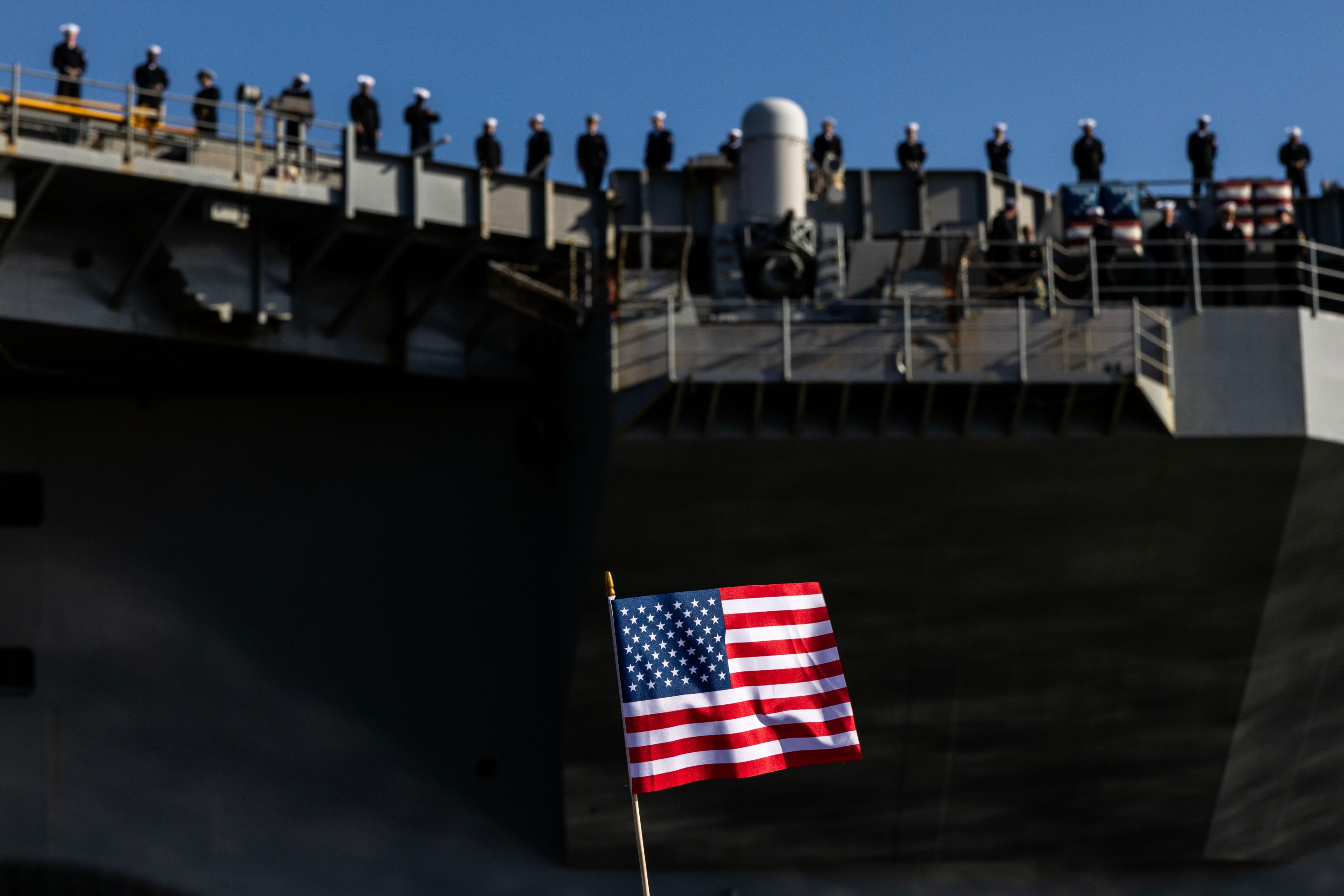
Ground forces have been deployed to the region. A brigade from the 82nd Airborne Division, marines brought in from South Korea and the 142nd Artillery Brigade are deployed in the region. In terms of naval power, one aircraft carrier is in the Eastern Mediterranean, another is south of Oman and a third is reportedly en route to the region.
In addition, the U.S. is conducting intensive ammunition transfers using C-17 Globemaster transport aircraft. Tomahawk missiles, Terminal High Altitude Area Defense (THAAD) and Patriot air defense systems are being deployed to the region. There is also information indicating that a significant portion of ammunition from U.S. forces in Europe has been redirected to the Gulf.
Furthermore, the U.S. is working to establish a new air defense system in the Middle East. Mobile tactical radars and the Airborne Warning and Control System (AWACS) early warning aircraft have been deployed to replace the fixed radars destroyed by Iran. Israel is also being heavily supported in this context.
The issue of mines in the Gulf is also noteworthy. The mines laid by Iran off Basra are intended for coastal defense and do not obstruct maritime traffic. Therefore, the U.S.’s mine-clearing efforts may point to a different objective: paving the way for a potential amphibious operation. This scenario strengthens the likelihood that the U.S. has planned a ground attack on Iran from the Strait of Hormuz and the Basra coast. The artillery units deployed to the region are also a significant indicator supporting this possibility.
In light of all this data, it can be assessed that the U.S. is using the current process not as a cease-fire but as a new strategic buildup process. Unlike the initial buildup, which was leader-focused and had limited objectives, this time it appears a broader plan has been devised – one that is longer-term, more intensive and incorporates different operational methods. April 22 stands before us as the critical threshold that will determine the direction of this process.