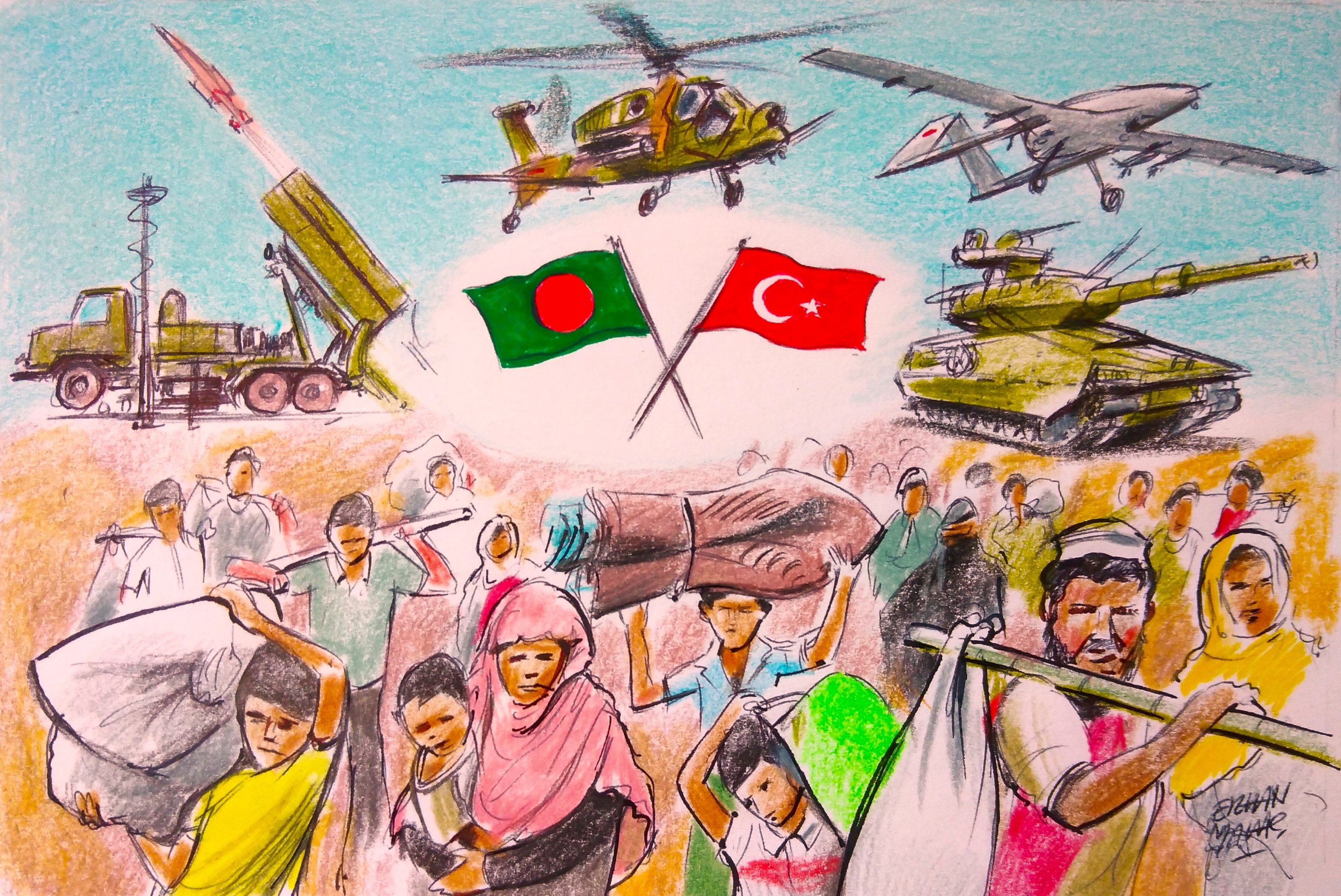
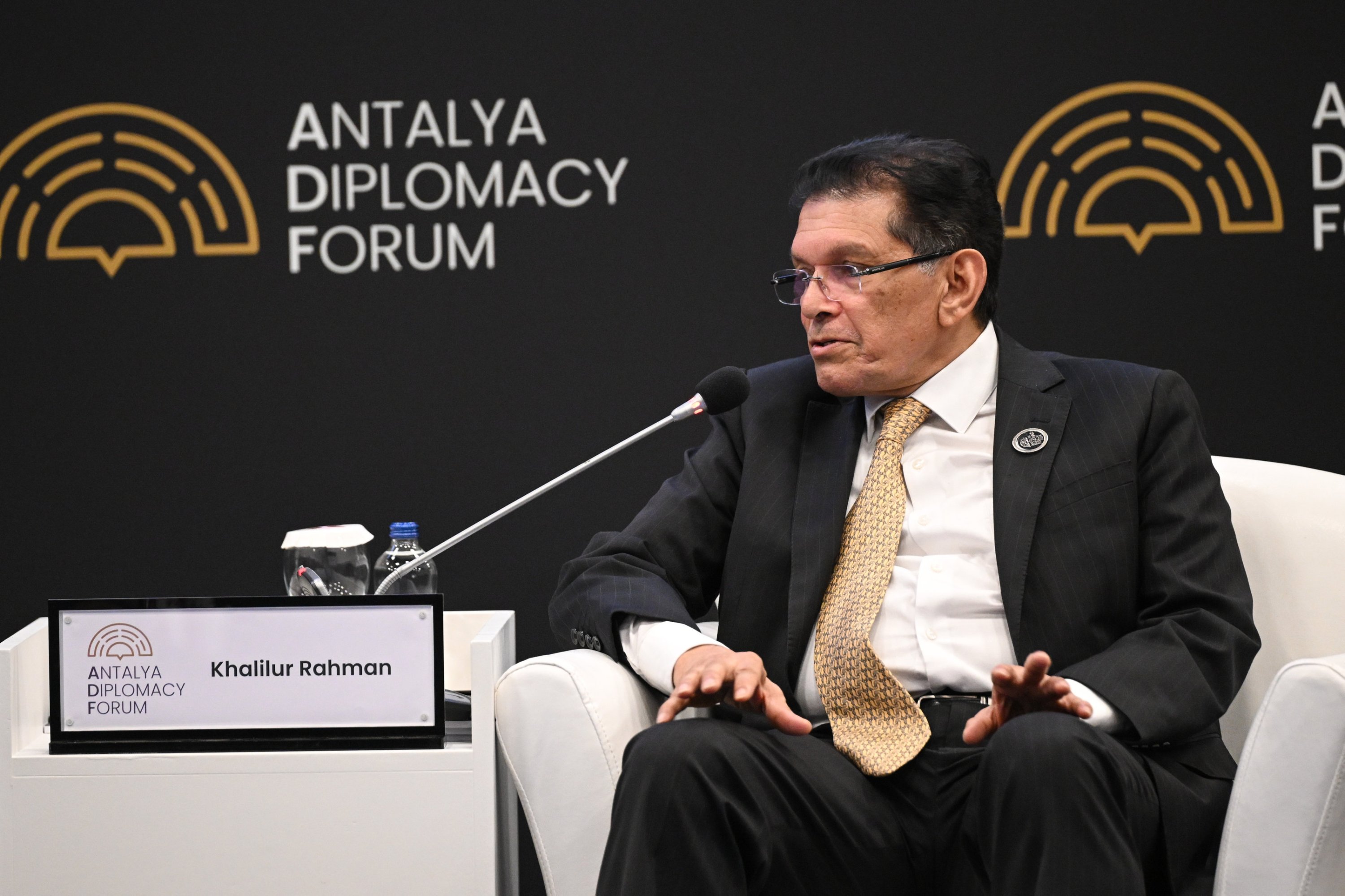
Recent diplomatic exchanges between Ankara and Dhaka, including the Bangladeshi Foreign Minister Khalilur Rahman's visit to Türkiye and his participation in the Antalya Diplomacy Forum (ADF), have drawn attention to a warming relationship between the two countries. Yet focusing only on visits, agreements and growing trade risks missing a more important question: Why is Bangladesh becoming strategically relevant to Türkiye now?
The answer lies not only in bilateral goodwill but in a deeper change inside Bangladesh and a wider transformation across South Asia.
For much of the past 15 years, Bangladesh’s foreign policy operated within a narrow strategic space. Its external relations were strongly shaped by alignment with India. This did not mean Bangladesh lacked other partners but it did mean that many diplomatic decisions were made with clear regional limits.
The effects were visible. Relations with Pakistan remained largely frozen, with direct flights suspended for years. Institutional cooperation declined and even academic and cultural exchanges became politically sensitive. Bangladesh’s foreign policy was not inactive but it was constrained.
This condition is now changing.
The political developments following July 2024 and the elections of February 2026 have opened a new phase in Dhaka’s diplomacy. Recent statements by Rahman at the Antalya Diplomacy Forum (ADF) show that Bangladesh is now moving beyond internal stability toward a more active regional role. The emerging leadership, linked with the Bangladesh Nationalist Party (BNP) and its broader allies, has shown interest in a more balanced approach. The goal is not confrontation with India but diversification beyond a single strategic direction.
The change is not entirely new. It reflects an earlier phase in Bangladesh’s diplomatic history.
Under BNP’s founder, President Ziaur Rahman, in the late 1970s, Bangladesh pursued a foreign policy that aimed for balance. His administration expanded relations with the wider Muslim world while maintaining engagement with different global partners. Bangladesh became active in the Organisation of Islamic Cooperation (OIC) and played a key role in regional cooperation through the South Asian Association for Regional Cooperation (SAARC).
Today, Bangladesh appears to be moving back toward that idea. However, the current moment goes further. Dhaka is not only adjusting its foreign policy. It is also trying to shape the regional environment.
The renewed emphasis on regional cooperation is a clear example. Bangladesh’s leadership has recently stressed the need for a more active and effective SAARC, noting that South Asia remains one of the least integrated regions in the world. This is a shift in posture. Bangladesh is no longer presenting itself only as a country seeking stability, but as one willing to play a role in regional integration.
For Türkiye, this shift carries strategic meaning.
Ankara’s engagement in South Asia has long been centered on its strong relationship with Pakistan. This partnership remains important and will continue. However, South Asia is no longer a simple geopolitical space. It is becoming more complex, more competitive and more connected to the wider Indo-Pacific.
In this environment, relying on a single regional partner can limit strategic reach. Bangladesh offers something different.
First, scale matters. With a population of more than 170 million, Bangladesh is one of the largest countries in the world. Its economy has grown steadily over the past decade, especially in manufacturing and exports. It is now an important part of global supply chains, particularly in textiles, and it is also becoming a growing consumer market.
Second, geography matters even more. Bangladesh sits on the Bay of Bengal, a region that is gaining importance in global trade and regional security discussions. It connects South Asia with Southeast Asia and lies close to key maritime routes. It also links to India’s northeast and to wider regional connectivity projects. This makes Bangladesh not only a national market but also a regional gateway.
Third, Bangladesh is connected to wider regional frameworks such as the Bay of Bengal Initiative for Multi-Sectoral Technical and Economic Cooperation (BIMSTEC), which links South Asia with Southeast Asia. Through these platforms, Bangladesh is not only participating in regional politics. It is helping shape the space between regions.
Fourth, there is already a strong base for cooperation with Türkiye.
Defense ties have started to grow, and Bangladesh has shown interest in Turkish technologies, including unmanned systems. This reflects a wider trend where countries are seeking diversified defense partnerships, and Türkiye has emerged as a credible partner in this area.
Humanitarian engagement has also strengthened Türkiye’s position. Since the Rohingya crisis of 2017, Turkish institutions and organizations have been active in Bangladesh. This has built trust and created a positive image of Türkiye as a reliable partner in times of need.
Economic relations are also expanding, although they remain below their full potential. There are clear opportunities in textiles, machinery, infrastructure, energy and logistics.
The importance of Türkiye in this context is also reflected in diplomatic behavior. Rahman's first bilateral visit as the foreign minister was to Ankara, and his return to Türkiye for the ADF within weeks further underlines the priority given to this relationship. Such signals suggest that Dhaka sees Türkiye not only as a partner but as part of its broader diplomatic reorientation.
Yet the real importance of Bangladesh goes beyond these individual sectors. South Asia is undergoing a period of changing alignments. India and China are competing for influence. Pakistan remains closely connected to China. Afghanistan is also evolving in ways that affect the regional balance.
In this situation, countries that can maintain flexibility and balance are becoming more valuable.
Bangladesh is positioning itself as one of those countries. It is not choosing one side. Instead, it is opening space for multiple partnerships. This approach matches Türkiye’s own foreign policy style, which values flexibility, multi-directional engagement and strategic independence.
For Ankara, this creates a clear opportunity. Rather than seeing Bangladesh only as a friendly country or a growing market, Türkiye can begin to view it as an eastern strategic anchor in South Asia. This would not replace existing partnerships. It would complement them and expand Türkiye’s regional reach.
This shift does not require sudden policy changes. It can develop through steady steps. Türkiye can deepen defense cooperation, increase trade and investment, strengthen institutional links, and continue humanitarian engagement. It can also engage Bangladesh as part of a broader regional approach that connects South Asia with wider Asian frameworks.
For Bangladesh, closer ties with Türkiye offer a way to diversify its external relations while maintaining regional stability. For Türkiye, Bangladesh offers access to a large and growing economy, a key geographic position, and a partner that is actively redefining its role in the region.
The current moment should therefore not be understood simply as a period of improving relations. It reflects a structural shift. Bangladesh is moving from a phase of constrained diplomacy to one of strategic balance. Türkiye, if it looks beyond established patterns, is well placed to engage with this transition.
What appears today as growing diplomatic warmth may, in fact, be the early stage of a deeper realignment in South Asia.