This year, the Nobel Peace Prize was awarded to Nihon Hidankyo, a Japanese anti-nuclear weapons group founded by survivors of the atomic bombs in Hiroshima and Nagasaki. Hidankyo was recognized "for its efforts to achieve a world free of nuclear weapons and for demonstrating through witness testimony that nuclear weapons must never be used again."
Indeed, as the victims and witnesses who share their testimonies are now very old or have mostly passed away, it is crucial to maintain awareness of the destructiveness of these weapons of mass destruction (WMDs). The atomic bombs dropped on Hiroshima and Nagasaki at the end of World War II have been subjects of literature worldwide. Turkish poet Nazım Hikmet Ran’s 1956 poem "Little Girl" ("Kız Çocuğu") was also written about this tragedy. Every year on Aug. 6, the tragedies of Hiroshima and Nagasaki are commemorated around the world at various memorials. Notably, there is also such a memorial in Ankara. The Hiroshima Bell in Ankara is located in a prominent spot on Jinnah Avenue in the Botanical Park in Çankaya, near the landmark tower Atakule.
This leads us to the importance of nuclear non-proliferation and disarmament and reminds us of the guiding principle of Turkish foreign policy, "Peace at Home, Peace in the World," set by the nation's founding leader, Mustafa Kemal Atatürk, in 1923.
Universal human rights and the right to live free from the fear of a nuclear apocalypse are indispensable. Abiding by agreements ("pacta sunt servanda") is a fundamental principle of international law. Unfortunately, many decision-makers around the world who should be making rational and sensible decisions do not always act rationally in their domestic or foreign policy practices. Diplomacy and the protection of national interests are the main motivations of all states, yet they often criticize their counterparts for failing to comply with universal human rights principles.
Yet, the issue of disarmament and nuclear non-proliferation is complex, and the detailed aspects of such matters are perhaps best addressed by expert academics like Mustafa Kibaroğlu and Şebnem Udum. For my part, I have discussed the United Arab Emirates (UAE) Nuclear Power Plant in an article published in the prestigious Middle East Policy journal. I felt the need to touch upon the subject of nuclear energy, as Türkiye is a country currently developing civilian nuclear energy and is committed to the Non-Proliferation Treaty. Like the UAE, Türkiye seeks to acquire nuclear energy to ensure a safe, secure and uninterrupted baseload energy supply.
Nuclear energy, if implemented safely, is a strategic resource with no atmospheric emissions and can provide uninterrupted electricity. However, nuclear power plants carry significant risks, as we have seen from the Chernobyl and Fukushima Daiichi meltdowns. The management of nuclear waste and the catastrophic consequences of potential accidents show that nuclear plants are associated with considerable hazards.
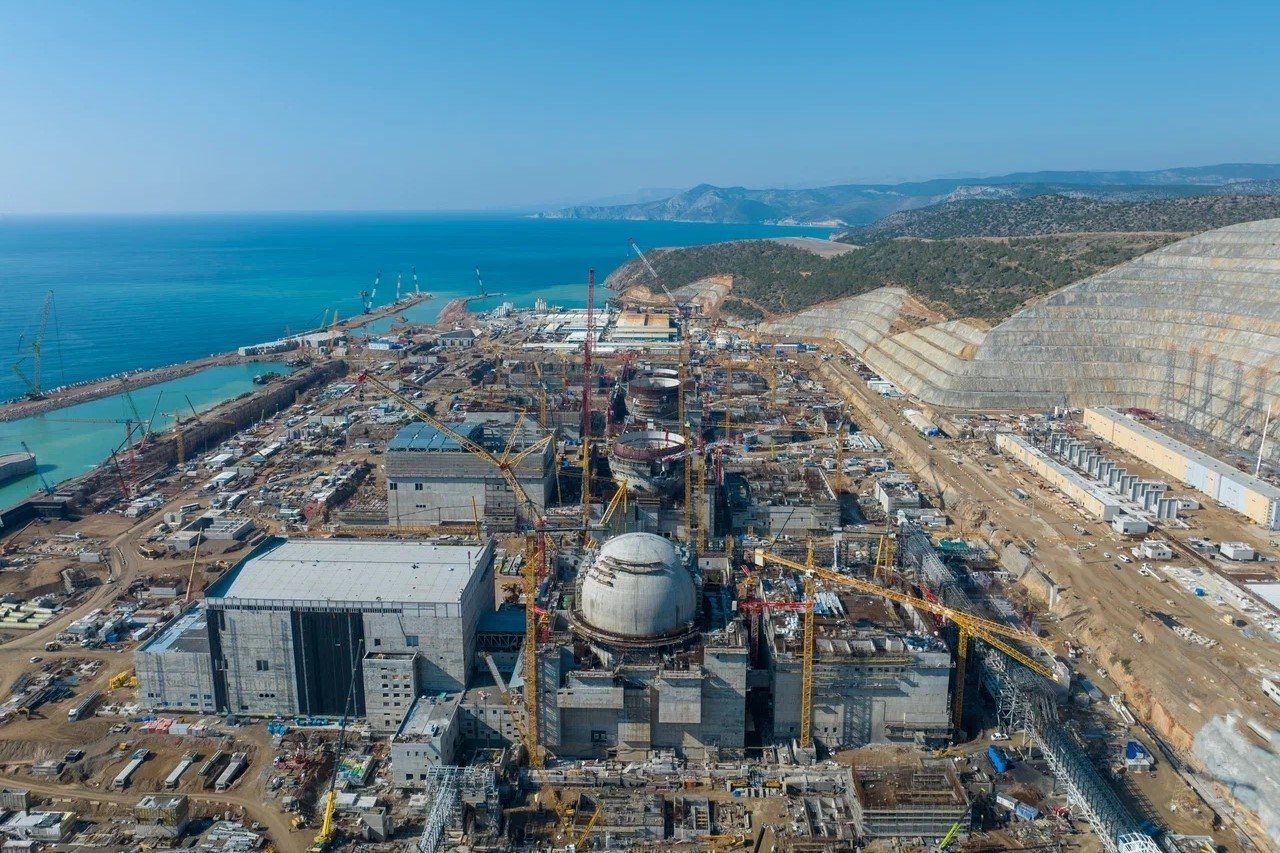
Additionally, the fuels used in nuclear power plants, though possessing much lower radioactivity than weapons-grade uranium and plutonium, are subject to international inspections. Türkiye signed the Treaty on the Non-Proliferation of Nuclear Weapons (NPT) in 1968 and ratified it in 1970. Like all NPT signatories, Türkiye is subject to international inspections by the International Atomic Energy Agency (IAEA). Türkiye’s first nuclear power plant, the Akkuyu Nuclear Power Plant, is also under IAEA inspections. However, Türkiye will only use civilian nuclear energy for peaceful purposes, specifically energy generation.
Under the non-proliferation regime, the IAEA inspects and monitors the international nuclear energy system and reports suspicious cases to the United Nations Security Council (UNSC), recommending sanctions if necessary. Countries that violate the NPT or are suspected of doing so, such as Iran and North Korea, face severe international sanctions.
India, Pakistan, and Israel have never signed the NPT and are widely believed to possess atomic weapons. None of these countries are NATO members. Iran, meanwhile, has special negotiation processes, and although questionable, according to Armenian sources, may have tested certain weapons capabilities due to abnormal seismic activity. In any case, if Iran were to possess nuclear weapons, it would destabilize regional balances, further jeopardize security in the Middle East, and negatively impact Türkiye’s national security.
While most experts and academics agree that the proliferation of nuclear weapons poses a security risk for everyone on Earth, some academics argue that nuclear weapons could prevent conflicts, a highly speculative claim. John Mearsheimer published an article in 1993 the Foreign Affairs magazine suggesting that Ukraine should maintain its nuclear deterrent capability. However, Mearsheimer's assumption could also accelerate the collapse of the current international order, as scenarios resembling neo-medievalism are becoming more common. Most states critical of the current UNSC seek reform, not the collapse of the global system. Additionally, if more countries were to acquire nuclear weapons (as inferred from Mearsheimer's arguments), not all of them would necessarily have the infrastructure or rational governance to safely and securely manage such weapons, which would heighten insecurity and risk.
These times, international governance and a stronger institutional order are indispensable for maintaining a non-proliferation regime. Institutions and collective security organizations such as NATO play a critical role in the security of the North Atlantic, Europe and Türkiye. As a member of the NATO alliance, Türkiye is under a nuclear deterrence and defense umbrella that protects member states. NATO, the world's most significant collective security organization and defense alliance, serves as a valuable "insurance" against global geopolitical crises. This was made clear with Finland and Sweden's memberships after 2022.
In conclusion, it is vital to recognize the importance of nuclear disarmament in Türkiye's region and the defense umbrella provided by NATO deterrence. Just as Türkiye is a key contributor to NATO's security, NATO is also a key security provider for Türkiye's national security. I sincerely hope that NATO's significance will not be undermined again following the U.S. elections in November. Any rhetoric suggesting that NATO is obsolete would only weaken the alliance and make its members less secure.