The 2026 FIFA World Cup comes down to a meeting worthy of football's biggest stage.
Defending champions Argentina will face European champions Spain in Sunday's World Cup final at MetLife Stadium, with Lionel Messi bidding to lead La Albiceleste to consecutive titles while Spain's young stars attempt to usher in a new era by reclaiming the sport's biggest prize.
Kickoff is scheduled for 10:00 p.m. (3:00 p.m. ET) in the championship match of the first 48-team World Cup, co-hosted by the United States, Canada and Mexico.
It is only the second all-Spanish-speaking World Cup final in history, following Uruguay's victory over Argentina in the inaugural 1930 decider and the first to feature the reigning champions of Europe and South America.
For Argentina, the stakes extend beyond defending the trophy they won in Qatar four years ago. Lionel Scaloni's side are chasing a fourth World Cup title and a place alongside Brazil's 1958 and 1962 teams as the only nations to successfully defend the championship.
Spain, meanwhile, are seeking their second World Cup crown after their triumph in South Africa in 2010, hoping to cement their status as international football's dominant force after capturing the European Championship.
Few finals could script a richer narrative, as arguably football's greatest-ever player, Messi, takes on his presumed successor, Lamine Yamal, with both being products of Barcelona's legendary La Masia academy.

Argentina's road to the final has been defined by resilience as much as quality.
The South Americans comfortably won Group J with victories over Algeria, Austria and Jordan before navigating a demanding knockout stage that repeatedly tested their character.
They edged Cape Verde 3-2 in the Round of 32, rallied to defeat Egypt by the same score in the Round of 16, overcame Switzerland 3-1 after extra time in the quarterfinals, and produced another dramatic comeback against England in the semifinals.
Trailing late in Atlanta, Enzo Fernandez equalized before Lautaro Martinez struck deep into stoppage time to seal a memorable 2-1 victory and send the defending champions back to the final.
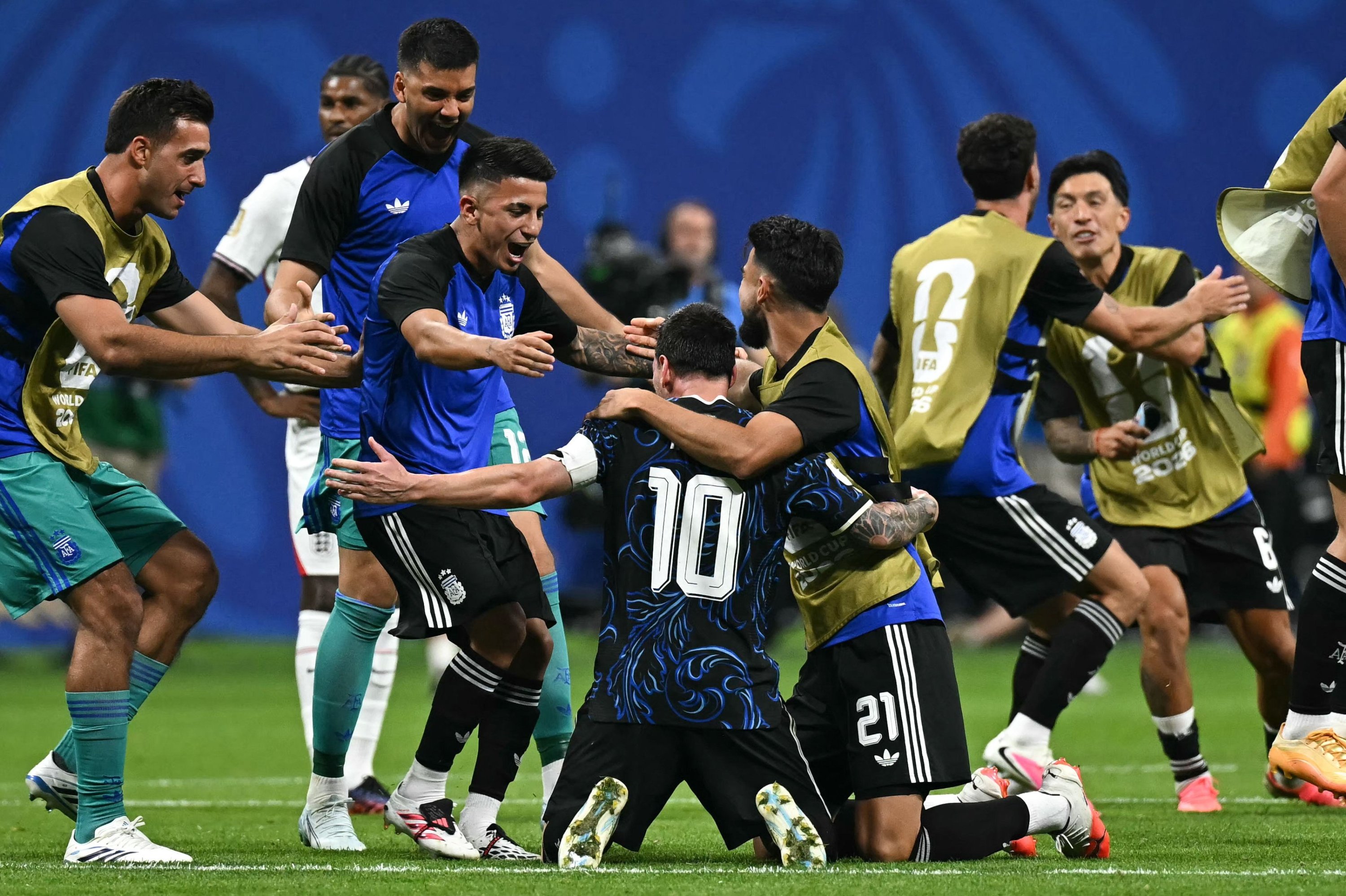
Argentina have relied on timely goals throughout the tournament, consistently finding another level in decisive moments. While their attack has been among the tournament's most productive, defensive lapses have occasionally left Scaloni's side vulnerable, making late heroics a recurring theme of its title defense.
Spain have taken a different route.
Luis de la Fuente's squad has built its campaign on defensive discipline, patient possession and tactical control.
After opening with a scoreless draw against Cape Verde, Spain defeated Saudi Arabia and Uruguay to win Group H before cruising through the knockout rounds with victories over Austria, Portugal, Belgium and France.
The semifinal win over France further highlighted Spain's balance, combining relentless pressing with clinical finishing while extending what has been the tournament's most impressive defensive record.
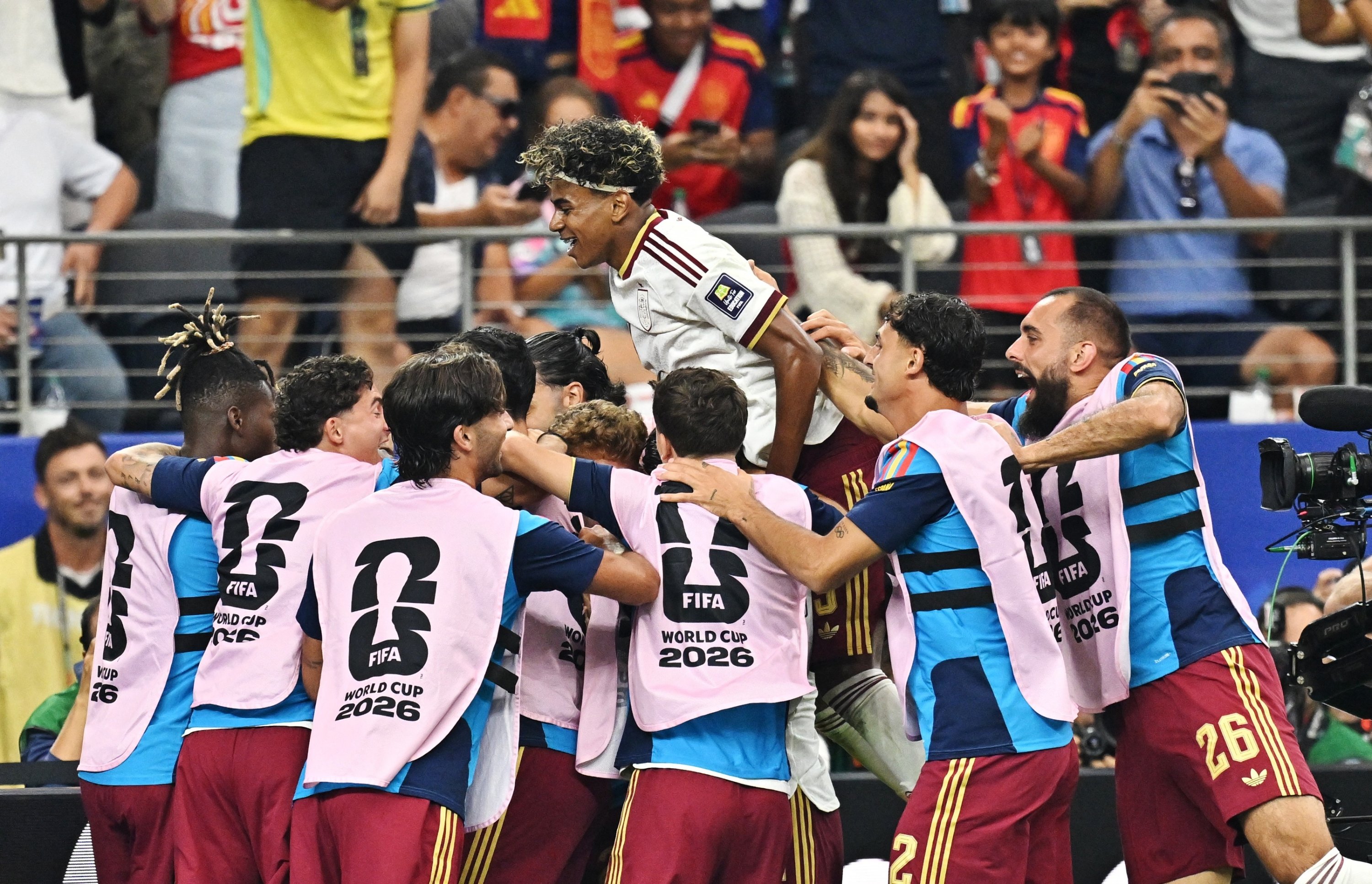
Spain has conceded just one goal in seven matches, a remarkable achievement in an expanded World Cup featuring longer schedules and deeper fields.
Its midfield has consistently dictated matches, allowing La Roja to control possession while limiting opponents' scoring opportunities.
Even at 39, Messi remains the centerpiece of Argentina's attack.
The captain enters the final with eight tournament goals, combining finishing, creativity and leadership in what could become the defining chapter of an already legendary international career.
Whether operating between the lines or creating space for teammates, Messi continues to shape games with moments of brilliance that few players in history have matched.
He is expected to start alongside Julian Alvarez, while Lautaro Martinez offers another elite attacking option after his semifinal winner against England.
Behind them, Enzo Fernandez, Alexis Mac Allister and Rodrigo De Paul provide the balance between creativity and relentless work rate that has become the foundation of Scaloni's midfield.
Defensively, goalkeeper Emiliano Martinez and center backs Cristian Romero and Lisandro Martinez bring valuable experience, although Argentina will need greater concentration against Spain's dynamic attack.
While Argentina leans on experience, Spain represents football's emerging future.
Rodri anchors one of the world's strongest midfields, controlling tempo with calm distribution and exceptional defensive awareness. Alongside him, Pedri continues to dictate play with intelligence beyond his years.
Out wide, teenage sensation Lamine Yamal and Nico Williams have transformed Spain into one of the tournament's most dangerous attacking teams, combining pace, creativity and fearlessness against elite defenses.
Their movement has created space for Mikel Oyarzabal, whose composure in front of goal has been another key ingredient in Spain's run to the final.
Behind them, goalkeeper Unai Simon and a disciplined back line led by Aymeric Laporte, Pau Cubarsí and Marc Cucurella have formed the tournament's toughest defense.
Sunday's final offers a compelling tactical contrast.
Spain is expected to dominate possession through Rodri and Pedri, patiently circulating the ball before attacking through Yamal and Williams on the wings.
Argentina is more comfortable absorbing pressure before striking quickly in transition, with Messi orchestrating attacks and Alvarez stretching opposing defenses with his movement.
The midfield battle could ultimately determine the outcome.
If Spain establishes control through Rodri and Pedri, Argentina may spend long stretches defending. If Fernandez, Mac Allister and De Paul disrupt Spain's rhythm, Messi will receive the space needed to influence the match.
Spain's disciplined defensive structure will also face its toughest challenge against an Argentina side that has repeatedly delivered in high-pressure moments.
The nations have rarely met in meaningful competition.
Argentina won their only previous World Cup meeting 2-1 during the 1966 group stage, while Spain's memorable 6-1 victory in a 2018 friendly remains one of the most lopsided results between the two sides.
After their scheduled meeting in the canceled Qatar Finalissima never materialized, Argentina and Spain now have the chance to write a far more significant chapter on football's biggest stage.
For Argentina, victory would secure back-to-back World Cup titles and further strengthen the country's place among football's greatest powers.
For Spain, lifting the trophy would confirm the arrival of another golden generation capable of dominating international football for years to come.