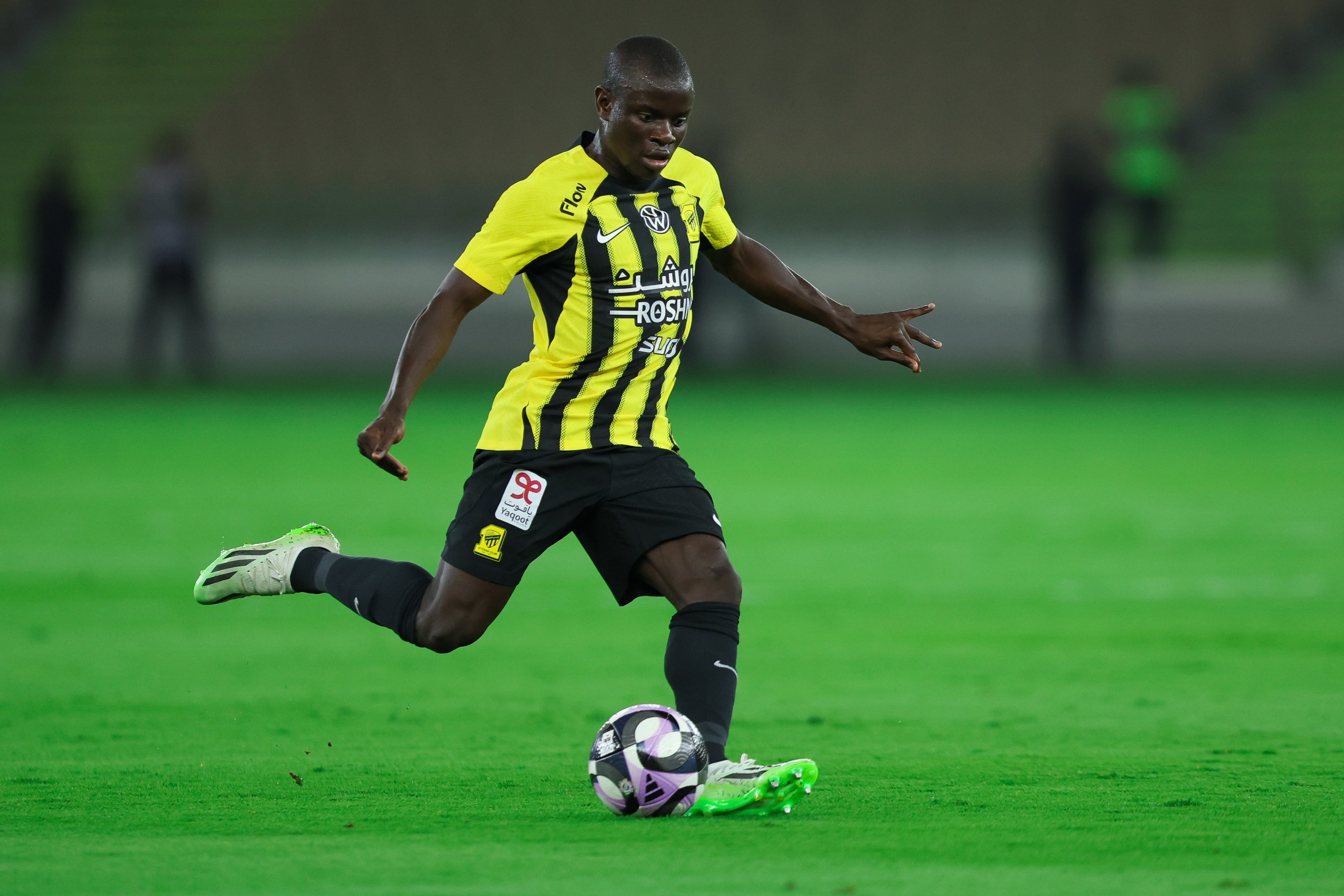
Fenerbahçe completed one of the most dramatic signings in recent Turkish football history early Wednesday by officially securing French midfielder N’Golo Kante, finalizing a deal that unraveled, collapsed and was ultimately revived in the final days of the January 2026 transfer window.
The Istanbul club confirmed the signing on Wednesday, announcing that the 34-year-old World Cup winner had joined on a 2.5-year contract running through June 30, 2028.
Kante arrives from Saudi Pro League side Al-Ittihad following a transfer process shaped as much by administrative missteps and regulatory intervention as by player resolve.
What began as a straightforward high-level swap soon evolved into a test of patience, leverage and institutional credibility.
Early in January, Fenerbahçe, under sporting director Devin Özek, reached an agreement with Al-Ittihad centered on a player-plus-cash deal.
Youssef En-Nesyri was set to head to Saudi Arabia, while Kante would reinforce Fenerbahçe’s midfield, with sources indicating a 4 million euros ($4.7 million) payment balancing the transaction.
All sporting elements fell into place.
Both players agreed personal terms, medical checks were completed, and documentation was prepared ahead of the deadline.
But on the final day of the transfer window, the deal stalled, not over valuation or consent, but over execution.
Al-Ittihad’s incorrect data entries into FIFA’s Transfer Matching System (TMS) prevented the transfer from being validated before the window closed.
With the system locked, the deal collapsed publicly.
Fenerbahçe moved quickly to protect its position, issuing a detailed statement asserting full compliance with regulations and placing responsibility squarely on the Saudi club’s administrative failures.
Behind the scenes, the matter escalated from a bilateral dispute into a regulatory one.
Fenerbahçe opened talks with FIFA, seeking either an exception or an alternative legal route to complete the transfer.
The club’s stance was clear: sporting agreements had been honored, and the failure was procedural, not contractual.
As legal channels were explored, the player himself became a decisive factor.
Kante, whose move to Saudi Arabia in 2023 was financially lucrative but professionally transitional, had grown increasingly determined to return to Europe ahead of the 2026 World Cup.
When the transfer stalled, he refused to train with Al-Ittihad, signaling unmistakably that his future lay elsewhere. The decision, while risky, shifted the balance of power.
Faced with a player unwilling to continue and a deal already complicated by procedural error, Al-Ittihad relented.
The club agreed to mutually terminate Kante’s remaining contract, originally set to expire in the summer of 2026, allowing FIFA to authorize the move outside the collapsed TMS framework.
The resolution also freed En-Nesyri’s transfer to proceed independently.
By early February, the impasse had been cleared.
Fenerbahçe finalized Kante’s registration, completed Turkish Football Federation (TFF) paperwork and unveiled the signing with a measured but symbolic announcement: “Welcome to our Fenerbahçe, N’Golo Kante.” Internally, the message was more pointed, persistence, the club stressed, had prevailed.
Financially, the deal reflected compromise on all sides.
While Kante earned up to 20 million euros annually in Saudi Arabia, Turkish media reported he accepted a salary closer to 8 million euros per season.
Transfer sources maintain that Fenerbahçe still compensated Al-Ittihad in the 3-4 million-euro range, despite early speculation the termination would allow a free transfer.
Kante’s career credentials remain among the strongest of his generation: the engine of Leicester City’s improbable 2015-16 Premier League title, a Champions League winner and domestic champion with Chelsea, and a World Cup cornerstone for France in 2018.
His reputation, built on relentless ball recovery, positional intelligence and tactical discipline, has endured well into his thirties.
At Al-Ittihad, Kante made 79 appearances and scored eight goals across competitions, maintaining elite physical output while contributing to domestic success alongside stars such as Karim Benzema and Fabinho.
Fenerbahçe officials believe that experience, rather than diminishing his value, sharpens it.
Under coach Domenico Tedesco, Kante is expected to anchor midfield alongside Matteo Guendouzi, forming a French partnership designed to control tempo, protect defensive transitions and stabilize high-pressure matches.
His presence allows attacking players greater freedom and offers tactical flexibility in both domestic and European competitions.
Equally significant is the off-field impact. Kante is viewed as a cultural stabilizer, an understated leader whose professionalism sets standards in training and match preparation.
Club sources expect him to play a mentoring role for younger players while helping Fenerbahçe navigate decisive phases of the season.
International ambition also factors heavily into the move.
Kante has recently re-entered France’s national team rotation and views consistent European competition as essential ahead of the 2026 World Cup in the United States, Canada and Mexico.