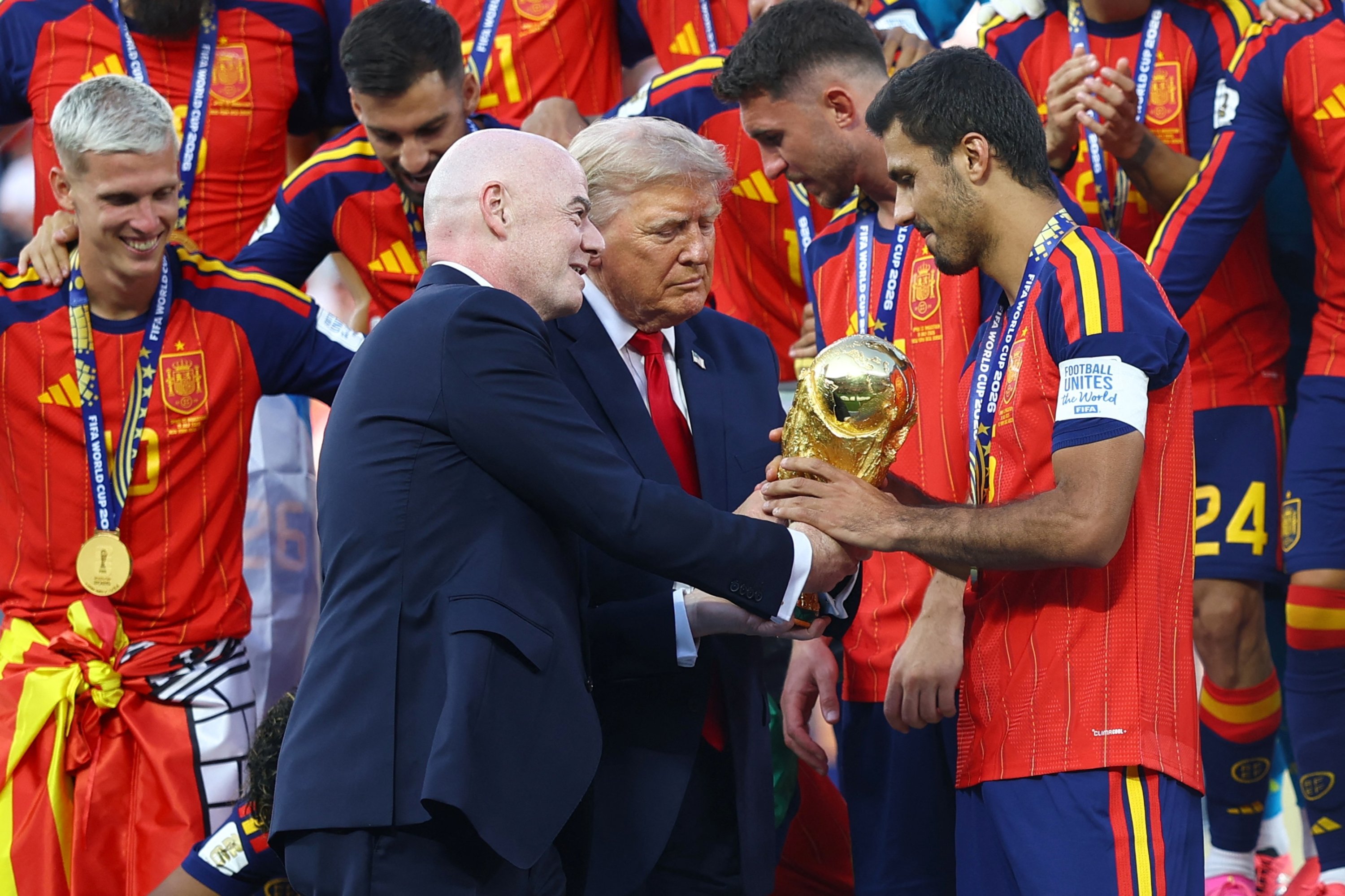
The 2026 FIFA World Cup will be remembered as the biggest tournament football has ever staged. It shattered attendance records, expanded the field to 48 teams, generated unprecedented revenue and ended on Sunday with Spain reclaiming the title after Ferran Torres' extra-time winner against Argentina in the final at MetLife Stadium.
Yet beneath the spectacle, the monthlong tournament exposed difficult questions about FIFA's priorities, from commercialization and political influence to climate concerns, fan accessibility and player welfare.
Whether the tournament represented football's future or a warning about its direction remains one of its defining debates.
For the first time, 48 nations competed for the World Cup, increasing the tournament from 64 to 104 matches across the United States, Mexico and Canada.
The expansion undeniably opened doors. Nations from Africa, Asia and other underrepresented confederations enjoyed more qualification places, allowing countries such as Cabo Verde to make history with memorable knockout-stage runs.
New faces and fresh storylines added diversity to a competition long dominated by traditional powers.
But the expanded format also reignited concerns that had existed since FIFA approved the changes.
More matches meant a longer tournament, heavier workloads and increased travel across 16 host cities spread over three countries.
Critics argued that the additional group-stage games diluted the competition and stretched players close to their physical limits after already demanding club seasons.
UEFA President Aleksander Ceferin was among those who questioned the expansion, describing it as unnecessary and warning that quantity should not come at the expense of quality.
The tournament's geography only intensified those concerns. Long-haul flights, multiple time zones and cross-border travel created logistical headaches for teams, supporters and organizers while significantly increasing the competition's carbon footprint.
For example, Türkiye were forced to travel from their base in Arizona to Vancouver for a match against Australia before making the return journey immediately afterward.
Financially, the tournament was an overwhelming success.
FIFA reportedly generated about $15 billion in revenue through broadcasting rights, sponsorships, hospitality and ticket sales, making it the most lucrative World Cup in history.
Yet much of that success became a source of criticism.
For the first time, FIFA embraced dynamic ticket pricing, allowing prices to rise according to demand. Final tickets reportedly climbed as high as $11,000 across primary and resale markets, effectively pricing many lifelong supporters out of football's biggest match.
The soaring prices prompted investigations by several U.S. state attorneys general into potential price gouging and drew criticism from players, including U.S. midfielder Timothy Weah.
Despite record overall attendance of roughly 6.8 million spectators, some lower-profile matches featured noticeable empty seats, highlighting the gap between strong headline figures and affordability for ordinary fans.
FIFA defended the pricing strategy as a reflection of market demand and a necessary component of maximizing revenue in North America's sports marketplace.
For many supporters, however, the tournament increasingly resembled a premium entertainment product rather than the global celebration that has traditionally defined the World Cup.
Few World Cups have blurred the line between sport and politics as visibly as the 2026 edition.
The most controversial incident centered on U.S. forward Folarin Balogun, whose suspension following a red card against Bosnia and Herzegovina was reportedly overturned after lobbying from President Donald Trump.
The decision drew criticism from UEFA officials and fueled accusations that political pressure had compromised FIFA's judicial independence.
The debate intensified during the final trophy presentation.
Trump remained on the podium alongside FIFA President Gianni Infantino as Spain captain Rodri lifted the trophy, breaking with longstanding World Cup protocol. The moment drew loud boos from sections of the crowd and sparked widespread criticism that football's biggest celebration had become politically charged.
Officiating also remained under scrutiny throughout the tournament.
VAR decisions, including the disallowed Spanish goal in the final after a foul was called on Mikel Merino, fueled familiar arguments over consistency, transparency and whether technology has improved football or merely shifted controversy from referees to video review.
The World Cup prides itself on bringing the world together, but immigration and visa restrictions complicated that vision.
Somali referee Omar Artan, the Confederation of African Football's 2025 Referee of the Year, was denied entry into the United States despite holding a valid visa, citing security vetting concerns.
Iran also faced significant logistical obstacles, establishing its tournament base in Tijuana, Mexico and traveling into the United States for group-stage matches because of diplomatic and visa complications.
Supporters from countries including Haiti, Senegal, Ivory Coast and Iran also reported visa delays, travel restrictions and rejected applications.
Those incidents raised broader questions about whether football's premier global event can truly remain inclusive when geopolitical realities limit participation for players, officials and supporters alike.
The World Cup final embraced an unmistakably American flavor.
A Super Bowl-style halftime show featuring international music stars including Shakira, Madonna and BTS transformed football's biggest match into a major entertainment event.
Supporters praised the production value and global appeal.
Traditionalists argued that extending halftime well beyond football's customary break represented another example of the sport bending to commercial interests.
Even mandatory cooling breaks during extreme heat became advertising opportunities, with commercial content filling the stoppages.
To critics, the tournament increasingly reflected entertainment business priorities as much as football itself.
Environmental concerns followed the tournament from kickoff to the final whistle.
The combination of 16 host cities, three countries and thousands of cross-border flights made the tournament one of the most carbon-intensive sporting events ever staged.
Extreme summer temperatures also became a recurring issue.
More than one-quarter of the matches were reportedly played in potentially dangerous heat, forcing mandatory hydration breaks and raising fresh concerns about player safety.
Wildfire smoke drifting from Canada periodically affected air quality, disrupting training sessions and creating additional health concerns ahead of the final.
Although FIFA promoted sustainability initiatives throughout the tournament, critics argued that the scale of the competition fundamentally conflicted with global climate goals.
Supporters pointed to billions in projected economic activity, increased tourism and job creation across North America.
Hotels, restaurants, transportation providers and local businesses experienced significant boosts during the tournament.
But the financial picture was more complicated.
Host cities also absorbed enormous security, infrastructure and operational costs, prompting questions about whether taxpayers ultimately received sufficient long-term value.
Critics argued that FIFA captured a disproportionate share of the tournament's profits while local governments assumed much of the financial risk.
The debate echoed questions raised after previous mega sporting events: Who really wins when the final whistle blows?
There is little doubt that the 2026 World Cup succeeded as a sporting spectacle.
Spain's triumph, underdog breakthroughs, record crowds and unprecedented global attention ensured its place among the most memorable tournaments in football history.
Yet it also became a defining test of where the sport is headed.
The expanded format widened access but increased physical and environmental demands. Record revenues came alongside soaring ticket prices. Entertainment reached new heights while commercial interests became more visible than ever. Politics, immigration policies and climate challenges repeatedly intersected with the game itself.
Perhaps that is the tournament's true legacy.