Daily Sabah logo

Politics
Diplomacy Legislation War On Terror EU Affairs Elections News Analysis
TÜRKİYE
Istanbul Education Investigations Minorities Expat Corner Diaspora
World
Mid-East Europe Americas Asia Pacific Africa Syrian Crisis Islamophobia
Business
Automotive Economy Energy Finance Tourism Tech Defense Transportation News Analysis
Lifestyle
Health Environment Travel Food Fashion Science Religion History Feature Expat Corner
Arts
Cinema Music Events Portrait Reviews Performing Arts
Sports
Football Basketball Motorsports Tennis
Opinion
Columns Op-Ed Reader's Corner Editorial
PHOTO GALLERY
JOBS ABOUT US RSS PRIVACY CONTACT US
© Turkuvaz Haberleşme ve Yayıncılık 2025

Daily Sabah - Latest & Breaking News from Turkey | Istanbul

  • Politics
    • Diplomacy
    • Legislation
    • War On Terror
    • EU Affairs
    • Elections
    • News Analysis
  • TÜRKİYE
    • Istanbul
    • Education
    • Investigations
    • Minorities
    • Expat Corner
    • Diaspora
  • World
    • Mid-East
    • Europe
    • Americas
    • Asia Pacific
    • Africa
    • Syrian Crisis
    • Islamophobia
  • Business
    • Automotive
    • Economy
    • Energy
    • Finance
    • Tourism
    • Tech
    • Defense
    • Transportation
    • News Analysis
  • Lifestyle
    • Health
    • Environment
    • Travel
    • Food
    • Fashion
    • Science
    • Religion
    • History
    • Feature
    • Expat Corner
  • Arts
    • Cinema
    • Music
    • Events
    • Portrait
    • Reviews
    • Performing Arts
  • Sports
    • Football
    • Basketball
    • Motorsports
    • Tennis
  • Gallery
  • Opinion
    • Columns
    • Op-Ed
    • Reader's Corner
    • Editorial
  • TV
  • Opinion
  • Columns
  • Op-Ed
  • Reader's Corner
  • Editorial

Should Turkey follow China's footsteps in progress?

by Muhammet Ali Güler

Jul 13, 2021 - 12:05 am GMT+3
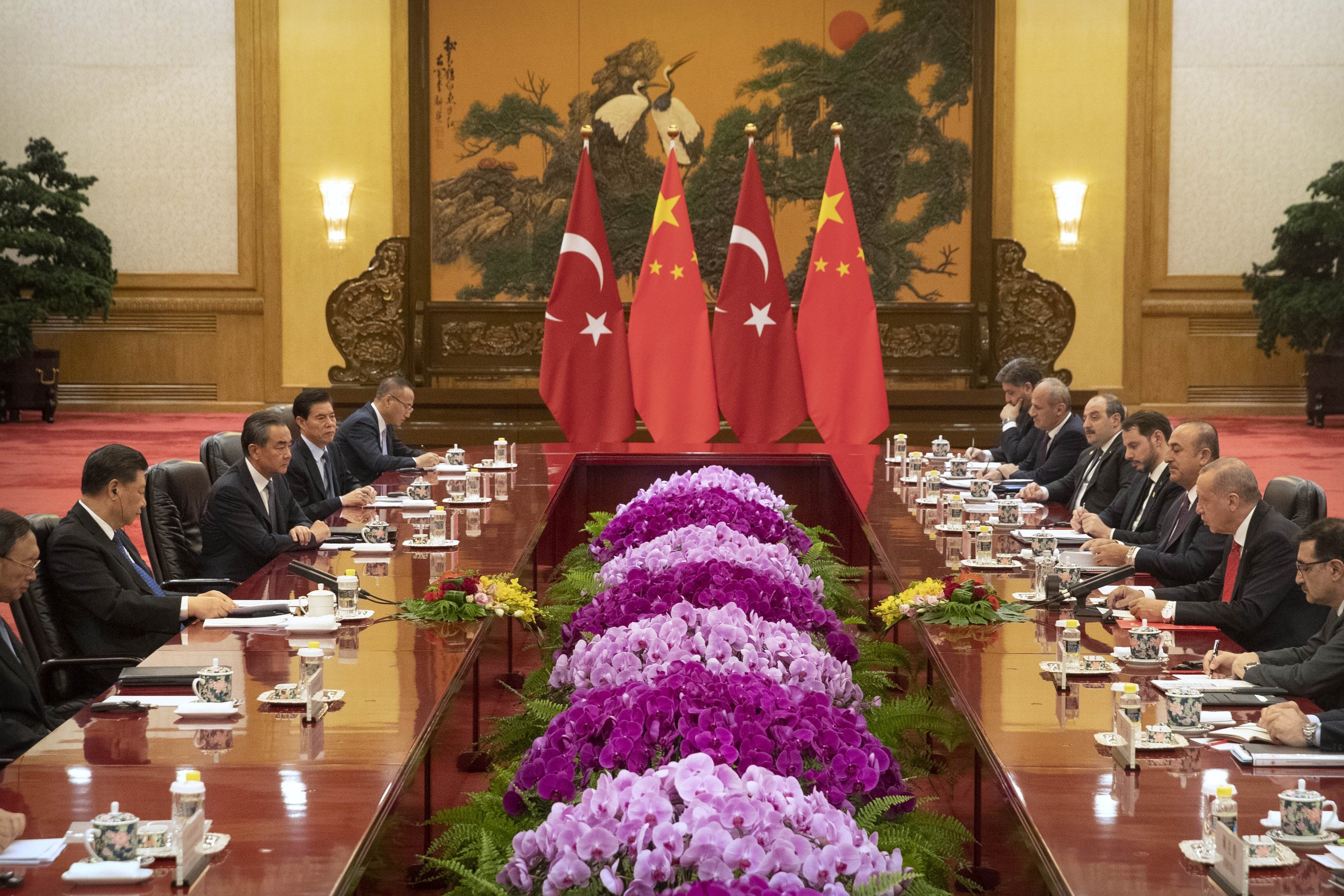
President Recep Tayyip Erdoğan (C-R) speaks during a meeting with Chinese President Xi Jinping (C-L) at the Great Hall of the People in Beijing, China, July 2, 2019. (Getty Images)
by Muhammet Ali Güler Jul 13, 2021 12:05 am

Turkey and China have had internal, regional and global issues for a long time. However, when compared, China is a bit ahead in achieving its goals due to several reasons.

The membership of the World Trade Organization (WTO) and reforms initiated in China following the death of leader Mao Zedong are usually classified as the headway to China’s rapid integration into the world economy.

Some believe that China's one party-system has also played an important role in such achievements. Beyond the ideology, the Communist Party of China (CCP) has revealed the capabilities and talents of Chinese people and invested in mostly the right moves over the last several decades.

The CCP has also faced competition among those vying for leadership positions. However, the party has never faced any issue in winning elections, making a significant contribution to the focus on one-party-made plans by those elected by the National People’s Congress.

Tourists pose for photos in front of an art installation marking the 100th anniversary of the founding of the Communist Party of China (CPC) at Tiananmen Square in Beijing, China, July 9, 2021. (Getty Images)

Another significant point is that the Chinese regime under President Xi Jinping has declared war on corruption and announced harsh punishments for those who break the law.

It is a fact that China has copied technology from the West, innovated or upgraded it and sold these “advanced” versions to other countries. That is possible only because of China's quick response to changes. Therefore, China has achieved its success in line with its understanding of the world.

What step is Turkey at?

Turkey can also do much better if it adopts a model that reflects the Turkish understanding of the world. Turkish people should stop their youth from hoping to invest their productive years in acquiring a car or a house. They can interpret economics, which may include the best practices of the West and the East, and implement them.

Turkey became a WTO member in 1995. However, Turkey’s short-lived or coalition governments, relations between military and civil governments, and excessive politicizing resulted in Turkey falling behind China.

The progress in today's defense and independent foreign policy confirms the great capability of the Turkish people and state. Back in 2002, Turkey had chronic major problems, which then led people to elect the Justice and Development Party (AK Party). If the governments before the AK Party had been firm, Turkey could have had a stronger economy. Unfortunately, some governments ruled the country for even less than one year.

The AK Party came to power because the Turkish public was not willing to let the country be governed by short-term governments anymore. This view is still widely held among Turkish voters.

The AK Party has been ruling Turkey for almost two decades. There are a number of achievements, as well as some disappointments, in this long period.

AK Party's achievements

Here is a list of 12 points showing the major achievements of Turkey under the AK Party since 2002.
  1. Determination to have elections on time
  2. Revealing the Turkish capability in the defense sector
  3. Connecting the country through investment in transportation
  4. Improving the conditions in the health sector
  5. Attracting positive or negative attention in the international arena, an obvious sign that the country has progressed more than in previous decades
  6. Strong willpower on core interests such as Blue Homeland (Mavi Vatan)
  7. Discovery of Turkey’s ability to confidently and economically encourage business circles
  8. Reopening of the Hagia Sophia Grand Mosque
  9. The Turkish military's timely intervention in some parts of Syria
  10. Focus on a civil constitution which hopefully will be comprehensive, encompassing all areas in this technological era and synthesizing Turkish traditional and contemporary values and morals
  11. Alleviation of dependence on one party and diversification of alternatives
  12. Worldwide perception of Turkey as an emerging power

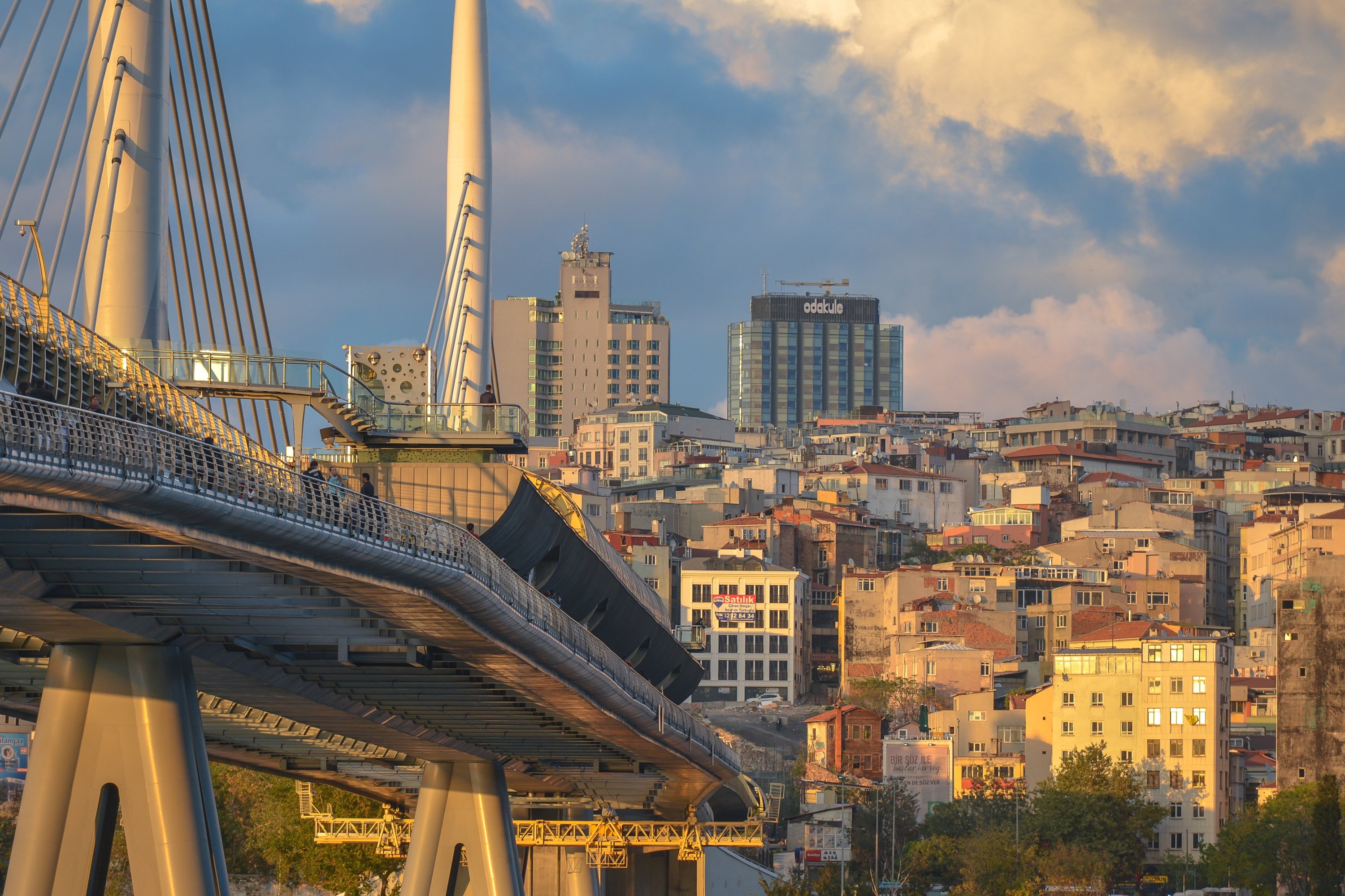
A view of Haliç subway station and Beyoğlu district in the background at sunset, in Istanbul, Turkey, Oct. 17, 2017. (Getty Images)

What are the failures?

On the other side of the coin, there are areas where the AK Party, in my opinion, could have made better choices. Here is a list of five points:

  1. Initially choosing the construction sector as the main driver for the economy, which I believe is still why technology and production were not prioritized earlier
  2. Straining relations with Syria and Egypt unnecessarily while preferring the use of diplomatic language
  3. Sometimes insisting on maintaining old discourses in politics
  4. Failure to convince some citizens that there is an ongoing war in Syria and that the Turkish military is carrying out its duty while ensuring other parts of Turkey stay safe and peaceful
  5. The lack of greater efforts in mass-production initiatives

More careful steps

Turkey still needs a strong ring of inspection, cooperation and supervision. For example, a businessperson told me several days ago that: “Yes, some major companies get the incentives and aids. But we should also check how they use the money and how much they contribute back.”

I agree with that point. Turkey provides enormous advantages and initiatives regardless of the size of the company, encouraging me and others to convince those around us to invest in Turkey.

At the end of the day, Turkey should be able to inspect the activities of the companies. Training local businesspeople and improving strategies to lure foreign and Turkish experts will be highly beneficial.

Devising ways to resolve common arguments over ideological ones will help Turkey reach its desired developmental goals faster. There are still supporters who believe that having high-rise buildings show the economic development of a country. The Ottomans ruled the three continents with low-rise madrassas, the higher education institutions of Islamic civilizations, for over 600 years.

Adopting constructive, productive, creative rhetoric and ideas will prevent Turkey from falling into vicious circles in politics.

Underestimating agriculture

China's initial strategy was transforming agriculture. There are many disagreements among family members in Turkey due to land issues and high input costs. For example, my uncle and aunts lived off agriculture and animal husbandry. The total number of their children is 21. Four out of 21 are of school-going age. One out of the 17 older children lives in the village. The rest have taken up jobs in cities.

The world is at the point where only self-sufficient nations will survive. Therefore, in the post-coronavirus period, let’s initiate a project to give 100,000 students (primary, secondary, high schools) and individuals below 35 who have achieved something in their lives the chance to go abroad. The duration of these international visits could be 10-15 days to broaden their perspectives. In this regard, Germany, the U.S., the U.K., Africa, Malaysia, Indonesia, Vietnam, Singapore, South Korea, Japan, Russia and China could be some potential destinations.

I humbly listed points that I believe could benefit Turkey’s future. The AK Party and all others in the Parliament should be focusing on how to make Turkey stronger. Both globally and regionally, the necessary steps should be taken during this period.


About the author
Co-founder and director of Rinali Samudra International, a Turkish-Indonesian enterprise focusing on business consultancy, tourism and export/import, based in Indonesia
The views and opinions expressed in this article are solely those of the author. They do not necessarily reflect the editorial stance, values or position of Daily Sabah. The newspaper provides space for diverse perspectives as part of its commitment to open and informed public discussion.
  • shortlink copied
  • KEYWORDS
    turkish economy turkish politics chinese economy chinese politics
    The Daily Sabah Newsletter
    Keep up to date with what’s happening in Turkey, it’s region and the world.
    You can unsubscribe at any time. By signing up you are agreeing to our Terms of Use and Privacy Policy. This site is protected by reCAPTCHA and the Google Privacy Policy and Terms of Service apply.
    No Image
    In photos: Almost 100 years of lighting the Olympic flame
    PHOTOGALLERY
    • POLITICS
    • Diplomacy
    • Legislation
    • War On Terror
    • EU Affairs
    • News Analysis
    • TÜRKİYE
    • Istanbul
    • Education
    • Investigations
    • Minorities
    • Diaspora
    • World
    • Mid-East
    • Europe
    • Americas
    • Asia Pacific
    • Africa
    • Syrian Crisis
    • İslamophobia
    • Business
    • Automotive
    • Economy
    • Energy
    • Finance
    • Tourism
    • Tech
    • Defense
    • Transportation
    • News Analysis
    • Lifestyle
    • Health
    • Environment
    • Travel
    • Food
    • Fashion
    • Science
    • Religion
    • History
    • Feature
    • Expat Corner
    • Arts
    • Cinema
    • Music
    • Events
    • Portrait
    • Performing Arts
    • Reviews
    • Sports
    • Football
    • Basketball
    • Motorsports
    • Tennis
    • Opinion
    • Columns
    • Op-Ed
    • Reader's Corner
    • Editorial
    • Photo gallery
    • DS TV
    • Jobs
    • privacy
    • about us
    • contact us
    • RSS
    © Turkuvaz Haberleşme ve Yayıncılık 2021