Daily Sabah logo

Politics
Diplomacy Legislation War On Terror EU Affairs Elections News Analysis
TÜRKİYE
Istanbul Education Investigations Minorities Expat Corner Diaspora
World
Mid-East Europe Americas Asia Pacific Africa Syrian Crisis Islamophobia
Business
Automotive Economy Energy Finance Tourism Tech Defense Transportation News Analysis
Lifestyle
Health Environment Travel Food Fashion Science Religion History Feature Expat Corner
Arts
Cinema Music Events Portrait Reviews Performing Arts
Sports
Football Basketball Motorsports Tennis
Opinion
Columns Op-Ed Reader's Corner Editorial
PHOTO GALLERY
JOBS ABOUT US RSS PRIVACY CONTACT US
© Turkuvaz Haberleşme ve Yayıncılık 2025

Daily Sabah - Latest & Breaking News from Turkey | Istanbul

  • Politics
    • Diplomacy
    • Legislation
    • War On Terror
    • EU Affairs
    • Elections
    • News Analysis
  • TÜRKİYE
    • Istanbul
    • Education
    • Investigations
    • Minorities
    • Expat Corner
    • Diaspora
  • World
    • Mid-East
    • Europe
    • Americas
    • Asia Pacific
    • Africa
    • Syrian Crisis
    • Islamophobia
  • Business
    • Automotive
    • Economy
    • Energy
    • Finance
    • Tourism
    • Tech
    • Defense
    • Transportation
    • News Analysis
  • Lifestyle
    • Health
    • Environment
    • Travel
    • Food
    • Fashion
    • Science
    • Religion
    • History
    • Feature
    • Expat Corner
  • Arts
    • Cinema
    • Music
    • Events
    • Portrait
    • Reviews
    • Performing Arts
  • Sports
    • Football
    • Basketball
    • Motorsports
    • Tennis
  • Gallery
  • Opinion
    • Columns
    • Op-Ed
    • Reader's Corner
    • Editorial
  • TV
  • Life
  • Health
  • Environment
  • Travel
  • Food
  • Fashion
  • Science
  • Religion
  • History
  • Feature
  • Expat Corner

Environmental developments in Turkey, a 2020 recap

by Anadolu Agency

ANKARA Dec 31, 2020 - 12:34 pm GMT+3
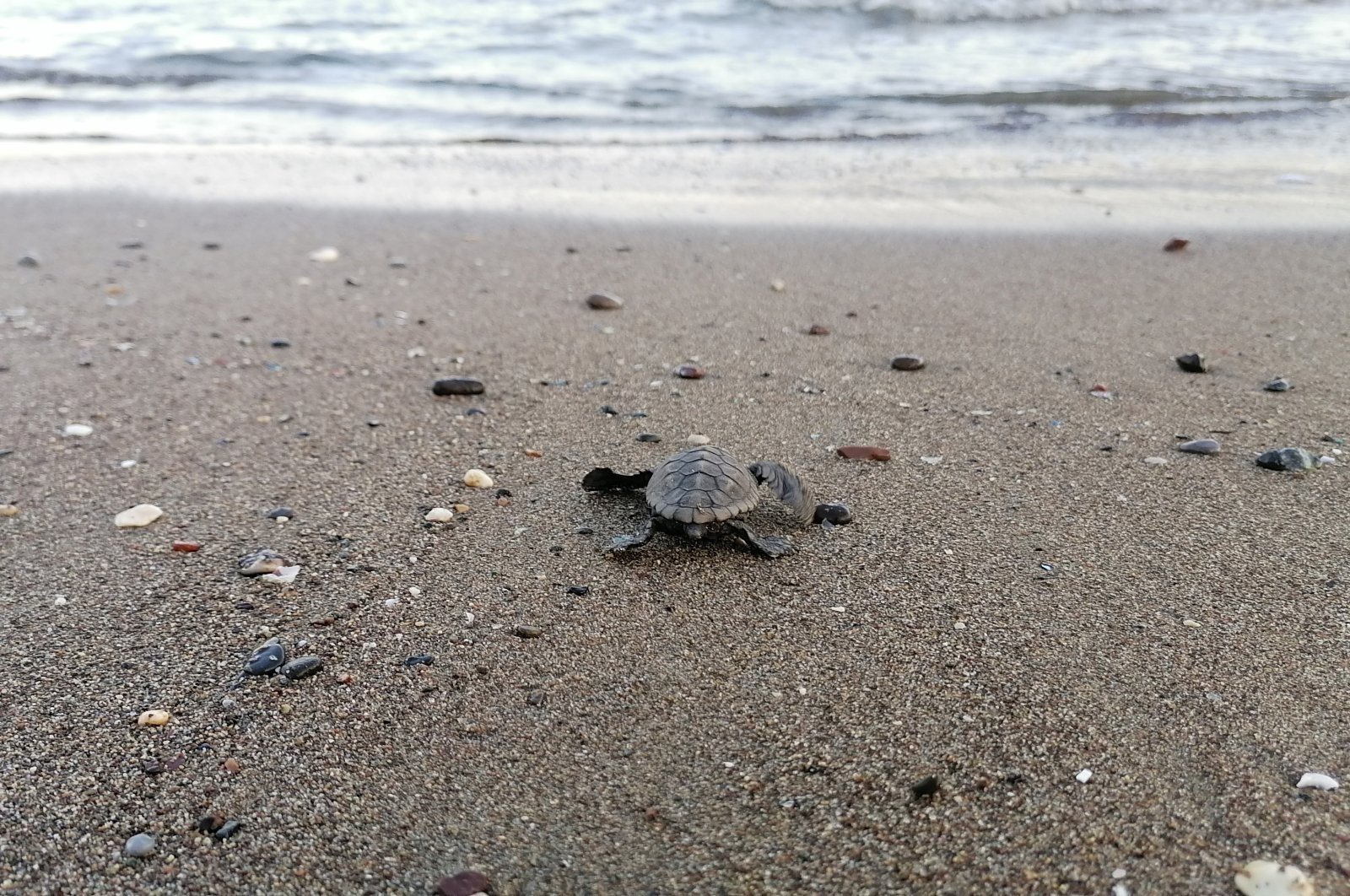
A baby turtle heads to sea on a beach in Mersin, southern Turkey, Aug. 7, 2020. (DHA Photo)
by Anadolu Agency Dec 31, 2020 12:34 pm

Turkey has enacted many green policies this year to protect the environment and slow down climate change, closing dirty thermal power plants and establishing government offices to oversee further such steps. As the year comes to an end, let's take a look back at these developments that have spanned an unusually unique year.

Winter

At the start of the year, Turkey shut down five thermal power plants and partially closed one for failing to comply with a legal requirement to install filters, Environment Minister Murat Kurum and Energy Minister Fatih Donmez announced at a joint news conference. On Jan. 24, Agriculture and Forestry Minister Bekir Pakdemirli announced plans to plant 82 million saplings – equal to Turkey's population – across the country by November.

In February, the Ministry of Environment declared the nation's target of reducing national greenhouse emissions by up to 21% by 2030. The same month, the Agriculture and Forestry Ministry launched the country's most comprehensive campaign in its history to develop indigenous seeds that are resistant to disease. Meanwhile, Minister of Industry and Technology Mustafa Varank shared the news that Turkey's fourth polar expedition team had arrived in Antarctica to conduct scientific research.

Throughout the year, Agriculture and Forestry Minister Pakdemirli continuously underlined the importance of adding lessons on climate change to the school curriculum and urged the world to fight against climate change to the same degree that it seeks to prevent smoking.
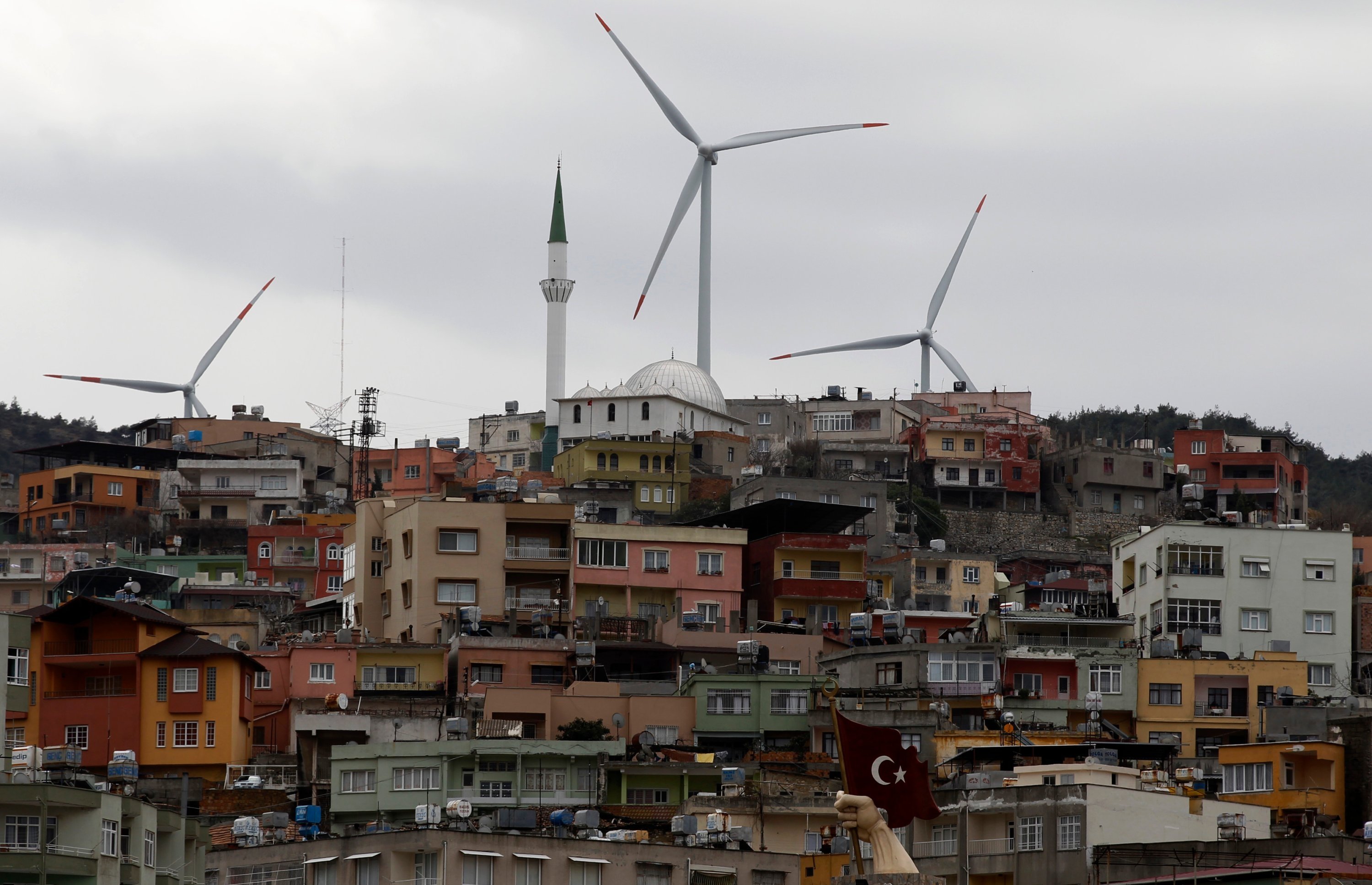
Wind turbines are seen in the southern town of Belen, Hatay province, Turkey. (Reuters Photo)

Spring

In April, the Environment Ministry issued two circulars – one with 15 provisions listing steps to manage medical waste, including masks and gloves, and the other on wastewater management – as part of measures against the COVID-19 outbreak.

Also, at the beginning of the spring, levels of airborne particulate matter in 29 metropolitan areas of Turkey dropped by 32%, according to data compiled by air quality measurement stations and municipalities.

As the struggle against the coronavirus continued, in May Turkey announced that it will plant a Health Heroes Memorial Forest in each of its 81 provinces to honor health workers' efforts against the pandemic, with over 1 million saplings to be named after the country's health care professionals.

Meanwhile, as many as 71 endemic plant species were discovered in Tuz (Salt) Lake basin in the central province of Konya.
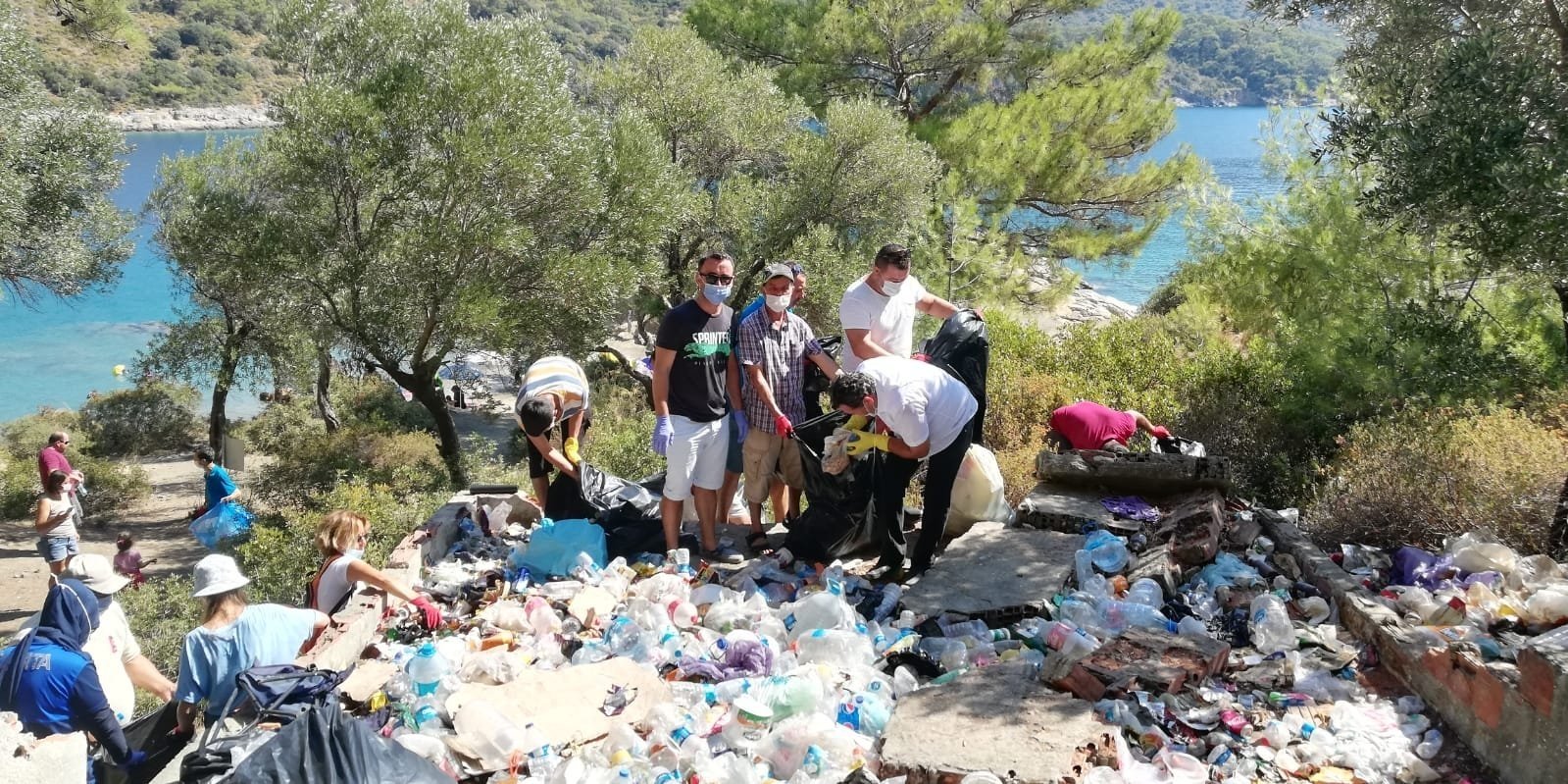
Volunteers stand beside a pile of collected garbage in Darboğaz Bay, in the Fethiye district of Muğla province, southwestern Turkey, Aug. 23, 2020. (AA Photo)
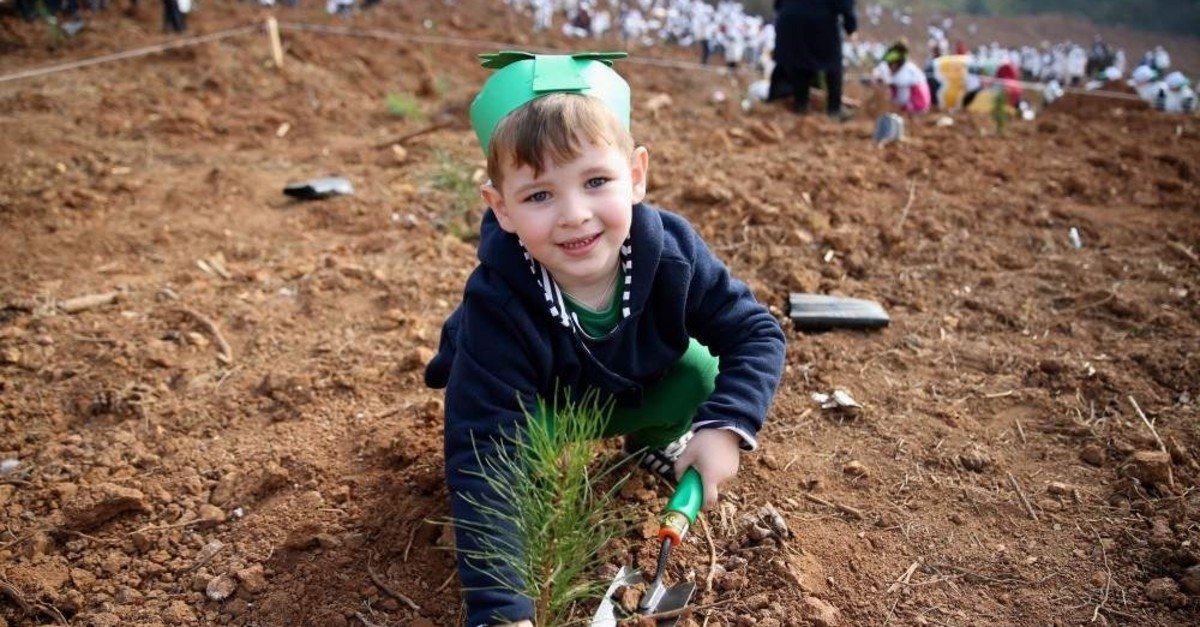
A boy plants a sapling on National Forestation Day, Sakarya, Nov. 11, 2019. (AA Photo)

Summer

In June, a 20-year record was broken as Turkey produced 66% of its total electricity from renewable resources in April, stated Energy Minister Dönmez. In July, a new directorate was launched under the Interior Ministry to focus on wildlife protection, called the Nature and Animal Protection Branch Directorate.

Later in the summer, 744 nests – an all-time record high – were built for endangered Caretta caretta sea turtles on the world-famous Iztuzu Beach in Muğla province, southwestern Turkey. Meanwhile, environmental activists in the Fethiye district of Muğla collected 2 tons of waste in two hours as part of a cleanup campaign.

President Recep Tayyip Erdoğan plants a sapling in the capital Ankara, Turkey, Nov. 11, 2020. (DHA Photo)

Fall

As autumn drew near, Turkey established a “forest school” in Samsun, a province in the Black Sea region, to raise awareness of environmental concerns among elementary school students. Then in October, Agriculture and Forestry Ministry announced plans to plant saplings over 50 hectares (124 acres) of land in Hatay, southern Turkey. Also in November, marking National Afforestation Day, President Recep Tayyip Erdoğan declared the country's goal to plant a total of 7 billion saplings by the end of 2023.

In this period, researchers recorded that 199,000 loggerhead turtle hatchlings had reached the sea in specially protected environmental areas; the record is the highest number to date.


  • shortlink copied
  • Last Update: Dec 31, 2020 3:30 pm
    KEYWORDS
    nature news environment flora&fauna climate crisis thermal energy wildlife
    The Daily Sabah Newsletter
    Keep up to date with what’s happening in Turkey, it’s region and the world.
    You can unsubscribe at any time. By signing up you are agreeing to our Terms of Use and Privacy Policy. This site is protected by reCAPTCHA and the Google Privacy Policy and Terms of Service apply.
    No Image
    Türkiye's historic Sumela Monastery welcomes winter snow
    PHOTOGALLERY
    • POLITICS
    • Diplomacy
    • Legislation
    • War On Terror
    • EU Affairs
    • News Analysis
    • TÜRKİYE
    • Istanbul
    • Education
    • Investigations
    • Minorities
    • Diaspora
    • World
    • Mid-East
    • Europe
    • Americas
    • Asia Pacific
    • Africa
    • Syrian Crisis
    • İslamophobia
    • Business
    • Automotive
    • Economy
    • Energy
    • Finance
    • Tourism
    • Tech
    • Defense
    • Transportation
    • News Analysis
    • Lifestyle
    • Health
    • Environment
    • Travel
    • Food
    • Fashion
    • Science
    • Religion
    • History
    • Feature
    • Expat Corner
    • Arts
    • Cinema
    • Music
    • Events
    • Portrait
    • Performing Arts
    • Reviews
    • Sports
    • Football
    • Basketball
    • Motorsports
    • Tennis
    • Opinion
    • Columns
    • Op-Ed
    • Reader's Corner
    • Editorial
    • Photo gallery
    • DS TV
    • Jobs
    • privacy
    • about us
    • contact us
    • RSS
    © Turkuvaz Haberleşme ve Yayıncılık 2021